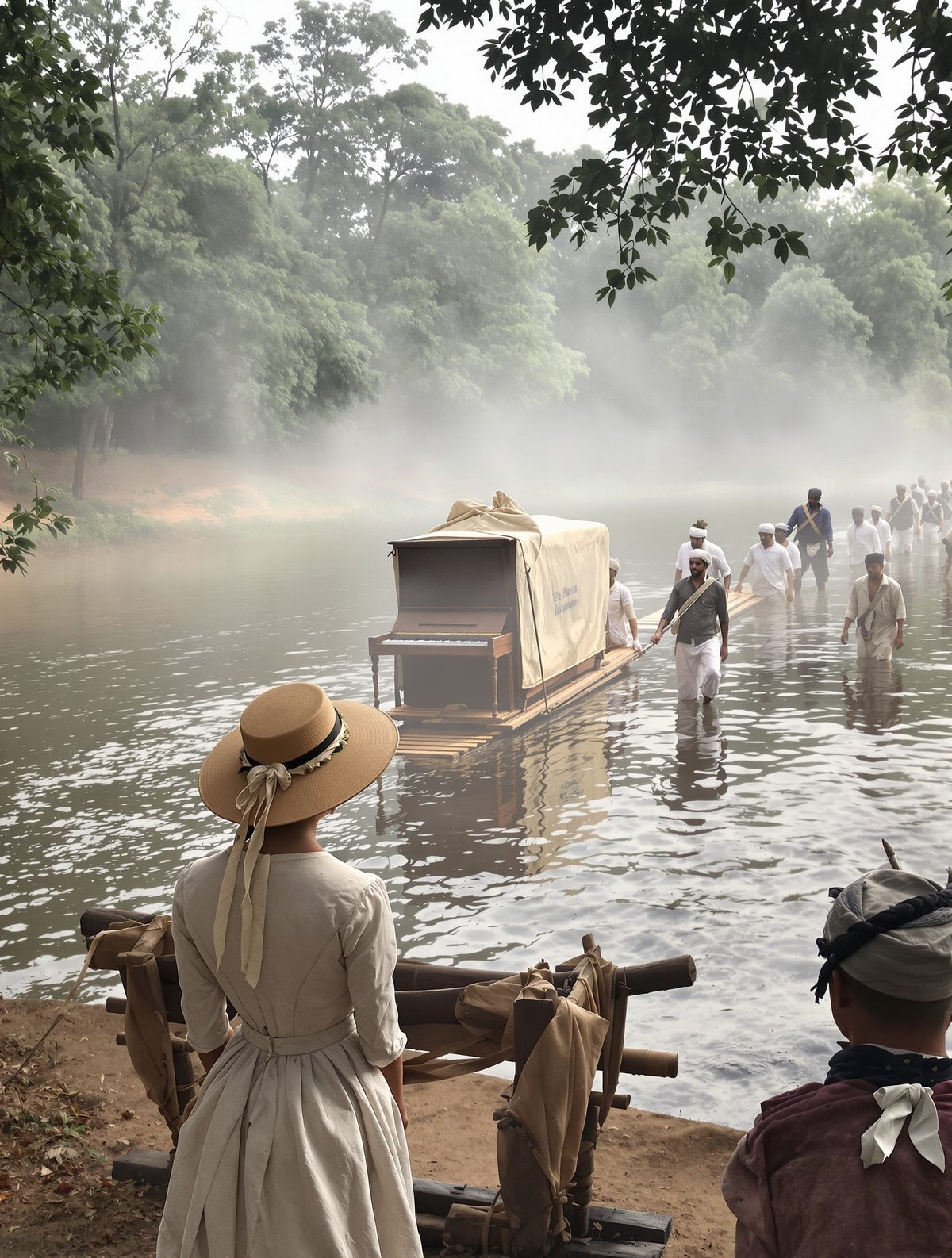
The year was 1838. Under the blazing sun of June, a lone British envoy named Alexander Burnes entered the heart of the Sikh Empire, Lahore. It was a magnificent place, brimming with vibrant colors and grandeur—a gilded nest of intrigue. This audacious visit set the stage for an extraordinary negotiation with Maharaja Ranjit Singh, the celebrated Lion of the Punjab. What unfolded in that mosaic-tiled court would redefine the boundaries of empires and leave a lasting imprint on the annals of history.
The Stage is Set: The Great Game Begins
As Europe slumbered beneath the Victorian Era’s colonial flourish, Asia became the board on which empires played their high-stakes game. The British Raj, with its insatiable thirst for control, sought to quell the Russian specter looming from the north. Punjab, ruled by Maharaja Ranjit Singh, stood as a formidable bulwark—a jewel yet unclaimed by foreign hands and an invaluable pawn on the geopolitical chessboard termed *The Great Game*.
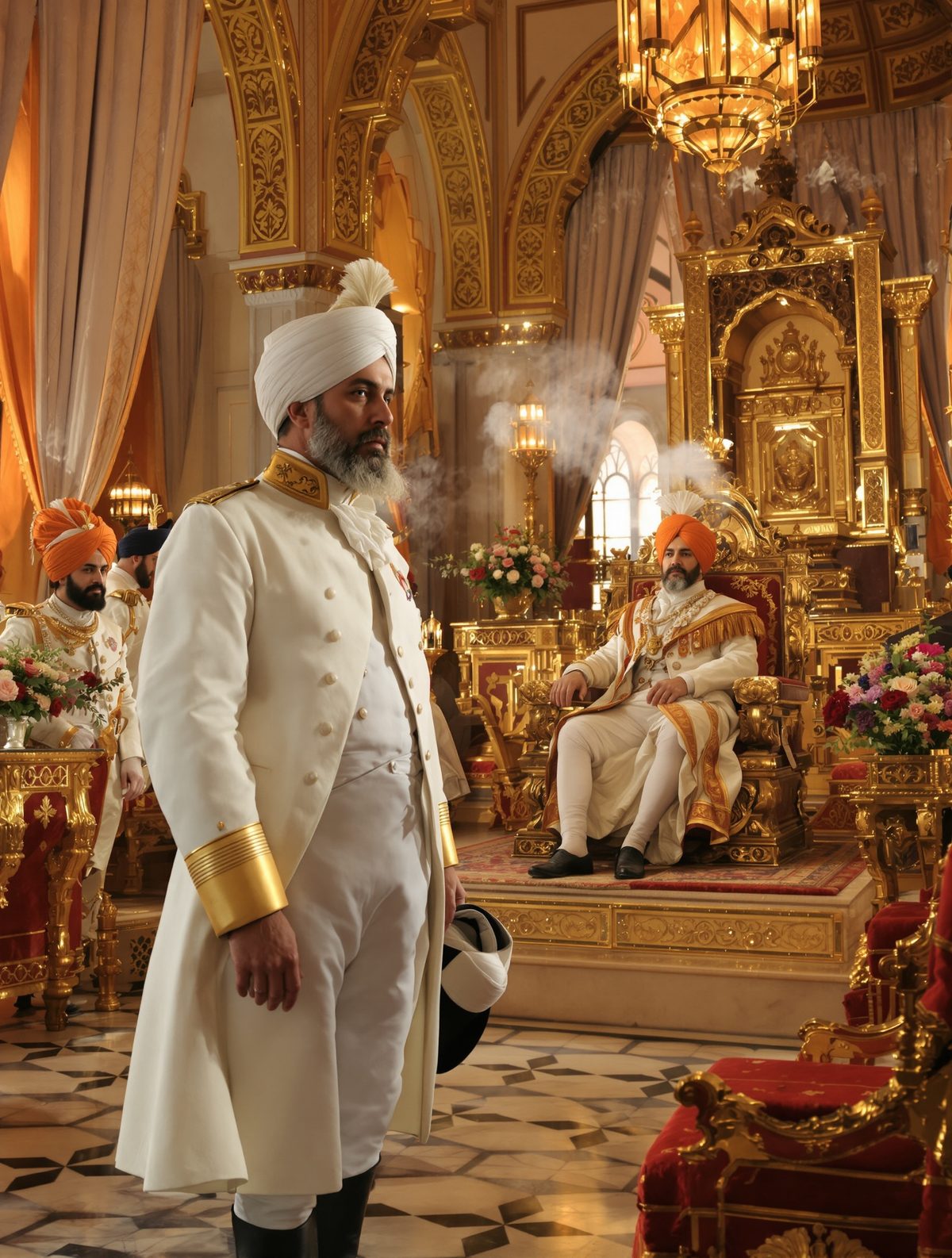
Ranjit Singh, a master tactician and renowned leader, commanded the most disciplined and sophisticated military force native to the subcontinent. His capital, Lahore, was the center of his strength—rich with culture, golden rooftops, and a mosaic court that rivaled any European palace for its opulence and might.
A Singular Bold Approach: Enter Alexander Burnes
Alexander Burnes, a seasoned Scottish diplomat and explorer, was dispatched to Lahore by the Governor-General of India, Lord Auckland. His mission was as perilous as it was crucial: to secure an alliance with the Sikh ruler, or at the very least, ensure neutrality against the Russian advances. Armed with little more than diplomatic dexterity and audacious confidence, Burnes traversed through the dusty paths with only a small entourage, leaving behind the safety and support of the British strongholds.
His entry into the court did not go unnoticed. Lahore was alive with murmurs of his arrival, a spectacle of curiosity and suspicion. The court shone with golden light, capturing the essence of India’s majestic past and its vibrant presence.
The Lion and The Envoy: A Courtroom Drama
The courtroom of Maharaja Ranjit Singh was a living tapestry: a blend of Persian rugs, mirrored walls, and the scent of exotic spices that hung in the air like a soft invincibility. In the center sat Singh himself, an imposing figure, blind in one eye, yet possessing a vision that traversed the ordinary realm.
Burnes advanced into this vibrant milieu under the scrutinizing gaze of Singh’s courtiers. What transpired was an exchange that would echo through the corridors of history. Singh, shrewd and curious about foreign machinations, listened to Burnes's pleas as the latter spun tales of British friendship and mutual prosperity amidst the rivalry of European giants.
It was subtle diplomacy, but Burnes's eloquence shone as he spoke against the backdrop of autocratic gold and purple. His words were more than mere tokens; they were carefully crafted propositions, seeking to inspire trust in a man well-versed in the art of warfare and governance.
A Calculated Gamble: The Treaty of 1838
History is a tapestry of choices; some threads are pulled with meticulous intent, others by a leap of faith. Burnes's mission was concluded with the signing of the Treaty of 1838. Through deft diplomacy, the British secured an agreement to stave off Russian ambitions, fostering a facade of tranquility while ensuring the safety of trade routes and the stability of regions vital to British interests.
This diplomatic success was as much about timing as it was about wit. Ranjit Singh, acutely aware of his position, sought to play the empires against each other to maintain the sovereignty of his own realm. Though fraught with complexities, the treaty forged a temporary stalemate—a strategic pause in *The Great Game* that benefited both entities for a time.
Aftermath and Modern Reflections: Legacies Left Untold
What Burnes accomplished within those walls did more than just chart new courses; it provided a window into the intricate weaving of empires and the diplomatic nuances that are often overshadowed by battles and conquests. The diplomacy in Lahore set a precedent for future engagements in an era where trust was a currency more volatile than gold.
Ranjit Singh passed away a year later in 1839, leaving behind a legacy that held Punjab as a bastion of strength until it eventually succumbed to British dominion in 1849. As for Burnes, his journey continued, though tragically cut short during an uprising in Afghanistan in 1841.
Today, this story resonates with the delicate balance of power politics and soft diplomacy still prevalent in global strategies. It serves as a reminder that often, history's grand narratives turn not on the might of many, but on the calculated choices of the few. In an age where global connections continue to deepen, the echoes of that lone envoy’s footsteps in the sun-stricken streets of Lahore push us to consider how individual actions can shape the course of entire nations.