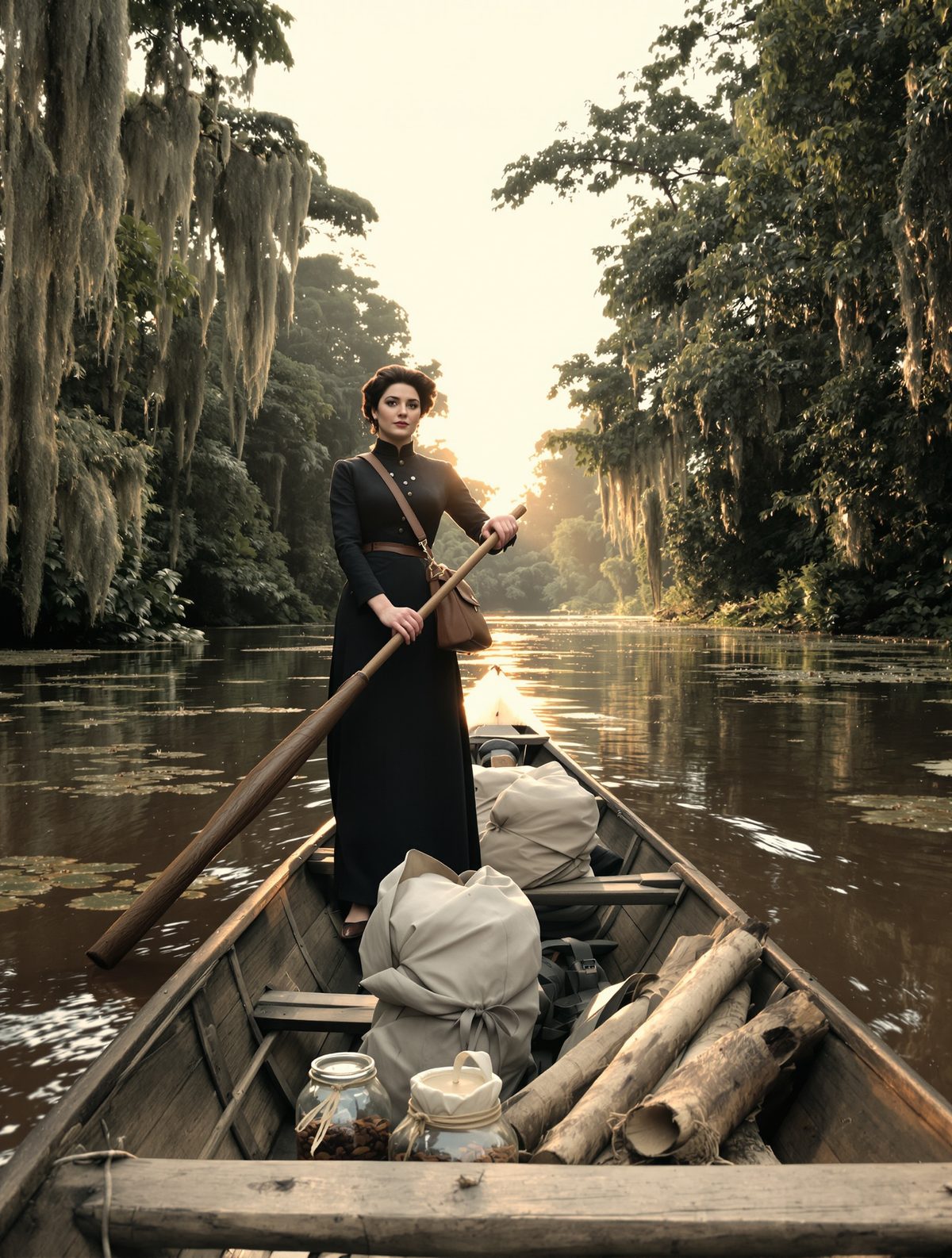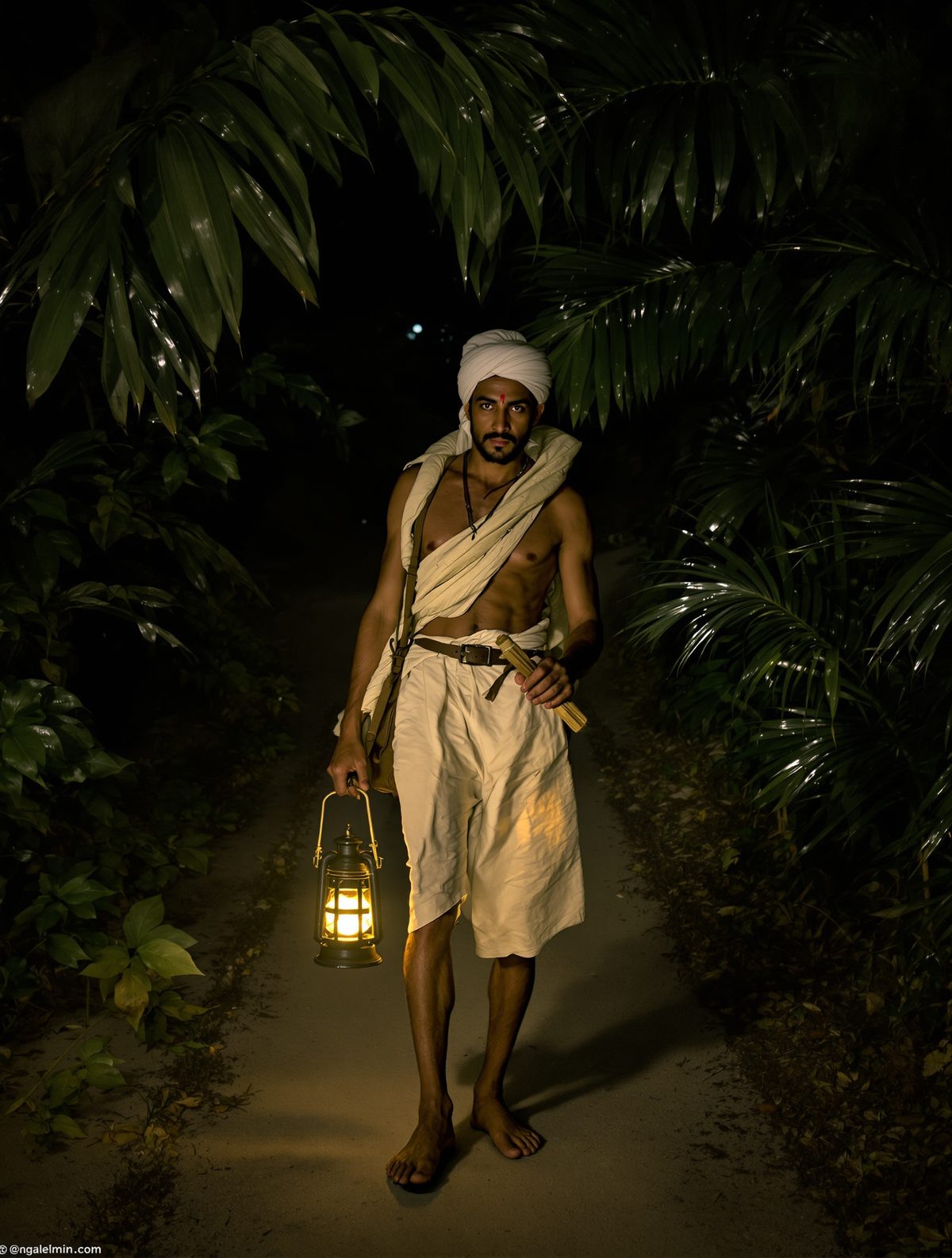
In the golden dawn of the Victorian era, beneath the towering palms of India, a melodious tune resonated through the jungle — a Western concerto finding its unlikely stage. The performance was not held in an opulent ballroom but rather was resplendently haunting against the verdant canopy of the subcontinent's heart. This was no ordinary music journey; it belonged to Emily Eden, sister to the Governor-General of India, Lord Auckland. As she briskly traversed the Indian landscape during the grand tour of 1838, a vast entourage accompanied her, poised to carry not only her but also her resolute devotion to British civilization encapsulated in an unlikely companion — her grand piano.
The Unlikely Journey Begins
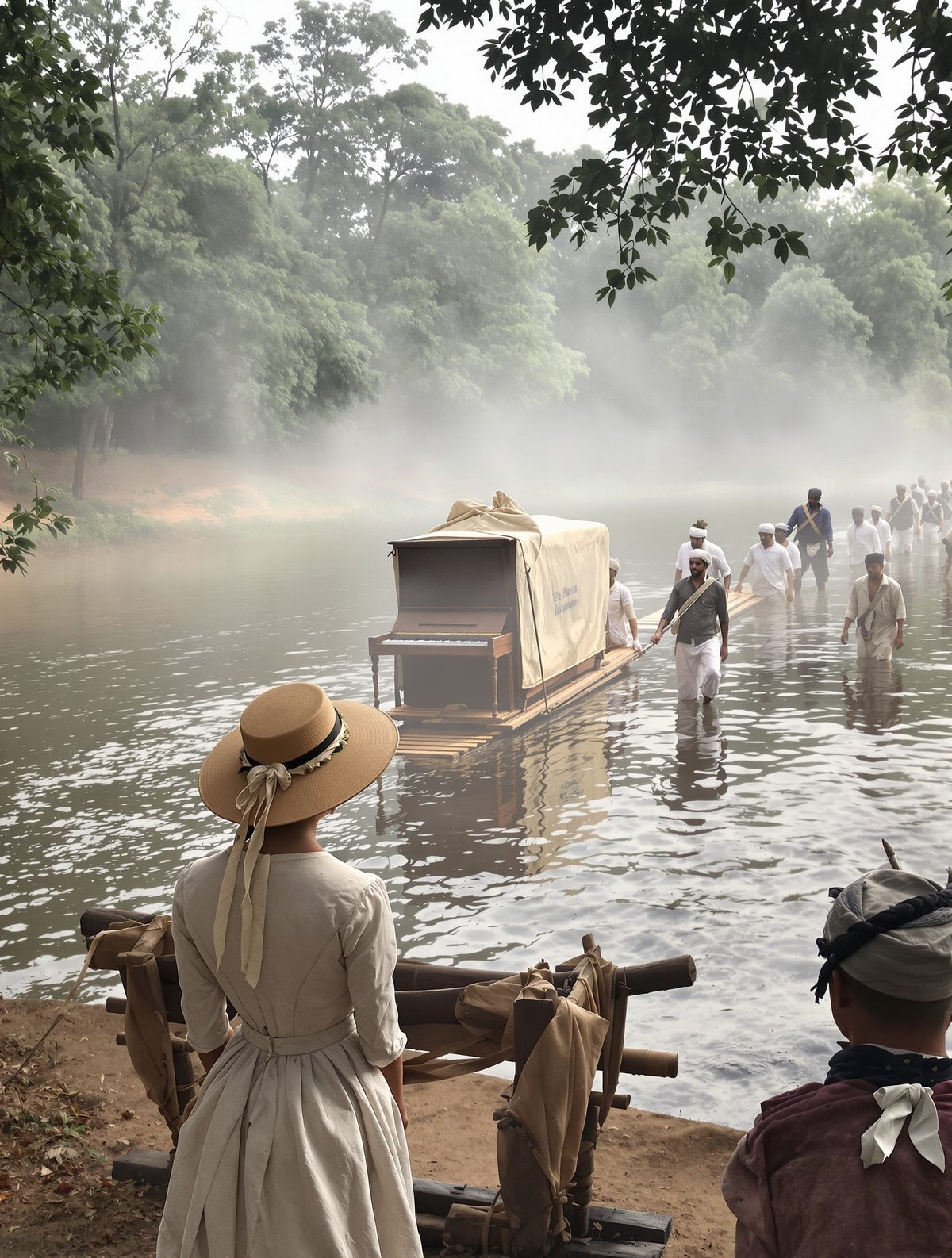
The fragile equilibrium of the English drawing room seemed to defy the unruly expanse of India. Yet, defy it Emily Eden did, with sheer daring and a touch of Victorian irony. Her expedition commenced from Calcutta in January 1838, a journey that many might have heralded for grandeur and political significance. For Emily, however, it was driven by a deeply personal mission — to cultivate the cultural affections of her homeland in alien soil. The imposing carriage of her piano, fastidiously borne aloft by the sinews of 300 Indian porters, set a theatre of the absurd against the backdrop of British imperialist endeavors.
Emily's tour was not merely a diplomatic soiree but a deep-dive into what she called the "India of curiosities." Her letters paint vivid portraits of scenes lost to time — the piano crossing jungle trails, its polished wood gleaming under the dappled sunlight. She captured the moment when harpsichord keys ventured bravely into territories they had never been intended for, scaling peaks and crossing swift rivers with quaint resolve. The tale of this unlikely encounter, spirited by her writings, offers us a colorful lens into the landscapes and the impulse of the era to transform foreign terrains into familiar domains.
The Logistics of Luxury
The logistics of Emily’s journey were as staggering as the empire itself. To transport a piano across undulating terrains, across rivers whose names danced on the tongues of the Ganges and the Indus, was no small endeavor. The instrument was packaged with the utmost precision, secured in wooden crates designed to withstand jolts and spills. Each leap from one geographic point to another embedded in stories of cultural exchange and stark dissonance.
Victorian campsite scenes along riverbanks turned into impromptu concertos, with a retinue of Indian workers orchestrating this logistical feat. Witness accounts describe porters and their peculiar hierarchy — teams that ensured the uplifted treasure remained perfectly balanced. The piano's dimensions, more pertinent in grand halls than jungle thickets, became a symbol of British poise yet belied the true hardship this adventure represented. The careful organization and execution hint at the inherent contradiction between the civilized airs the piano symbolized and the raw reality of the world it traversed.
Voices of the Journey
What could compel such an improbable venture? Here lay the rich tapestry of personalities, where voices resonated across class and creed. Emily Eden herself proved a formidable chronicler. Her letters to home, marked with wit and warmth, bring the vigor of her travels to life. In a missive penned as she traversed India, she on one occasion confessed being enchanted by the rhythmic syncopation of her porters. In these voices, she found an unexpected symphony, separate yet strangely harmonic with her stately piano.
Among her entourage were some peculiar figures — Colonel James Younghusband, an aide-de-camp with an affinity for Indian culture, and Sophia Eden, Emily’s niece, whose perspectives add layers to the narrative. Even the servants, largely from humble backgrounds, conveyed stories of quiet resilience, each with their whispered histories that revealed the intricate dance of power and dependency animating the British Raj.
The Impact of a Moving Concert
Emily Eden’s breathless pursuit of culture took her through not only the physical vastness of India but the spiritual breadth of its peoples. This tour unfolded not merely as a trip but as an orchestrated exchange. In one encounter, as she played a tender piece amidst the local tribes in the Himalayan foothills, the music, though novel, was met with curious admiration, infusing a moment of shared humanity.
In another recollection, British officers, native royals, and the rugged populace mingled outdoors, drawn by the strange alchemy of sound that fabricated connections across boundaries. This journey exposed interactions beyond the political, offering texture to the often monochromatic view of the imperial mission. Her piano, miraculously surviving the elements, served not only as a cultural bulwark but as a lyrical tapestry weaving different worlds together.
Legacy: A Past Echoing into Present
Why does this tale of a piano trucking across India matter today? The answer lies in its embodiment of yearning and contrast. Emily Eden’s moving concert — symbolic of the British imperial pursuit — encapsulates a peculiar impulse to plant semblances of homelands in foreign soil, manifesting both a quest for resonance and the desire to dominate. Yet, beyond this, her journey persists as a poignant reminder of resilience and curiosity, urging us to consider cultural dialogue not as a relic of power but as a profound exchange.
In exploring the improbable intersections of history, wherein music strides over mountains and pianos become relics of an empire's curious heart, we confront a legacy echoing into our present. It serves as a tender reminder that behind the grandiose era of empires lies a fragile, human symphony — precariously balanced between assertion and understanding.