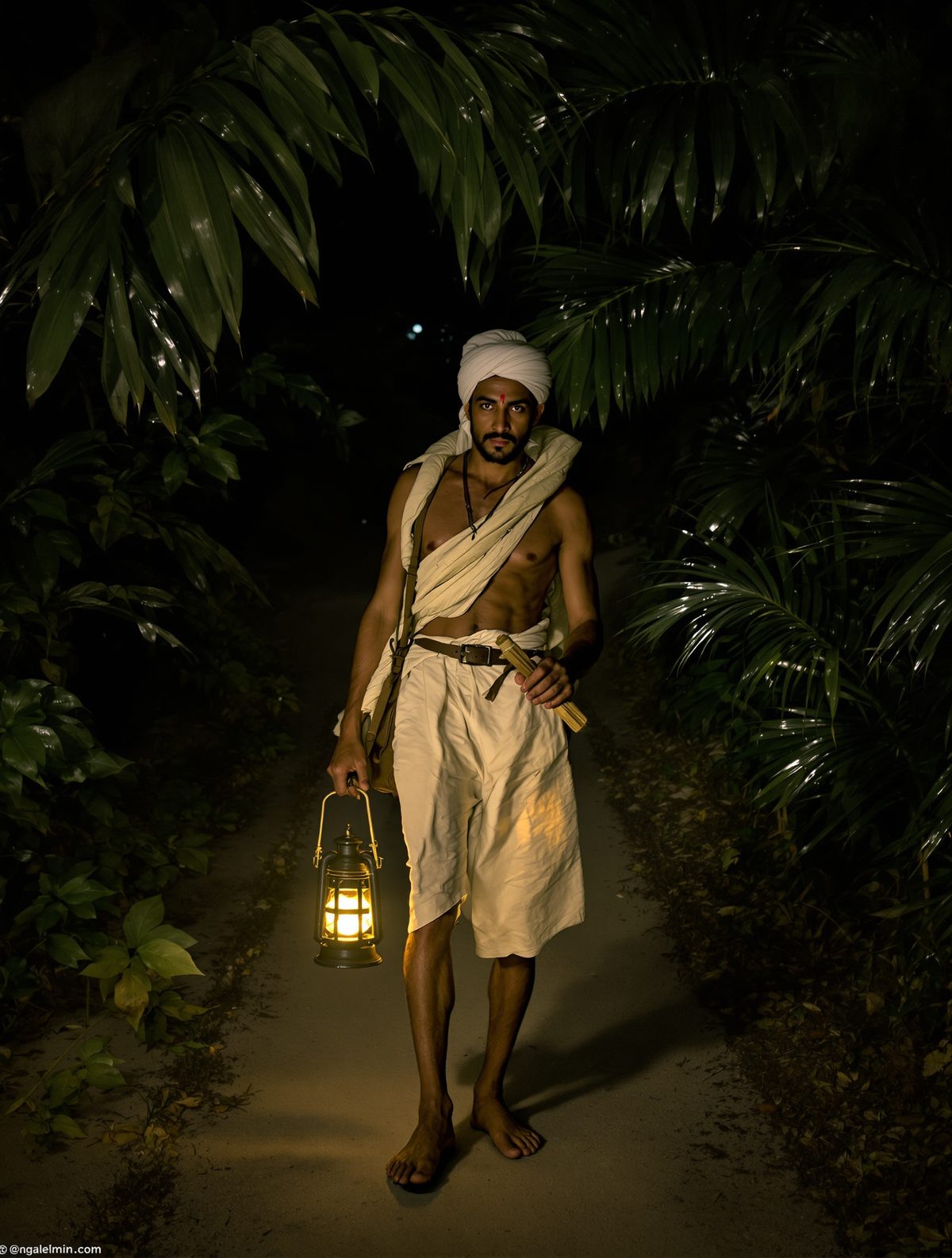
The shadows of the Indian jungle were alive with whispers. As the moonlight filtered through the canopy, a solitary figure emerged, barefoot and determined. This was not a soldier, nor an adventurer, but a dak runner — the unsung hero of the British Empire’s communication network. With a satchel slung across his shoulder, brimming with letters and dispatches critical to the functioning of the colonial machinery, he stepped into the darkness, aware that tigers, bandits, and the elements lay in wait.
Carrying the Empire on Bare Feet
Before the telegraph carved its web across the Indian subcontinent, the British Empire relied on an intricate network of messengers known as dak runners. These individuals were more than mere couriers; they were the vital conduits of information, connecting the sprawling empire with remarkable efficiency. During the Victorian era, the challenge was not just the distance but the path that lay along treacherous trails, often through dense forests teeming with wildlife.
They traveled through what was colloquially known as "tiger country," a term that evokes the dangers of their journey. The damp, humid air carried the scent of wild flora and lurking predators. With unwavering resilience, the dak runners navigated these treacherous paths — their only barriers were natural dangers and the perennial threat of highwaymen. Their average pace was seven to eight miles per hour, a remarkable feat considering the terrain they traversed daily.
Night Runners and Jungle Shadows
The dak runners moved primarily at night, capitalizing on the coolness and cover of darkness. This nocturnal schedule was no trivial matter; it required acute senses and familiarity with the path forged over endless journeys. A misstep could lead to a tragic end, as tales of runners vanishing without a trace were not uncommon.
The thick jungles of Bihar, for instance, were renowned for their thriving feline population. Historical accounts like those from hunters such as Jim Corbett recount the dangers that prowled these areas. Several accounts describe how the runners ingeniously tied bells to their ankles, a simple yet effective deterrent against inquisitive tigers. Unfortunately, these ingenious methods were not always effective against the cunning of human bandits.
Extraordinary People, Ordinary Lives
The men who took up this dangerous responsibility came from humble backgrounds, often from local tribes accustomed to the terrain and rigors of the job. Their knowledge of the land was unparalleled; they carried the wisdom of each pathway and flanked their marching routes with landmarks discernible only to them.
Despite the perilous nature of their work, compensation was meager. A dak runner could earn approximately 10 to 15 rupees per month in the late 1800s — a modest sum even by contemporary standards. Yet, it was a vital job that brought pride and a steady, though meager, income to families. It is a testament to their fortitude that even with little financial reward, they remained steadfast to their duty.
The Stories They Carried
The contents of their mailbags were as varied as the distances they covered. From personal letters that connected loved ones across vast distances to critical military dispatches that could alter the fate of entire regiments, the dak runners were carriers of stories as much as they were of information.
One poignant story of a dak runner relates to the Sepoy Mutiny of 1857. Amidst the chaos, a series of crucial messages regarding troop movements were delivered through the determination of these runners. Their individual contributions went largely unseen, yet they played an essential role in shaping critical events in colonial history.
An Echo of Footsteps, An Enduring Legacy
With the advent of the telegraph and the expansion of railroads in India during the late 19th and early 20th centuries, the role of dak runners gradually diminished. However, the legacy of these remarkable individuals should not be simply relegated to footnotes in history.
In today’s digital age, where communication spans the globe in milliseconds, remembering the dak runners highlights the human aspect of information transfer. They remind us that courage and commitment were often its most vital components. In acknowledging their overlooked service, we recognize the profound impact that ordinary individuals can have on the vast machinery of an empire.
The next time we send a message with the touch of a button or glide along a well-paved road, let us take a moment to remember the barefoot trailblazers who risked their lives to connect a fragmented world. Their footsteps may be lost to time, but their stories continue to echo through the corridors of history, inviting us to appreciate the bravery of unnamed heroes who built the pathways we walk today.