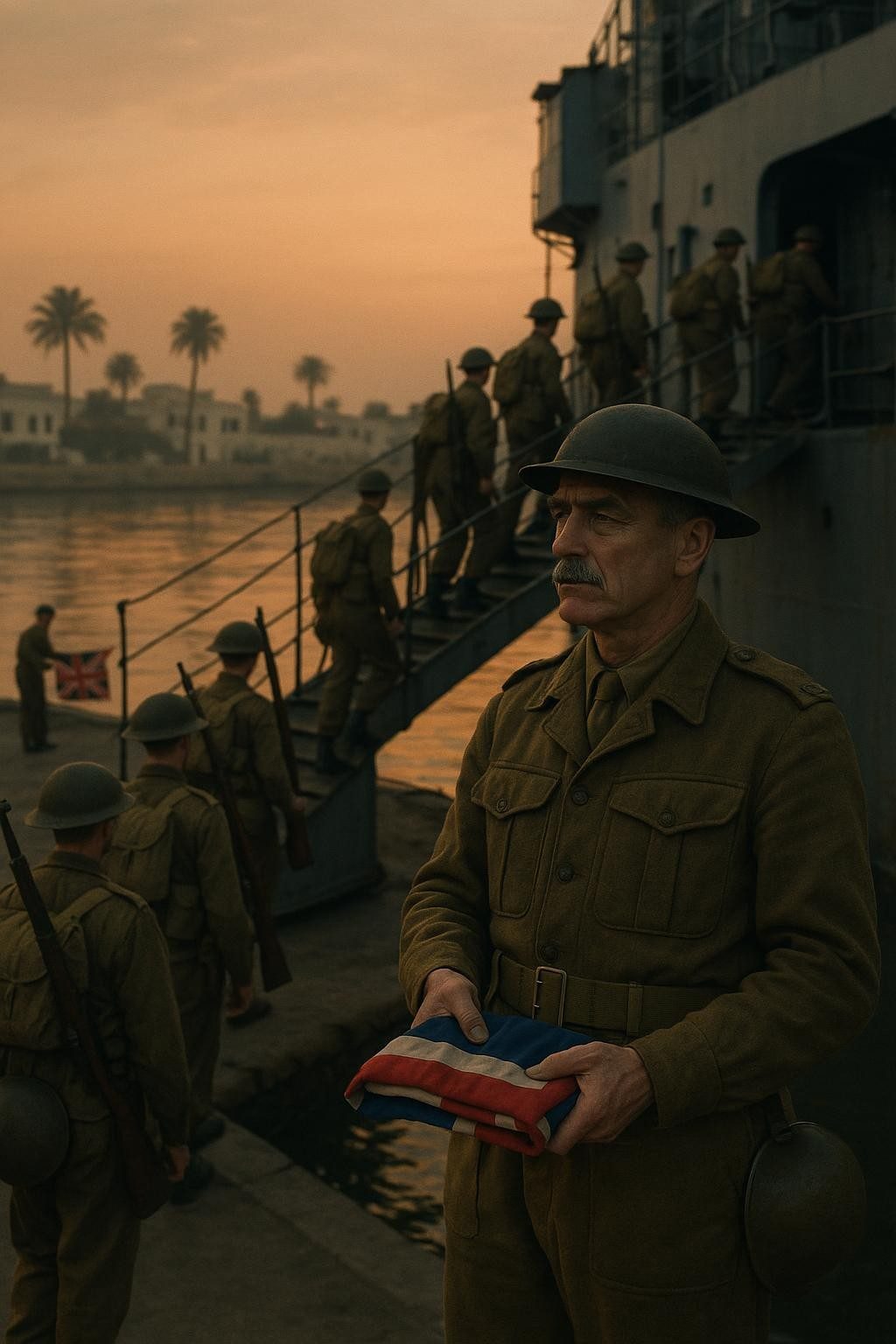
On a crisp November day in 1956, the desert skies of Port Said hummed with tension as the last of Britain's once-vaunted military force prepared to march out of the Suez Canal Zone. It was more than just a withdrawal; it was the swan song of a mighty empire. The British had long prided themselves on a global dominance that controlled nearly a quarter of the world's landmass, yet with a single telephone call from Washington, the curtain fell on this era. The Suez Crisis had lasted only eleven days, but its echoes of humiliation reverberated for decades, marking the definitive end of British imperial might.
The Jewel of Empire: Britain's Lifeline to the East
For over a century, the Suez Canal was the pulsating artery of the British Empire, slashing through 120 miles of Egypt to connect the Mediterranean with the Red Sea. When the canal officially opened in 1869, it provided Britain with a strategic shortcut to India, the crown jewel of its imperial crown. British investment poured into the canal, and the country eventually secured a controlling stake in 1875. For decades, British soldiers and engineers patrolled its banks, while steamships laden with precious goods from the East sailed through its waters.
The canal was more than just a trade route; it was a lifeline, both economically and symbolically. Its significance was underscored in 1936 when Britain and Egypt signed a treaty allowing British military presence in the canal zone. This agreement not only secured an important colonial asset but also projected British power in the Middle East and beyond.
A Tense Prelude: Nationalization and Military Maneuvers
The Suez Crisis, often referred to in its fraught atmosphere, did not begin with guns but with grand proclamations. On July 26, 1956, Gamal Abdel Nasser, the charismatic President of Egypt, announced the nationalization of the Suez Canal. Crowds in Cairo erupted in jubilation, unaware that this decree would soon bring the world to the precipice of war. The United States and the Soviet Union were engaged in Cold War tensions, and Britain, along with France and Israel, started plotting a military response to protect their interests.
On October 29, under the cover of darkness, Israeli forces invaded the Sinai Peninsula, quickly followed by British and French troops landing in Port Said. British military planners had envisioned a rapid victory but instead faced international outrage. The audacity of Britain and France, cloaked in the guise of a "police action," was too transparent for the world to ignore. President Dwight D. Eisenhower, vehemently opposed to colonialism and fearing Soviet intervention, pressured Britain to withdraw.
The Telephone Call That Changed History
November 6, 1956 – a date forever etched into the annals of British history. Harold Macmillan, then Chancellor of the Exchequer, took a fateful call from U.S. Secretary of the Treasury, George M. Humphrey. The message was blunt: America would not support the British pound unless Britain withdrew from Suez. Faced with economic disaster, Prime Minister Anthony Eden had no choice but to comply. In an anticlimactic end to a grandiose maneuver, Britain capitulated, marking a seismic shift in global geopolitics.
While British troops had been victors on the ground, diplomatically they emerged defeated. Only days before, British forces had been bombing Egyptian airfields; now they were dismantling their encampments with quiet resignation. They left behind a canal controlled by those they had sought to conquer, a symbol of Britain's diminishing role on the world stage.
Humiliation and Reflection: The Empire's Quiet Exit
The first light of dawn on November 24, 1956, saw the last British soldier salute the Union Jack as it was lowered from its pole. There was no band playing "Rule, Britannia!" No imperial fanfare. Instead, the retreat from the Suez Canal zone happened in a remarkably understated, almost bureaucratic manner. Spotless Land Rovers and military trucks rolled back through the desert sands, carrying the proud remnants of an empire into the pages of history.
For the British public, the crisis had initially sparked a blaze of imperial nostalgia, but by its end, the mood had soured to one of humiliation. Edward Heath, who would later become Prime Minister, succinctly encapsulated the sentiment: “The Suez adventure was a last, flamboyant act of imperialism—an illusion born of jalousie.” It was, perhaps, the moment Britain collectively awoke to the realities of the post-war order.
A World Remade: Lessons and Legacies
The Suez Crisis remains a critical juncture in world history, illustrating the irreversibility of decolonization. It demonstrates how rapidly traditional empires fell victim to the ascendancy of the two new superpowers, the United States and the Soviet Union. The telephone call from Washington was not just a military intervention but a new announcement of global hierarchy.
Today, the echoes of Suez resonate in British foreign policy and public sentiment. It serves as a reminder of overreach and the extent to which national pride can become entangled with strategic misjudgment. More than that, it is a case study in the nuanced ebb and flow of international influence—a stark acknowledgment that even the mightiest can falter when the winds of history change direction.
The Suez Crisis did not merely mark the end of an era; it was the beginning of a new global order. As Britain's last soldiers departed the burning shores of the Canal, they carried with them the end of an empire inscribed on the pages of a fading sunset, forever altering the path of nations.