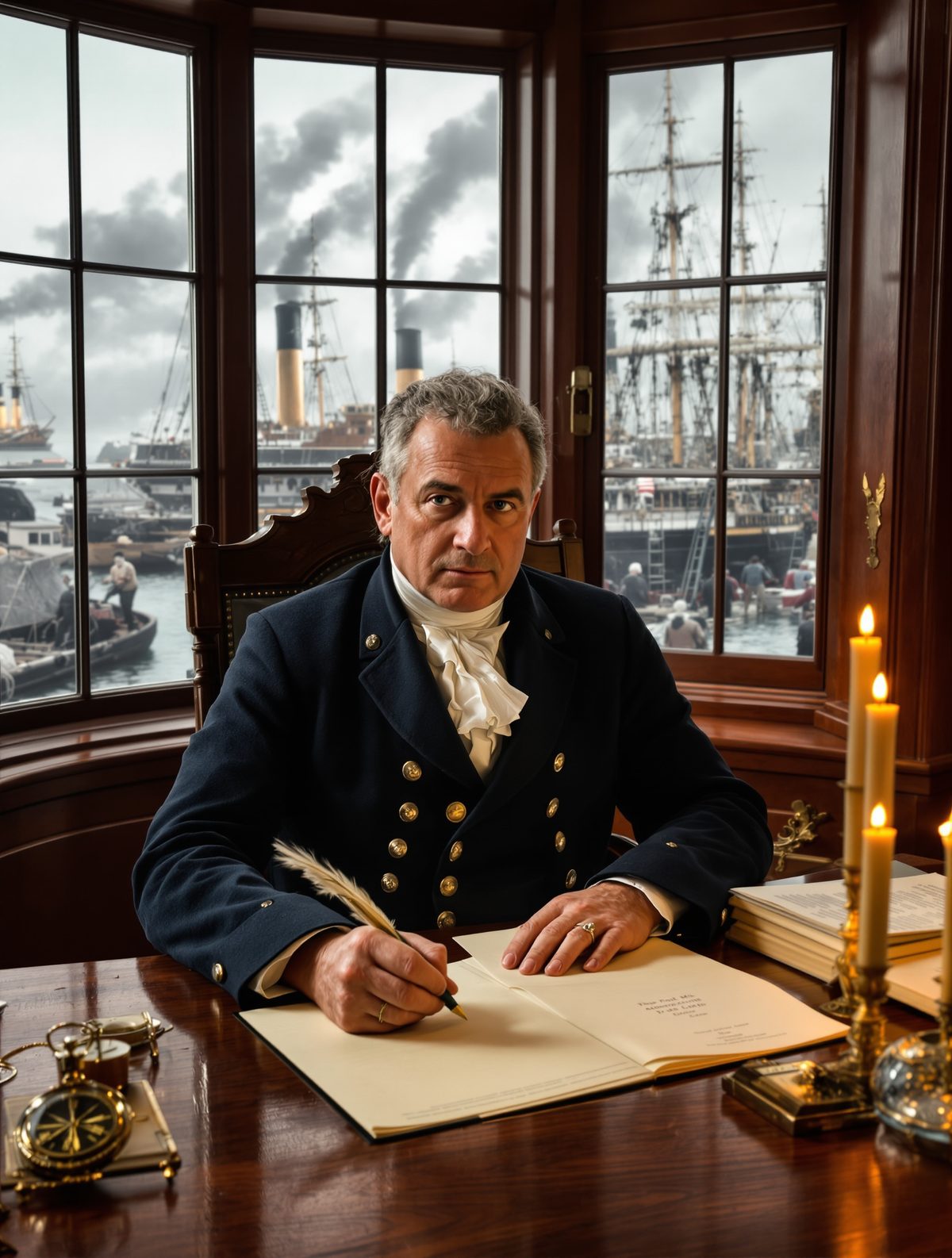
The port of Halifax lay cloaked in the mist of a typical Nova Scotian morning, the salty tang of the Atlantic in the air mingling with the sooty breath of emerging steam engines. The sun strained through grey clouds, painting an impressionist picture over the bustling dockside. Here, amidst the clamor of trade, voices haggling, and the clanking of metal on wood, one man's vision was poised to alter the world's oceans forever. Clutched tightly in his determined hand, Samuel Cunard possessed a letter from the British Admiralty—a simple piece of paper, yet it promised to kindle a revolution. This Nova Scotian merchant, fueled by the steam of ambition, was about to engineer a transatlantic trade transformation.
The Dawn of Steam: Converting Dreams to Reality
In 1839, the mores of the sea voyage were still tethered to sails and the whims of the wind, the Atlantic a vast expanse crossed at its mercy. Yet Samuel Cunard, a merchant with neither shipyard nor fleet, stood ready to challenge this age-old caprice. The letter he held offered him a mail contract of historic proportions—regular mail carriage across the Atlantic by steamship. It was an audacious undertaking—no one had succeeded in mapping the Atlantic's turbulent waters into a schedule governed not by tide nor squall, but by the steadfast reliability of steam.
Cunard's optimism emanated from the shrill whistles of steam engines that heralded a new era. He resolved to construct four cutting-edge steamships within a span of a single year. The impossibility of the task was but a shadow to his industrial fervor. He knew that steam held the power to rewrite maritime law, and he would lay its cornerstone. The science of steam propulsion came to life in shipyards challenged to fabricate vessels robust enough to challenge the ocean, yet agile enough to maintain punctuality.
The Columbia, Britannia, Acadia, and Caledonia—these names would soon become as familiar as the port cities they connected. Each was a marvel of engineering, a fusion of iron and art driving through waves that had humbled explorers for generations. For Cunard, the schedule was a promise written as steadfastly as the mail contracts themselves. Inaugural voyages set sail from British harbors, their black plumes etching a new path in maritime history. It was a testament to human ingenuity and determination that these steamers could now promise time itself; what once could take weeks, Cunard reduced to a matter of days.
The Echoes of Iron: Economic Tides Shift
The ripple effects of these consistent Atlantic crossings were boundless. The economies of Britain and her North American colonies experienced an unprecedented mutation. With reliable steam service, Halifax emerged as an important entryway into the continent, drawing attention to itself as a bustling port city and offering new opportunities for commerce and trade. Samuel Cunard had singularly catapulted the region into the limelight on the international stage.
As businesses began to count on the speedy mail—and along with it, news—from abroad, banking systems evolved, harnessing the communications revolution. Investors, who once wary awaited long-haul results with bated breath, could now pivot decisions monthly, almost weekly. Profit margins were recalculated overnight as the oceans shrunk in the face of steam-powered locomotion. More than mere goods or mail, Cunard's ships ferried anticipation and connected destinies across continents.
Yet, like the sturdiest vessels must still navigate rocky shoals, Cunard faced tremendous challenges; competition was inevitable. The expansion of steam voyages birthed a new rivalry at sea. Other entrepreneurs took note of the rich rewards, and the oceans became a chessboard for shipping lines seasoned by ambition. However, Cunard had advantages beyond the reliability of steam: he had the British government’s trust. For empire and commerce rode hand in hand, each ship was part of an interconnected network that sluiced resources and messages as lifeblood for its colonial veins.
An Inexorable Current: The Legacy of Cunard's Vision
Though overlooked today in many history textbooks, the ramifications of Samuel Cunard's venture resonate through time, like the unending tide against a rocky shore. His success lent wings to globalization in its infancy, laying the groundwork for a global exchange of far more than mere whispers and parcels. Cunard catalyzed a reciprocal expansion, goods and ideas flowing in twin streams as cultures and economies intermeshed with newfound speed.
Cunard's journey exemplifies a profound undercurrent in history: the power of audacity and innovation to redraw boundaries, expanding not just markets, but minds—a steam-powered epoch heralded by an iron fleet that defied nature's fiercest elements. It serves as a reminder of the propulsion of human endeavor, signaling an age where promise could navigate by propellers and destiny schedule its own timetable.
Today, the world's oceans teem with ships influenced by those pioneering Cunarders, iron hearts beating on a steely Atlantic rhythm. As we cast reflections on the stretch of water transformed by that single letter in 1839, we are reminded not just of commercial triumph, but of human tenacity, of visions that reach beyond horizons, propelling us into future seas uncharted, each wave a testament to those who ventured, undeterred. Samuel Cunard may not have charted these new waters alone, but it is upon his steam that they were realized.