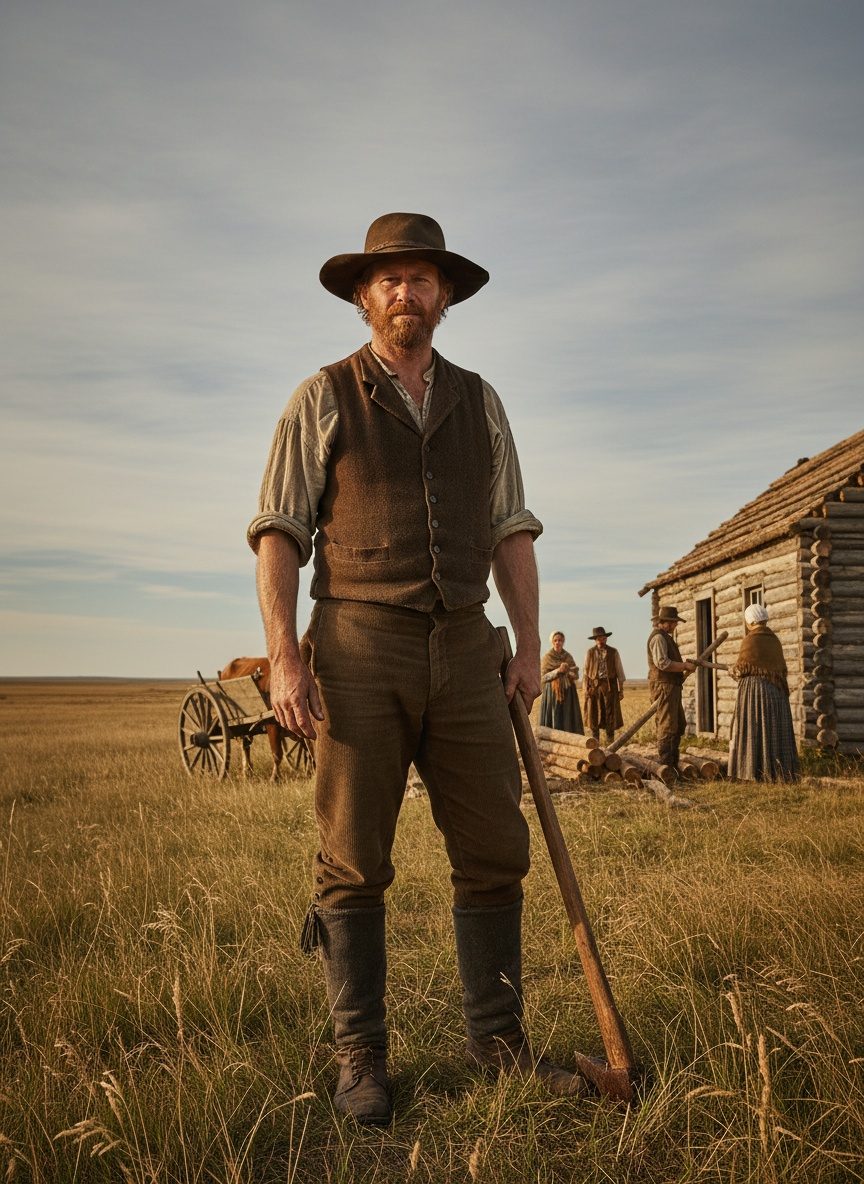
November 16, 1812. A thick, oppressive silence hung over the Red River Valley.
Dreams of a New Beginning
In the early years of the 19th century, the Scottish Highlands were a place of hardship and heartache. The crofters, once the backbone of their communities, found themselves at odds with their landlords, who were eager to transform the fertile lands into vast sheep pastures. It was a time of clearances, when tenants were evicted from their ancestral homes, left with little more than the clothes on their backs and a future shrouded in uncertainty. Amidst this turmoil emerged Thomas Douglas, the Fifth Earl of Selkirk, with a radical plan to transplant the uprooted Highlanders to the distant wilderness of Canada.
The Red River Valley, located in present-day Manitoba, was remote even by the standards of the vast North American continent. Known to some as the ultimate frontier, it was a land of sprawling flat plains, icy winds, and potential. But to the settlers, accustomed to the rugged terrain of Scotland, it was a bewildering expanse. Lord Selkirk envisioned this unspoiled wilderness as a new home for his dispossessed countrymen, who arrived after a grueling sea voyage across the Atlantic, their spirits buoyed by the promise of land to cultivate and a community to call their own.
The Struggle Against Nature
The promise of a new life did not guarantee ease. Upon arrival, the settlers confronted the raw power of nature. The valley's swamps, interspersed with pockets of arable land, presented a daunting challenge. Hardy as they were, the Scots had never known winters so biting or desolation so profound. The landscape was as unforgiving as it was beautiful; yet, it was this very adversity that necessitated innovation.
With each tree felled and each hut constructed, the settlers eked out an existence, driven by necessity and grim determination. Their first few winters were marked by devastating cold and dwindling rations. Yet within the folds of adversity, a resilient community emerged. The Scots drew upon their traditional skills—fishing, foraging, weaving—and integrated them with the indigenous knowledge of the local Cree and Métis peoples, forming a bond of mutual survival. It was these unexpected alliances that transformed a European endeavor into a uniquely Canadian experiment.
Conflict and Resolution
The reality of colonization was never simple. The arrival of the Scots inadvertently stirred tensions with the predominant fur traders of the Hudson's Bay Company and the North West Company. This prime location, so desired by Selkirk, was also coveted for lucrative trade routes established by these mercantile giants. As cultural clashes and competition for resources intensified, the Red River Settlement became a microcosm of the vast geopolitical struggles rippling across the North American continent.
Despite these conflicts, Selkirk and his settlers were navigating unseen pathways. Their interactions fostered a rich cultural tapestry. The shared hardships and cooperation sowed the seeds of a society where survival was valued above supremacy. While skirmishes erupted—sometimes tragically—the enduring stories from this period reveal a capacity for resilience and negotiation, laying the faint outlines of a future Canadian ethos characterized by pluralism and coexistence.
The Unexpected Legacy
As years turned to decades, what began as a seemingly doomed human endeavor proved to be fertile ground for the roots of Canada’s diverse cultural heritage. The settlement's legacy was greater than Selkirk or anyone could have imagined. By transforming these inhospitable swamps into productive farmland, the settlers demonstrated that human tenacity can reimagine desolation as opportunity. In doing so, they left a legacy that transcended their immediate needs and laid the groundwork for multiculturalism in modern-day Canada.
The story of Lord Selkirk's settlers is a poignant chapter in the grand tapestry of empire and exploration—one that offers a glimpse into the heart of human resilience. It beckons us to consider the crucible of change and how, in the face of insurmountable odds, a disparate community of dispossessed Scotsmen laid claim not only to land but to a sense of possibility. In the quiet expanses of the Red River Valley, as settlers tilled the soil of dreams, they redefined both landscape and legacy, inspiring us with the simple yet profound truth that new beginnings are often rooted in the most unlikely of places.