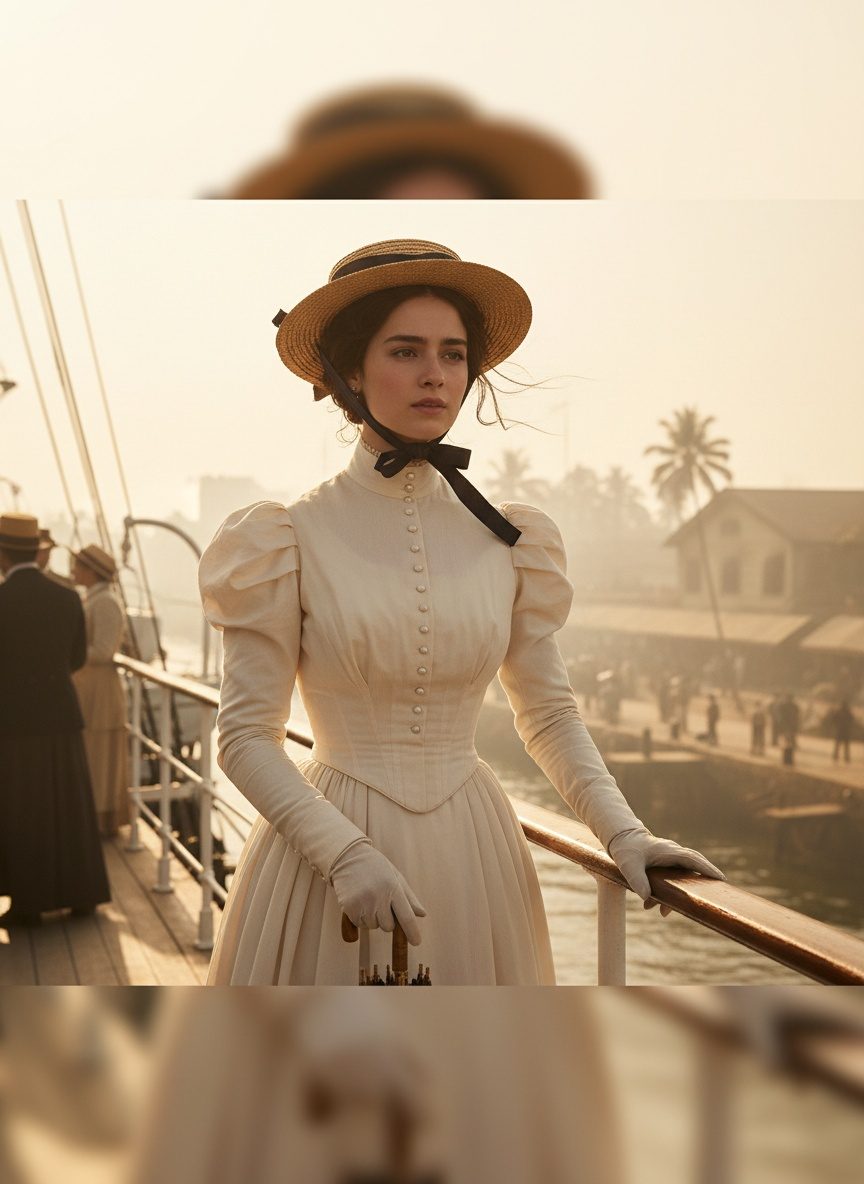
The piercing blue of the Indian Ocean lay unbroken under the vast, cloudless sky. Aboard the steamship, a symphony of creaking wood and distant gulls played counterpoint to the rhythmic slap of waves against the hull. The women clustered at the railing, peering through the salty mist for signs of their future – a sprawling city that promised new beginnings under the fiery Indian sun. It was Bombay, 1890, and for the young women of the "Fishing Fleet," the stakes were as high as the horizon was wide.
Hope Sails from Southampton
Each autumn, Southampton's bustling docks were transformed by a poignant spectacle. Rows of young British women, poised and hopeful, stood on tiptoe to catch a last glimpse of home before boarding the long, steel-bodied steamers destined for the exotic reaches of the British Empire. The air around them buzzed with the salty tang of the sea mixed with the fragrant waft of adventure, as luggage labeled with names and dreams was stowed away. For these women, the journey was not one of leisure, but of necessity and aspiration. Known colloquially as the "Fishing Fleet," these women ventured forth with a singular purpose: to find husbands among the colonial officers and civil servants stationed in India.
The journey itself was daunting. Six weeks across tempestuous seas, often in cramped quarters with little more than a trunk, a letter of introduction, and a heart full of optimism. Family could not accompany them, and there were no guarantees of what lay ahead. These women, most in their late teens to early twenties, sailed alone towards a destiny uncertain, but they did so with a steely resolve that belied their delicate appearances. For them, the historical might and prestige of the British Empire made India not just a distant land, but a land of opportunity.
The Empire's Matrimonial Market
Upon arrival in Bombay, the city unfolded like a vibrant tapestry, its palette rich with the colors and sounds of a bustling colonial port. The heat was thick and enveloping, a warm embrace signaling the start of a new chapter. The city's streets seethed with life, chaos, and the undeniable lure of empire. It was here, amidst this backdrop of imperial grandeur and exotic allure, that the women of the Fishing Fleet found themselves thrust into a social scene unlike any they had known back home.
India, under the Victorian Empire, represented more than just a distant colony. To these women, it was a lively marketplace bridging the personal and the imperial. Social gatherings, tea parties, and balls organized by the British community provided fertile grounds for introductions, set against the colonial backdrop of grand ballrooms and manicured gardens. In this world of rigid hierarchies and societal expectations, the young women navigated the complexities of matchmaking with a determined grace. The stakes were high, as a fortuitous marriage could secure one's place in society and transform a future that might otherwise be bleak with spinsterhood or economic struggle in England.
The Resilient Navigators of Change
Not every tale from the Fishing Fleet ended with matrimony, however. Some women discovered a world beyond the confines of a preordained destiny. Embracing the challenges of their new home, they adapted, thrived, and sometimes carved out unique spaces for themselves that defied traditional roles. The journey to India became a catalyst, offering an education in resilience and self-discovery as rich as any academic pursuit.
These intrepid travelers became woven into the very fabric of colonial life, influencing social customs and cross-cultural dynamics. They brought with them Western ideals of progress and education, contributing to the cultural exchanges that characterized the time. Many learned the local languages, immersed themselves in charitable work, and left indelible marks on their communities, reflecting the subtle yet profound impacts they had in a land thousands of miles from their origins.
A Voyage of Courage and Uncertainty
As steamers docked and set off year after year, the Fishing Fleet voyages continued into the twilight of the Victorian Era, leaving behind an awe-inspiring legacy of courage and audacity. These young women's willingness to traverse oceans in search of agency and new beginnings pushed the boundaries of what was conceivable for women of their time. No newspapers chronicled their journeys, though each woman's story might have filled volumes with tales of adventure, challenge, and fortitude.
Their paths remind us of the invisible networks of determination and ambition that coursed beneath the ostentatious surface of empire. The reality of colonial India was complex, and its harsh landscapes demanded a unique blend of grit and grace from all who dared to tread them. The Fishing Fleet women exemplified this amalgam of resilience and adaptability, often facing an India not as conquerors, but as individuals seeking to forge new lives amidst the cultural crossroads of a vast empire.
In a mosaic of societal expectations and cultural transitions, the story of the Fishing Fleet girls serves not only as a reflection on the gendered dynamics of the Victorian Empire but also as a testament to the enduring spirit of those who dared to dream beyond the shores of familiarity. Today, as bridges between worlds continue to shape history, their voyages echo the universal trials and triumphs of navigating one's own fate in a rapidly changing world. The fishing fleet may have been forgotten by conventional history books, but their legacy remains sewn into the expansive narrative of courage, exploration, and the pursuit of independence.