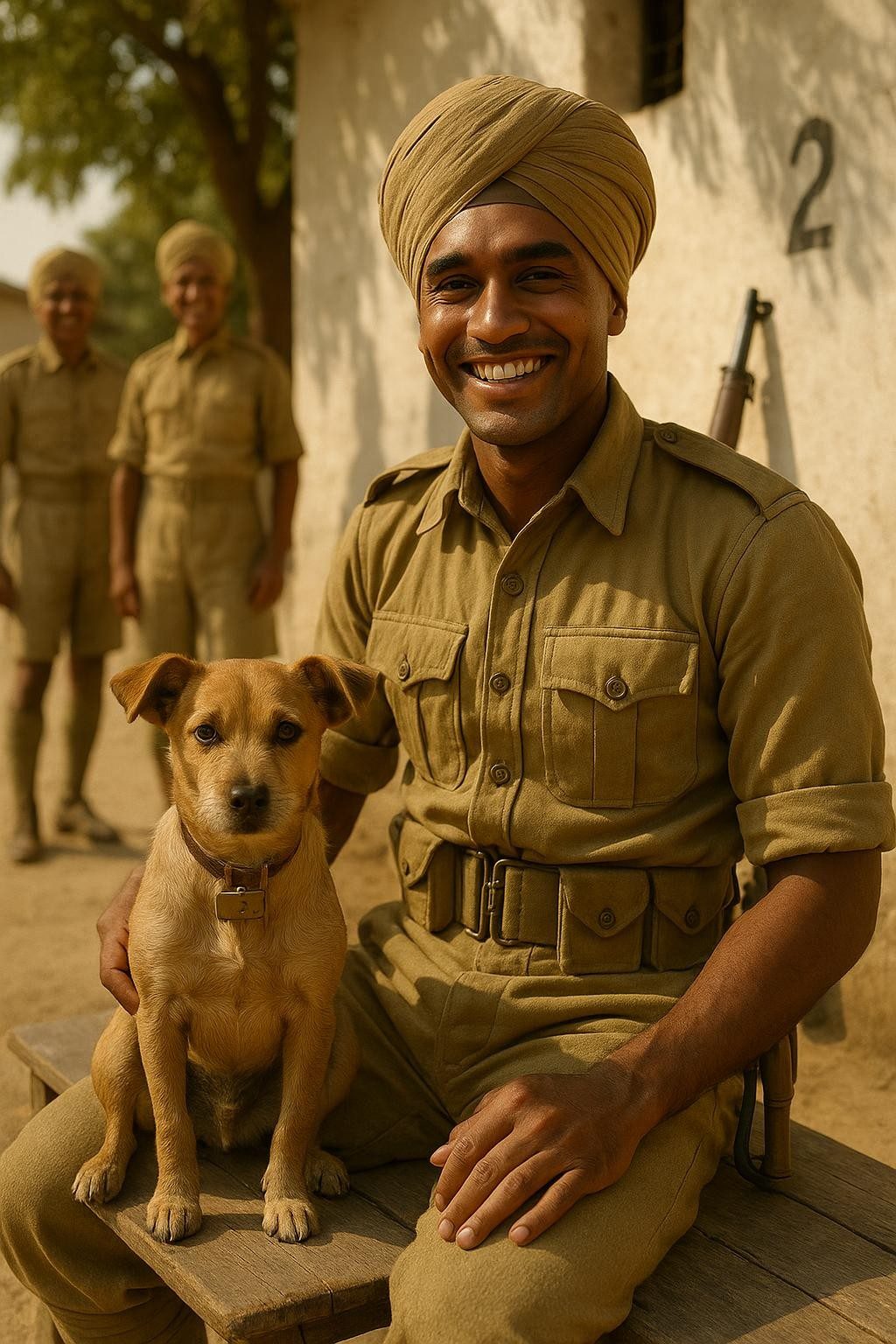
The pages of history rarely mention stray dogs. Yet, in 1940 a mongrel defied anonymity and embedded itself within the ranks of the 2nd Punjab Regiment of the Indian Army.
The Unlikely Recruit on the Road to Rawalpindi
On the dusty roads leading to Rawalpindi—a scene familiar to the soldiers of the Indian Army—emerged a scrappy reminder of home. It was here, amidst the predictable clatter of boots and the swish of regimental colors, that a stray pup decided to join the ranks. Unlike his human counterparts, he was not summoned by the King’s proclamation nor moved by the martial call of the Empire. Instead, this dog was guided by a curious whim—or perhaps a hint of fate.
The vast terrains of the Punjab, with their sweltering days and cool starlit nights, mirrored the teeming uncertainties of a world embroiled in a global conflict. For the soldiers of the 2nd Punjab, days were punctuated by drills and duties, but also by an unspoken homesickness for the familiarity of the lands they longed to protect. Enter the little dog, stoic despite his playful demeanor, striding into this camp of men who, though garbed as warriors, retained tender spots for such unexpected moments of levity.
The regiment, forged by tradition and steadfast duty, took a peculiar detour at the heart. The nameless pup was no longer a stray; he was regimental kin. The men offered him the family he was searching for, and in return, he gifted them companionship in the gloom of impending warfare. They fed him from their meager rations and treated him not as a mere mascot but as a genuine recruit, stitching a miniature collar that bore the regimental number.
Every morning, as reveille sounded, he donned this collar with pride, standing next to riflemen as if anticipating orders. His presence lent a quaint, almost surreal touch to the solemnity of the parade ground. The soldiers whispered that even the sternest officers grudgingly softened at the sight of this earnest parade attendee. Here was a dog who defied orders by merely showing up—proof that camaraderie knows no bounds.
A Stray Turned Symbol: Bearing the Weight of a Regiment's Heart
Over time, the once-aloof pup resolutely earned his place within the regiment’s narrative, becoming an emblem of resilience and enduring spirit. His unyielding loyalty was a constant amid the unpredictable tides of war. As histories collide with imperatives of war, he became an anchor—a living reminder that soldiering was more than the art of battle; it was about loyalty to those by your side, human or otherwise.
Each time the soldiers assembled, standing tall in crisply pressed uniforms, he matched their precision with an informal assertiveness. Stories circulated of how he sat through tedious war briefings, his scruffy head cocked in what seemed like attentive curiosity. Officers, privy to the intricacies of military strategy, harbored a fondness for this nonchalant canine, who somehow demanded—and now rightfully commanded—a ceremonious presence in their midst.
A tale spoke of a night marred by incoming enemy fire, the air thick with chaos and uncertainty. As poise faltered amid the ear-splitting noise, the little dog steadfastly stood his ground, as though holding fort for the very spirit of the regiment. To witnesses, he was a silent sentinel, fearless and steadfast in true Punjab tradition.
Such acts imbued him with a mythical stature. He was their companion when silence fell too heavily in the dead of night and during the arduous trek from Rawalpindi into new theaters of war. For two years, he was an indelible part of the regiment’s identity and a symbol of bravery unconstrained by human reckoning. His antics—innocuous but profound—echoed stories from the region’s folktales, where unlikely heroes emerge from obscurity, shaping legacies they never planned.
The "Regimental Rover" and Our Stories of Belonging
In 1940, beneath a heavy vault of fate and conflict, a dog with no name carved yet another legend into the sandstone walls of history. As the 2nd Punjab Regiment moved across terrains serrated by war, their invulnerable companion traveled alongside them, an ever-present reminder of unwavering determination and companionship. Though time eventually demands that all mortal beings surrender to it, the memory of this dog, clad in his make-believe regimental collar, remains immortal to those who were there and can still recount his loyal deeds.
The story of the "Regimental Rover" challenges the artificial hierarchy between man and beast. It serves as a poignant reminder that animals, too, partake in the weaving of the collective human fabric. Here was a creature that, in its naïve company, offered soldiers an indelible sense of belonging amid isolation. Beyond the scraped knees of training or the bark of command chains, it was this dog's unwritten code of camaraderie that fortified bonds and neatened tattered morale.
In reflecting on this tale from the bygone days of World War II, we are reminded that history is not merely chronicled by monumental victories or notorious defeats. Sometimes, the humblest of stories, like that of the 2nd Punjab's beloved mongrel, hold the most profound truths about the human experience within conflict. For those who cared for him, and for the many who later heard his story, the pup became not only a part of their past but a beacon that transcends time, a symbol of loyalty and unity that history books often overlook, yet never forget.