The wind howled like a mournful specter through the snow-laden corridors of the Khyber Pass, flanked by treacherous cliffs that loomed like silent sentinels. Each gust churned up flurries of snow so fierce they might have been conjured by the very spirits of the land, angered by the encroaching invaders. Against this backdrop of bone-chilling cold and foreboding silence, sixteen thousand souls attempted the impossible: an escape from Kabul. It was a desperate retreat, burdened not just by the harshness of winter but by the relentless pursuit of Afghan tribesmen who knew every crevice of their mountainous terrain. Yet, within this sea of humanity, one solitary figure would emerge as the remarkable flicker of defiance and survival: William Brydon.
As the last of the British-led forces reluctantly abandoned their posts in Kabul in January 1842, a sense of disquiet settled among them. The First Anglo-Afghan War had spiralled into chaos, an ill-fated venture born of imperial ambition and strategic missteps. Retreat seemed the only option, but it was fraught with peril. Beyond the city’s gates lay the daunting passes, with their narrow trails shrouded in a disquieting silence, immediately betrayed by the whispering winds foretokening unfathomable danger. To walk through them was to step into a death trap—Afghan tribesmen, skilled in mountain warfare, waited in ambushes, eager to exact revenge.
The column of retreaters snaked across snow-blanketed paths, a mix of red-coated soldiers, their native counterparts, and thousands of camp followers, including family members and countless others who had made Kabul their temporary home. They trudged forward, their faces etched with fear and their breaths visible in the biting cold. Each weary step was matched by an increasing sense of foreboding, with every laughter of the winds seemingly echoing tales of doom from the peaks above.
For the Afghan fighters hidden within the passes, this conflict was timeless—a cyclical tale of foreign invasion met with fierce resistance. To them, Afghanistan lay beyond mere geographical boundaries; it was their homeland, their identity. Such fervent nationalist zeal infused every skirmish with unyielding determination. As dusk approached on the first days of the retreat, these warriors descended upon the retreating column with ferocity. Volley after volley of musket fire fractured the mountain air, replaced only by the anguished cries of the beleaguered marchers. Entire contingents fell to the unrelenting assaults, one pass after another becoming the backdrop to deadly confrontations.
Amid the chaos, William Brydon, a young assistant surgeon with the British East India Company, found himself faced with an impossible decision. It was said that necessity often forces the hand of fate, turning even an unsure step into a stride of destiny. Tasked implicitly with a mission inferred rather than instructed, Brydon knew he had to reach Jalalabad to alert the garrison of the catastrophe unfolding in the snowbound war theater behind him. Empathy for his dwindling comrades waged wrathful war against the instinct for self-preservation, but it was perhaps their already evident imminent defeat that finally urged the spur on Brydon's weary mount.
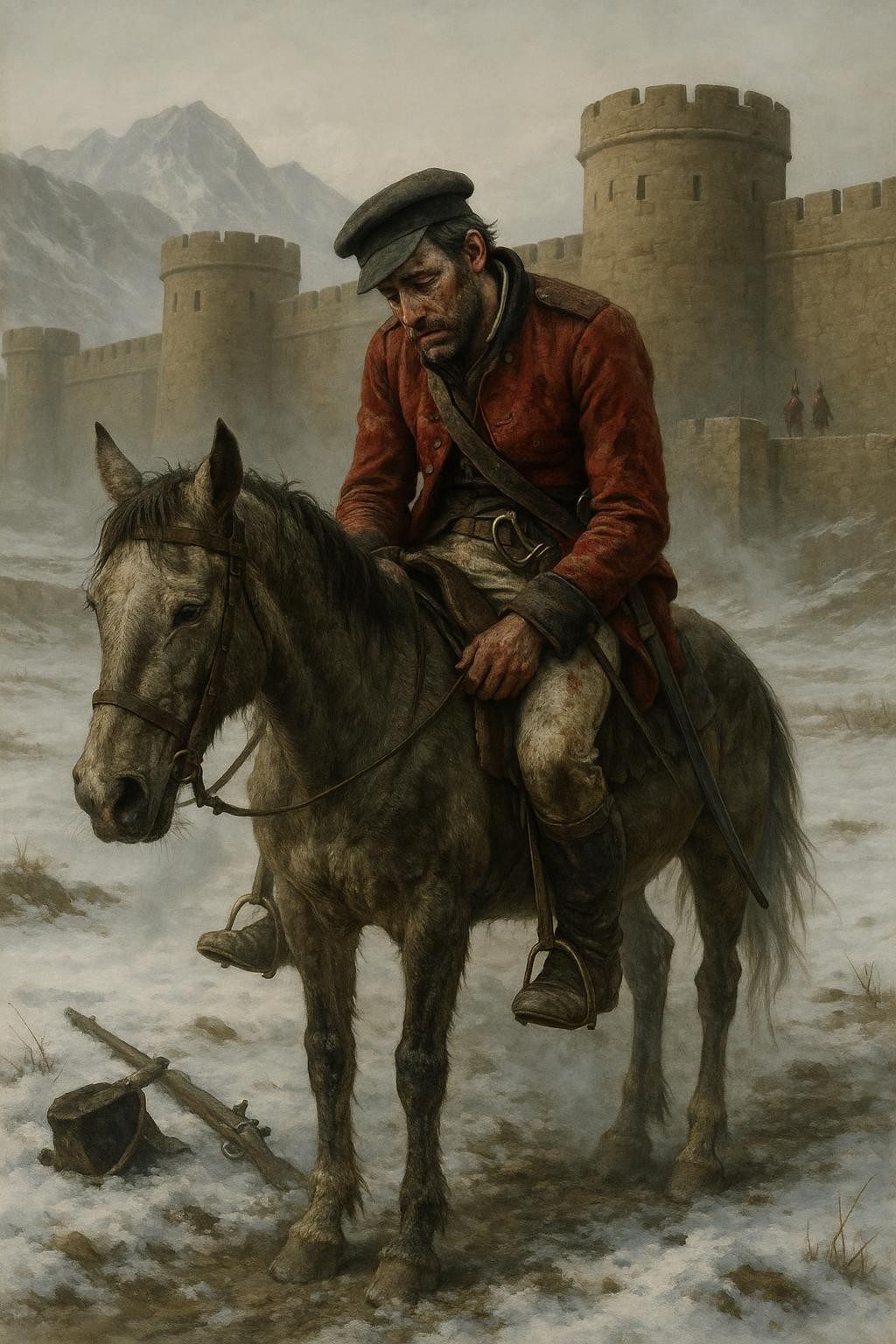
The ride was grueling—a test of not just physical endurance but of mental resilience. Each passing moment was a race against the encroaching specter of his pursuers and the dwindling hope of deliverance. Brydon's mount, exhausted yet driven forward by sheer will and adrenaline, navigated treacherous icy slopes and serpentine trails. Pain seared through his side, a souvenir from an Afghan blade, yet it was his tenacity that kept him in the saddle. On he pressed, through ink-black nights and pale morrows, every hoofbeat echoing a stark dirge in the snow.
It was on the barest fringes of his strength that William Brydon at last came into view of Jalalabad’s old earthwork fortifications. Guards blinked in disbelief, peering out over the ramparts at a solitary rider, mésalliance with the never-expected tidings of such calamity. Through chapped lips and a voice raw with cold and despair, Brydon confirmed what had seemed unthinkable—the defeat was total. Sixteen thousand had begun the dreadful retreat; he alone arrived at its end, a living testament to the magnitude of their loss.
The aftermath of Brydon's testament rippled far beyond the walls of Jalalabad, echoing not just through military and regal corridors of the British Empire but also through the political consciousness of England. The ignominious defeat was a vivid stain upon an empire at its zenith, awakening introspection amongst its statesmen, reflecting upon the fate of those who ventured too boldly into lands unwelcome. This disaster forced re-evaluation not just of military strategies but of the very nature of imperial dominion itself.
William Brydon's solitary survival reminds us of the capricious nature of history, how moments of profound heroism can emerge amidst utter catastrophe. His improbable journey from Kabul to Jalalabad underscores a truth that resonates through the ages—that human endurance, when pushed to its limits, can redefine the boundaries between fate and choice. In recounting this saga, we honor not only the past's unyielding spirits but also the complex tapestry of human endeavors, forever reminding us of the enduring significance of a solitary ride through the icy mountains of Afghanistan.