He was far from the beast most imagined. Just an ordinary terrier mix, the sort of mutt that anyone might find trotting across a village square, yet at RAF Northolt in 1942, his presence was essential.
The Second World War turned airfields across Britain into bustling hubs of activity, each sortie a dance with fate. In this tense atmosphere, where pilots faced the stark reality that each mission could be their last, a peculiar form of comfort emerged. Squadron mascots — a collection of dogs, cats, rabbits, and even bear cubs — provided a shard of normalcy amid the chaos of war. These mascots became silent witnesses to history, threading their way through the fabric of military life with a kind of magic that only animals can conjure.
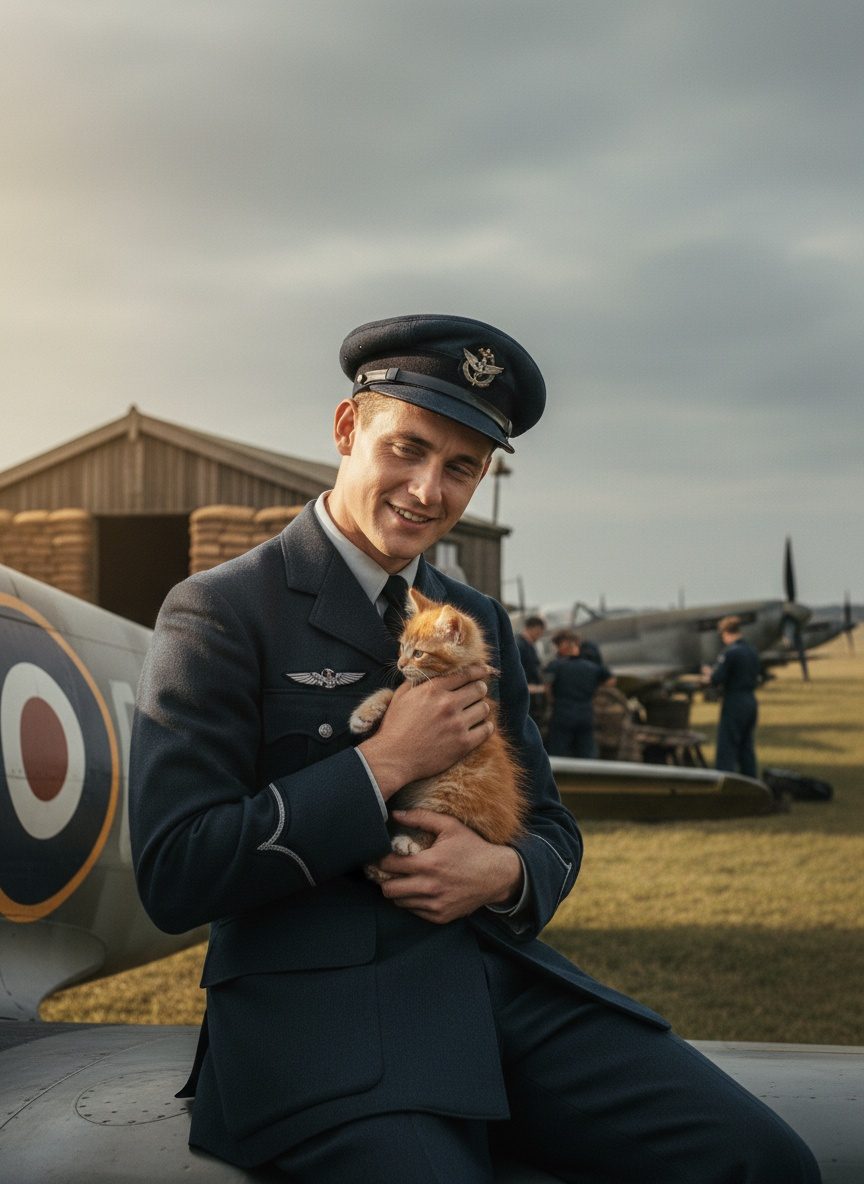
RAF Northolt was a testimony to this phenomenon. Pilots, mechanics, and support staff found solace in the wag of a tail or the soft purr of a feline companion. Animals brought an intangible comfort that metal wings and roaring engines could not. As airmen prepared for missions that demanded a delicate blend of precision and bravery, they found unexpected allies in their four-legged friends.
Imagine Squadron Leader David Moore, a ciggy loosely hanging from his lips as he scratched the ears of a stray cat that had sauntered into the mess hall. This wasn't just a brief pause before the storm. It was a grounding moment, a reminder of home, a touch of the ordinary that connected these men to the lives they had left behind. For some, it was the subdued assurance of faithful eyes watching them before they stepped into their Spitfires. For others, like Flight Sergeant John “Jack” Bowers, it was the boisterous antics of a tiny pup darting through the barracks that brought laughter to increasingly grim days.
These mascots often had stories of their own, tangled with the very fabric of the war. Take Sparky, the dog of No. 303 Polish Fighter Squadron. Originally found wandering the war-torn streets, he soon became an honorary member of the squadron. His barks punctuated late-night strategy sessions, and his presence in the debriefing rooms was as valued as any strategist's insight. Sparky became as much a part of the team as any pilot, his antics providing a brief escape from the haunting specter of Luftwaffe encounters.
It wasn’t just the more traditional pet mascots that found their way into the hearts of these units. At another airfield, a bear cub named Wojtek became emblematic of resilience. Though Wojtek’s story began with the Polish soldiers who crossed paths with him in the Middle East, the allegory of strength he provided resonated with airmen across Britain. Wojtek’s presence was a poignant reminder of the indomitable spirit that fueled the Allied forces; as he grew from a mischievous cub into a dominant symbol of hope, so too did the fortitude of the men who cared for him.
Pilots weren’t the only ones who bonded with these creatures despite their transient postings. Ground staff, tasked with the maintenance of aircraft and the logistics of war, often found that these animals transcended the role of mere mascots. They became unofficial comrades, linking disparate groups with a shared sense of purpose. Mechanic Tom Hart, who worked tirelessly to ensure the readiness of Hurricanes for the Battle of Britain, found quiet refuge in the eyes of a sheepish-looking goat named Whiskers. The goat, with his unruly beard and propensity to munch on mission orders, brought a levity that eased the fatigue etched into Hart’s face.
In times of lulls, when the sky fell silent, and the airfield hummed with anticipation, these mascots stitched the fabric of community tighter. They were there in the early dawn to watch as planes took to the skies and they were there at nightfall, a reminder of stability in a world threatened by chaos. Their presence resonated with the weight of the family and friends young pilots feared they might never see again.
The importance of these mascots was never more evident than during the toughest weeks at RAF stations like Northolt. As the European skies turned tumultuous with dogfights and disappearing comrades, the loss was palpable. In those darkest moments, when the return of a fellow airman was realized only by an empty hall at supper, it was the animals who remained, maintaining an undying allegiance to the lost.
But why did these mascots matter at all in an incomprehensible global conflict? The intangibility of their comfort provided a counterbalance to the mechanized world of warfare. They gave empathy shape, offered solace without a word spoken, and helped quench the unending thirst for human connection in times of solitude. In an era where every day was a gamble with destiny, these animals reminded the men of their humanity. They did not symbolize strength or resilience alone; they embodied a continuation of the lives the airmen wished to return to, a beacon of peace amidst the fog of war.
As the war marched on into its closing acts, the stories of these mascots subtly faded into the shadows of victory and loss. Yet they lingered in the hearts of those they comforted, mirroring the unspoken stories of survival and sacrifice. They didn't find their way into textbooks or tales of heroism, perhaps because their courage was too quiet, too understated to fit neatly into a narrative of accolades and medals. Nevertheless, their contribution resided in the silent corners of memory, where the lines between man and animal blur, reminding us that even in the darkest times, it was a wagging tail or a gentle purr that held the power to pull men back to the light.