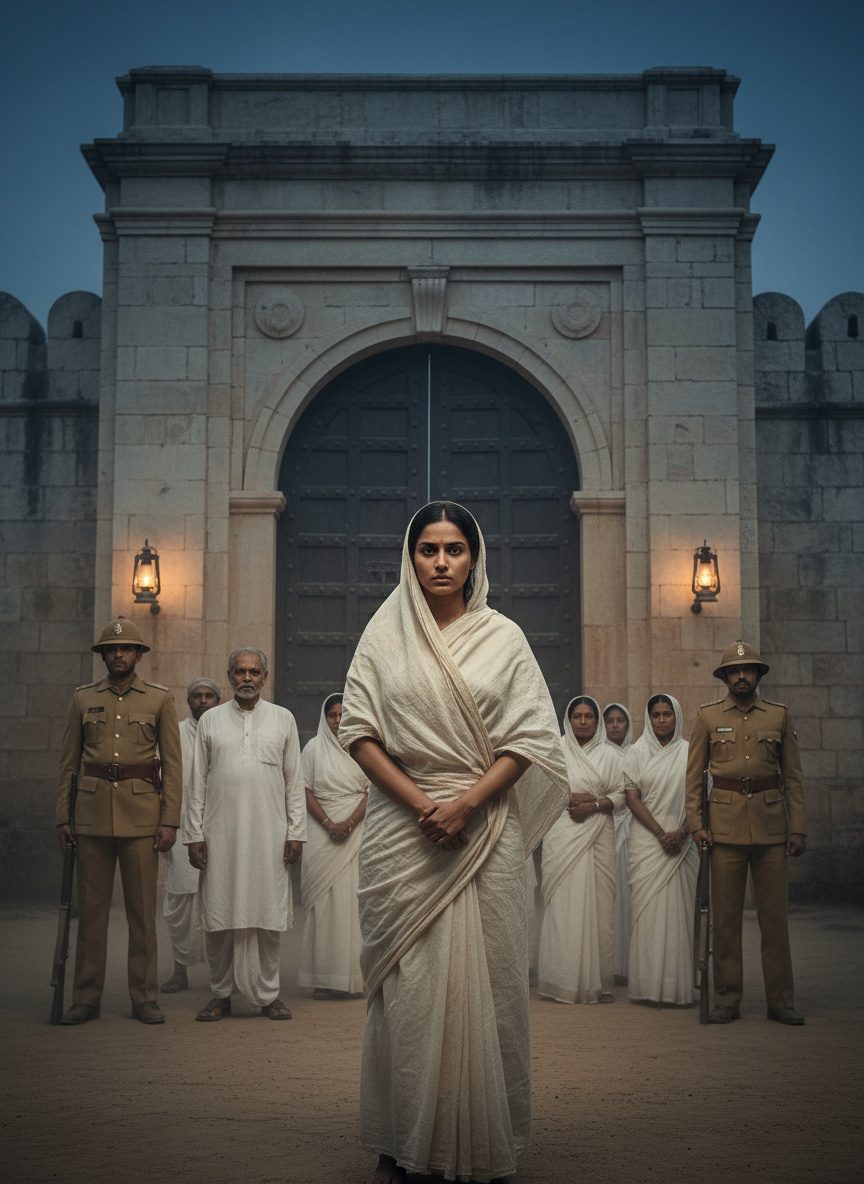
The humid air of Poona hugged the narrow streets, casting a syrupy thickness over the bustling cacophony of vendors and the murmur of sari-clad women haggling over their daily provisions. It was 1851, and overhead, a veil of clouds shaded the city in a dull gray that mirrored the somber prospects of those who lived within its confines—especially the child widows, erased by tradition, invisible to society, and unreceived by education. Within the oppressive order of Colonial India, one woman dared to defy the cultural orthodoxy. Her voice would ripple through the fabric of this powerful empire, setting in motion changes that echoed across decades.
A Young Widow's Audacious Entry
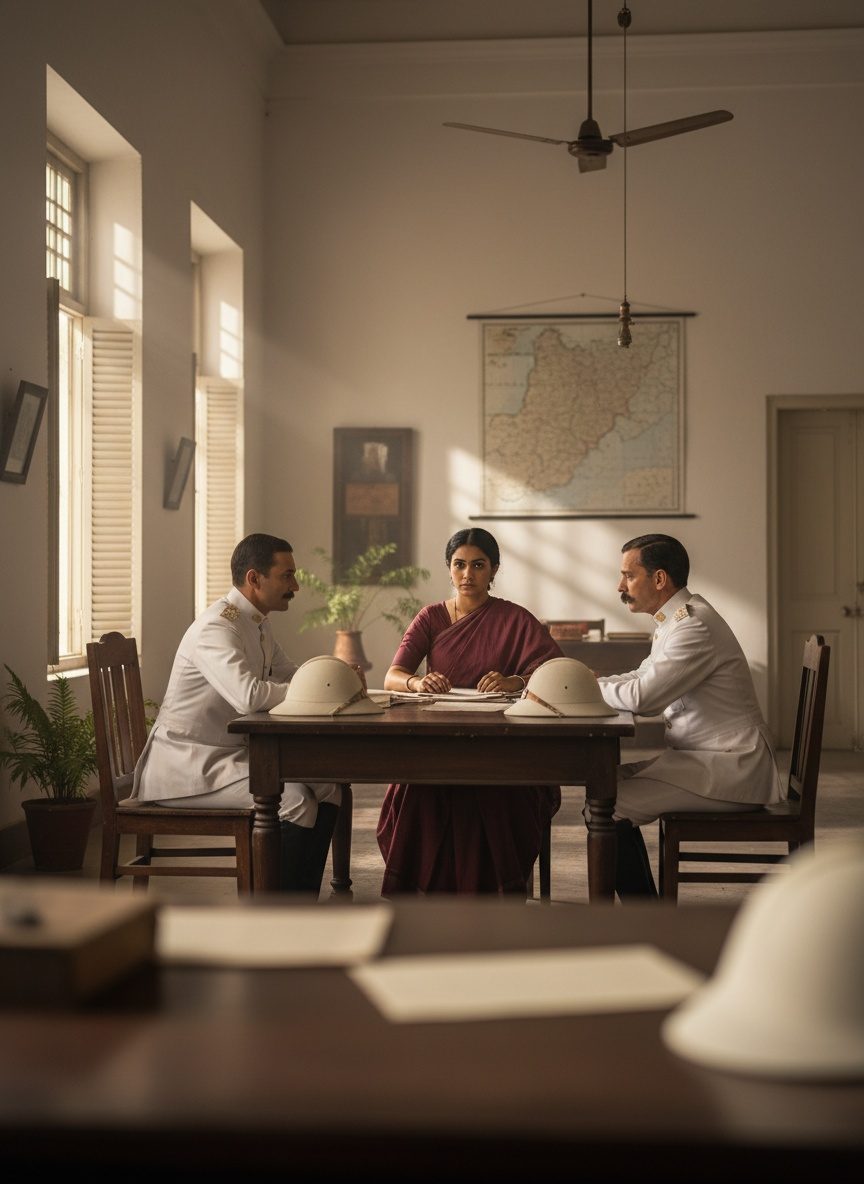
The hallways of the commissioner’s building, with their looming arched doorways and British portraits staring imperiously down at the proceedings, enveloped Pandita Ramabai as she entered. Hers was a life already marked by tragedy; recently widowed, childless, she was a high-caste Hindu woman left to navigate a world where her value had been nullified. Yet it was this precarity that cemented her resolve. The corridors seemed to echo with her purpose as she pleaded the case not just for herself, but for the countless child widows who, like her, had been discarded by the rigidity of caste and gender norms.
Pandita stood before the commissioners—men steeped in the prejudices and privileges of colonial authority. Her sari, modest and unornamented, whispered its ruffle against the floor, a far cry from the elaborate garments that adorned these halls during official functions. Pandita was an anomaly here. Her eloquence, birthed from deep wells of suffering and hope, challenged the passivity of bureaucratic ears. In a time when English was used to assert dominance, she wielded it as a tool of advocacy and conviction. As she spoke of education as a beacon, her words fused urgency with clarity, illuminating the dark corridors of potential futures unfulfilled.
Her argument was both radical and rational, urging the commissioners to envision a legacy beyond their empires—a legacy where nurturing intellect became their enduring contribution. The stakes were profound: to educate child widows was to provide them a voice, to empower them was to revolutionize societal structures. And listening to her, something shifted. Unbeknownst to them, these men who saw a subcontinent as a colony were about to be changed by the vision of one resilient woman.
Cracking Imperial Armor with Iron Resolve
The British Raj’s position in India, fortified by policies that wielded power through appeasement and coercion, didn’t easily accommodate the complexities of holistic social welfare. Pandita’s campaign targeted a demographic that had been consistently overlooked and marginalized—young girls who had been widowed before truly becoming women. “What education?” the cynics asked. “For whom? For those prepared to recede into the shadows of society?” Pandita’s rebuttal was categorical: education was a universal right, an unassailable pillar of progress.
Her persistence in advocating for these widows battered at the stiff entrenched walls of the colonial institution, at a time when advocating for women’s education was largely unprecedented, let alone for those deemed untouchables by society. She revealed hidden truths to the commissioners, stories of young lives existing in constriction, of talents stifled before they could blossom. Such revelations prompted doses of reluctant introspection from those seated in power. This was an era defined by rigidity, yet one woman's words began to shape a consciousness flooding out to the wider centers of influence within the Raj.
The campaign for widows' education slowly started to seep through bureaucratic barriers, initially as whispers, later as policy discussions. As detractors dismissed her as overly idealistic, allies slowly emerged, their ranks swelling among those who hearted her cause for reform. Shakespearean irony colored the developing narrative: a lesson in resilience taught by a nation once prided on subjugation.
The Quieter Currents of Transformation
Progress did not come like a tidal wave but rather like the steady advance of a river carving new paths through rock. The reaction of the British Raj’s administration, initially tentative and uncertain, began to crystallize into action. The notion of educating widowed young girls became a feasible undertaking, one supported by the informed councils of early adopters like Alexander Duff and Ishwar Chandra Vidyasagar, who lent their voices to Pandita and helped convert rhetoric into policy.
The hand of change often moves with the caution of a master painter adding strokes to an evolving masterpiece. Schools dedicated specifically to the education of widows began to emerge. Curriculum discussions were held with a seriousness earlier reserved only for the sons of wealthy traders and colonial officials. Pandita’s tireless advocacy led to the birth of institutions that taught widowed children how to read, to write, to reckon a future recently inconceivable.
Amidst societal turbulence, as unrest simmered beneath the veneer of colonial control, the significance of these schools extended beyond their walls. They symbolized agency, and as more widows gained education, they began to rewrite scripts of their own stories that lacked closure. Pandita watched these embers spread with quiet satisfaction, her efforts knitting together a community of educated women poised to voice themselves within new social narratives.
Why Pandita's Voice Echoes On
In a era where the clang of colonial advancement often muffled cries for fundamental human rights, Pandita Ramabai insisted that subtle revolutions were still possible. Her audience extended beyond the rooms she spoke in; it reverberated into the conscience of an empire and persisted within the myriad stories of those who benefited from her struggle. Through her vision, India began a wary journey of reform that not only challenged British tenets but also the rigid societal norms entrenched over centuries.
This chapter, omitted from many retellings of history, is a reminder of those who forged futures with resilience in a world structured against it. Pandita's struggle for widows' education is more than a footnote—it's a paradigm of cultural spearheading that few realize quietly rewrote the rules of an empire. Hers is a testament not only to her own steadfastness but to the infinite possibility born when those considered powerless decide to speak for themselves. An indelible mark was left on the corridors of the British administration; a powerful harbinger reverberates as women in India and beyond continue to claim futures long denied and overlooked.