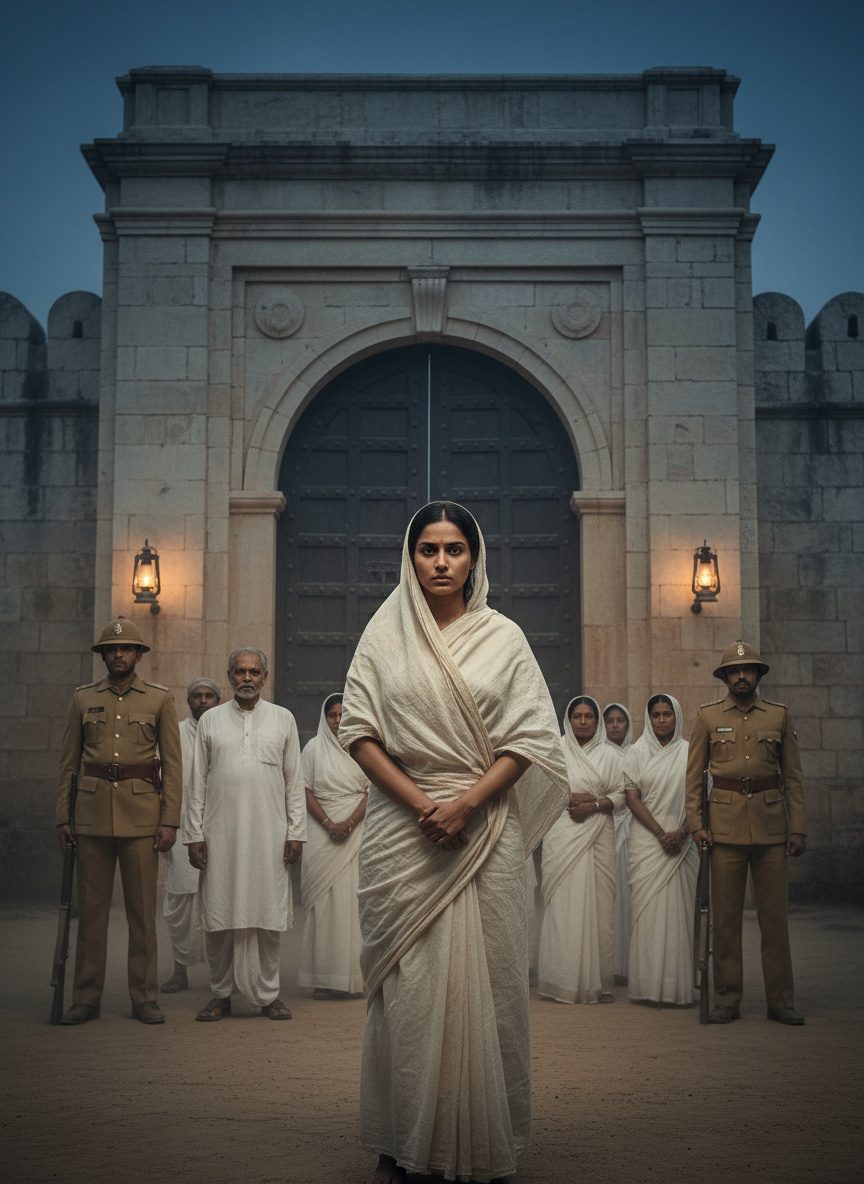
The execution of Bhagat Singh was meant to quell the fervor of rebellion. Instead, it ignited it. As the dim light of March 1931 faded over Lahore, a clandestine act unfolded under a cloak of colonial authority. Inside the formidable walls of Lahore Central Jail, the British Raj sought finality, believing that eradicating one of India's most passionate voices of independence would cement their dominance. Yet, in trying to do so, they scripted an unintended sequel: the undeterred defiance of a sister who refused to let her brother's memory be consigned to the shadows.
Lahore, under British rule, was a city tense with whispers of revolution. At the forefront of this simmering unrest was Bhagat Singh, a symbol of youthful defiance against imperial might. Arrested, tried, and sentenced to death for his role in the killing of a British police officer, Singh epitomized the hopes of a nation yearning for liberation. The British, acutely aware of his martyr-like status, understood the precariousness of the situation. His execution, scheduled for the evening of March 23, 1931, was to be a swift, silent affair, erring on the side of discretion.
The plan was simple yet charged with subterfuge: execute Bhagat Singh swiftly, cremate his remains under the cover of darkness, and erase the final traces of this rebellious spark. The authorities feared the repercussions a public spectacle might provoke among the Indian populace, charged with emotion and ready to ignite. This, they feared, could transform Bhagat Singh from a jailed revolutionary into a divine martyr.
As Singh’s life was extinguished, the authorities surreptitiously transported his remains to a cremation site. The flames consumed not just a body, but the tangible presence of a man who had inflamed the imaginations of millions. Meanwhile, his family, informed of the dreadful news, hastened to Lahore in hopes of claiming his body, clinging to the dignity of final rites. But upon their arrival, their hope met cold ash, a cremation pyre that was still warm, the air heavy with the finality of their loss. To depart without their kin was unthinkable. Yet, here, they stood, confronted by the residue of an Empire's fear.
In this moment of desperation, one figure emerged, resolute and immovable. Bibi Amar Kaur, Bhagat Singh's sister, embodied a will as unyielding as the sisterland's resilient spirit. Despite the despair etched in their hearts, her determination was clear. She advanced towards where her brother had been reduced to remnants, the echoes of his courage still reverberating in the smoke above. The British might have silenced Bhagat Singh's voice, but Kaur was steadfast in ensuring his memory did not suffer the same fate.
With no sword or musket, Kaur's defiance wielded the quiet might of persistence. In the face of colonial intimidating machinery, hers was an audacity that words alone could not capture. The authorities, expectant of submission, underestimated the tenacity that ran in Singh's family. Bibi Amar Kaur sat there like an ancient rock in a stormy sea. She refused to leave, demanding the right to the remaining vestiges of her brother. Her presence transformed the scene into a tableau of silent resistance — a testament to an undying wish for justice.
Her protests could not bring Bhagat Singh back to life, nor could they reverse the brutality of colonial justice. But her stand under the embers of the funeral pyre enlivened the march towards freedom, demonstrating the indomitable strength rooted in familial and national loyalty. Eventually, this unrelenting resolve forced the authorities to allow the family to take the ashes back—a small but significant victory against the backdrop of a far larger struggle.
The quiet yet poignant confrontation at the cremation site was more than just about claiming human remains; it was about preserving the sanctity of memory against calculated erasure. In her lone defiance, Bibi Amar Kaur did more than reclaim her brother's ashes; she reclaimed a narrative the British sought to extinguish. Her action crystallized the emotions of a subjugated nation, echoing the cries for freedom Bhagat Singh had enlivened during his life.
Why does this moment, obscured in the broader tapestry of Indian independence, resonate even today? It illustrates the human capacity to resist, to defy, no matter how formidable the opposition. In Bibi Amar Kaur’s single act of defiance, we glimpse the universe of countless unsung heroes — women, men, families — whose quiet rebellions amassed into the roar that ultimately toppled a colonial empire. It reminds us that behind the grand theaters of political movements are personal stories of courage and conviction, vital in shaping the course of history. Such stories, though not emblazoned on textbooks or memorialized in monuments, craft the soul of a nation's struggle for liberty.