June 21, 1887. London was ablaze with an air of celebration and anticipation.
Invisible Soldiers Behind the Pageantry
Amidst the ornate decorations and bustling crowds of the Victorian capital, an industrious army labored out of sight, ensuring the spectacle of Queen Victoria's Golden Jubilee proceeded flawlessly. Beneath the ceremonial grandeur of the Household Cavalry, an intricate dance of preparation was already underway. Farriers, tailors, and orderlies orchestrated their expertise with military precision, transforming potential chaos into an imposing display of imperial might.
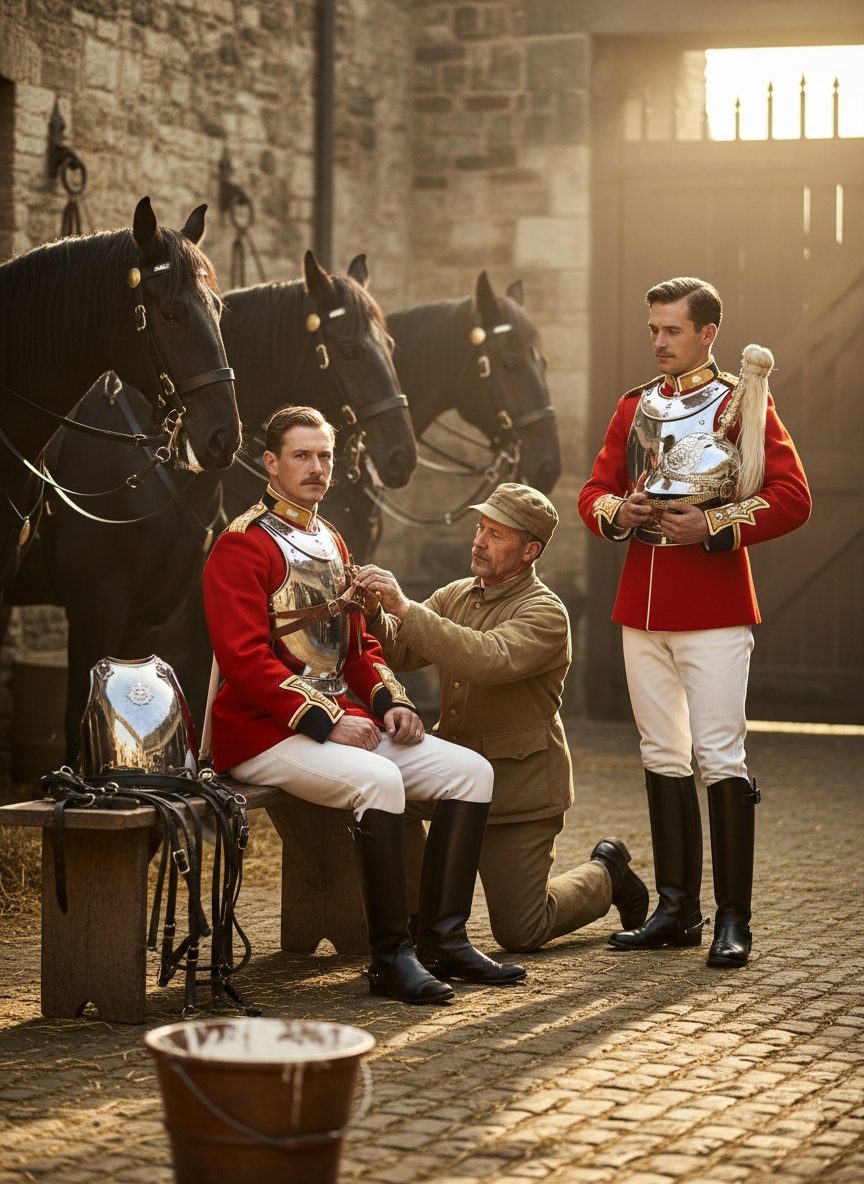
The Life Guards, resplendent in their polished cuirasses and flowing plumes, stood poised to honor their sovereign. But behind this polished veneer lay months of meticulous preparation. Each breastplate needed to glisten in the summer sun, reflecting the grandeur of the empire at its zenith. Every sword and spur had to gleam with a severity only the staunchest polish could afford. The Jubilee review was not merely an event; it was a statement of power and elegance.
The Tailor's Art and Armory's Craft
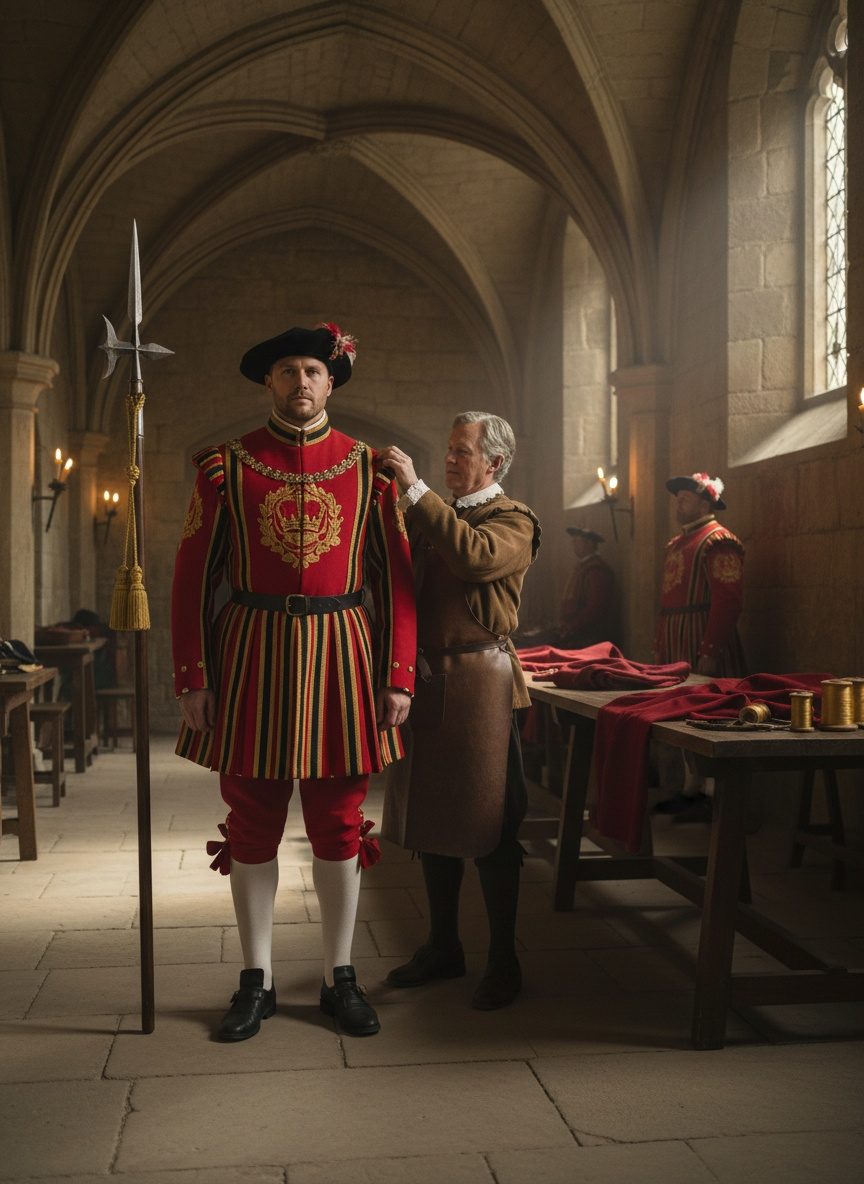
Central to this transformation was a battalion of tailors armed not with rifles, but with needles and thread. Tasked with fitting and refitting uniforms to perfection, they braved innumerable fittings to ensure that not a single epaulette was out of place. In the stern setting of the Victorian workshop, snipping shears and clinking anvils became the chorus of their laborious symphony.
The cuirass, as much a symbol of martial order as protection, posed its own challenge. Each breastplate, crafted to sit perfectly upon the uniform's red and gold, demanded hours of careful polishing. An army was needed for this alone — where bridges and ships gleamed of industrial steel, here, the accoutrements of empire would reflect the faces of those gathered along the Mall.
The Hooves That Heralded Majesty
No less vital to this visual extravaganza were the noble steeds, executing precise drills in preparation. Their upkeep was a military operation in its own right, involving farriers steeped in the knowledge of hoof and hide. Trained to precision, the horses were not just mounts, but participants in the ceremony, understanding the rhythms and pace of parades more intuitively than many of the men upon their backs.
The muck of stables hidden behind the parade’s glory bore testament to an earlier, hectic stage. Here, daybreaks and dusks were marked not by golden sun or silver moon, but by the hard labor of grooming giant steeds until their coats shone as brightly as the medals adorning their riders. The unseen ballet of man and beast conspired to bring forth the queen's cavalry in its full splendor.
A City Awaits, An Empire Watches
Union Jacks fluttered against the grandeur of Georgean and Regency edifices as anticipation coursed through the throngs. On this midsummer day, the anticipation was electric, spanning London’s densely packed streets to distant corners of the empire. For Queen Victoria herself, poised as the symbol around which the day's pageantry would orbit, this was a celebration of an era. An era her reign had shaped with both maternal benevolence and resolute authority.
The sun reached its zenith, casting sharp propriety on the day's proceedings. The sound of clattering hooves echoed like thunder over Horse Guards Parade, a fitting prelude to Victoria’s passage through history. As the Life Guards took their position, each movement was honed to perfection, a performance executed as assuredly as any military operation. Their attire, the spurs, and the order of their arrangement told a story, not merely of loyalty and duty, but of an epoch defined by elegance and might.
The Understated Symphony of History
As jubilant crowds streamed homeward, their hearts brimming with the day's sights and sounds, the remarkable effort fueling this imperial pageant remained largely unsung. Somewhere, in the storerooms and stables tucked away from the broad avenues, an exhausted yet hushed team reflected on a job well done. Each routine task, rendered invisible by pageantry, was anew revealed as undeniably vital.
Victoria’s Golden Jubilee is remembered as a dazzling spectacle, but glance beneath the surface, and one uncovers the raw narrative of dedication and craftsmanship. In this unnamed army, we perceive the embodiment of empire: not as an abstract, unreachable monolith, but as a living entity born out of the efforts of countless souls with their own stories, their own contributions. Through their toil and care, a day of pomp and circumstance was transformed into a living tableau of Britain’s most poised and powerful hour — a vivid reminder of shared history, crafted by hands unseen but never unrecognized. The orchestra of unsung heroes and silent partners plays on, in step with history's relentless march.