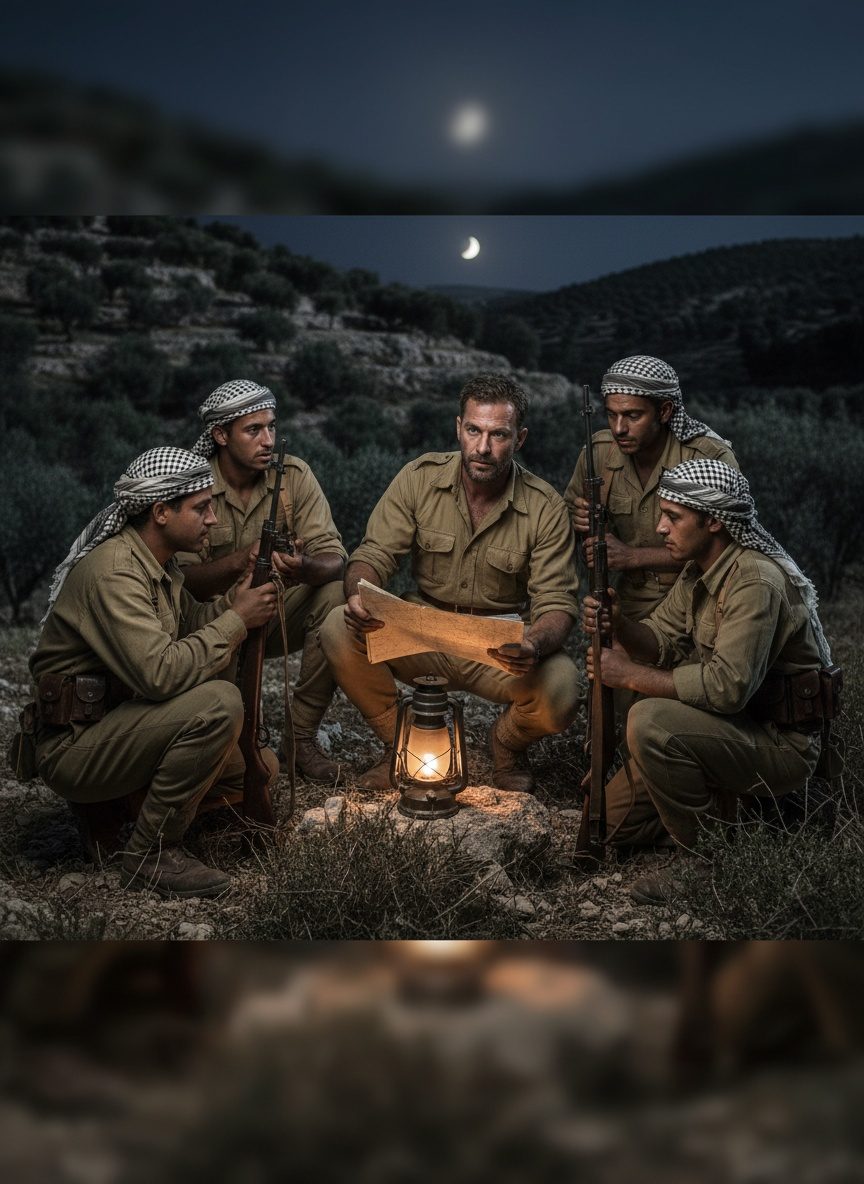
The air over the dusty plains of Mandatory Palestine in 1938 was thick with tension, the oranges of twilight melting into an inky blue as the sun dipped below the horizon. Shadows lengthened, embracing olive groves and hills with quiet menace, concealing those who sought to navigate this charged landscape under cover of darkness. In this delicate cloak-and-dagger dance of dusk, Captain Orde Wingate dared to defy conventional military wisdom, crafting a new brand of warfare that blurred lines and defied expectations.
Unorthodox Warriors
The world of 1938 was poised on the edge, trembling with the unease of shifting powers and brewing conflict. Yet, in far-flung corners under British rule like Palestine, the fight was raw and immediate—a puzzle of guerrilla warfare that cried out for innovation. This was the backdrop against which Orde Wingate emerged, a maverick officer whose strategies would forever alter the British military doctrine. While Palestine writhed in the throes of insurrection, Wingate seized the night for his battlefield.
Wingate's arrival in the Holy Land was met with skepticism by his conventional counterparts, yet his reputation for eccentric brilliance preceded him. Rejecting the rigid orthodoxy of British military traditions, he envisioned an adaptable force—nimble, covert, and, most importantly, united across lines of cultural division. Thus, he formed the Special Night Squads, a groundbreaking fusion of Jewish settlers and British soldiers trained for one purpose: to usurp the insurgency on their own nocturnal terms.
Under Wingate's leadership, these squads mirrored the insurgents in their tactics, employing guerrilla methods long before such terms became entrenched in counter-insurgency lexicon. The squads donned indigenous attire, camouflaged themselves as locals, and armed themselves with captured weaponry. Training was rigorous and unconventional; this was a war without front lines, where every rustle of leaves on a breathless night could herald an imminent ambush or signal the right moment to strike.
Wingate was nothing if not resourceful. He understood the terrain like a strategist and hunted like a predator, his fierce determination tempered by an understanding that to win the night, one had to outmatch the foe not just with strength, but with cunning and adaptability. It was a transformative approach, fusing the elements of surprise and immediate retaliation. The British Army found itself navigating a new paradigm, one where the boundaries between hunter and hunted blurred seamlessly into the night.
The Tension of Loyalties
Wingate faced formidable challenges beyond the battlefield—his greatest perhaps not in leading raids, but in balancing the precarious loyalties stirred by his squads. The Palestine of 1938 was riven with nationalist fervor. Jewish settlers contended for autonomy, a proposition at odds with Arab aspirations in the region. In command of a heterogeneous force, Wingate had to inspire trust and allegiance from both sides—a task in itself a masterclass in diplomacy.
Yet, Wingate was undeterred. His charismatic leadership stemmed from his genuine belief in the moral righteousness of fostering Jewish statehood, an ideology that, while noble, occasionally clashed with British policies. Nevertheless, in the field, he inspired a shared vision of purpose: unity against a common threat. Perhaps it was his ability to see beyond immediate political squabbles that enabled him to forge bonds between those who had every reason to be adversaries.
In the glow of campfires, away from the prying eyes of generals and politicians, Wingate's night squads learned the language of each other and, inadvertently, the language of the land they traversed together. In their nocturnal expeditions, they encountered challenges, from deciphering the starlit paths across rugged mountains to determining the quiet rustling of grains in the humid night air. Every breath of wind was a potential omen, every hoot of an owl a cloaked signal. Through this silent symphony, they moved like whispers against the oppressive backdrop of animosity.
Wingate's leadership style was often brusque and unyielding, yet his men respected the clarity of his vision; he had that rare ability to inspire fierce loyalty and create an esprit de corps amidst trepidation and mistrust. It was not merely about tactics, but a psychological game that required extraordinary nerve. His audacity slowly won over detractors, and the squads' effectiveness became irrefutable as they delivered unexpected victories.
Legacy Unleashed
Wingate's tenure in Palestine was as brief as it was impactful. The Special Night Squads' operational success could not be ignored, yet the very strategies that ensured their triumph became the source of consternation for military pillars steeped in tradition. That Wingate had effectively rewritten the rules was both his crowning achievement and the grounds for much resistance from his superiors. Renegade he may have been, yet as the drums of war reverberated globally, his methods began to percolate through the ranks of military tacticians.
The echoes of Wingate's tactics resonate across the annals of military history, forming the bedrock for subsequent irregular warfare doctrines. His daring use of small, agile units operating in continuous nocturnal maneuvers laid the groundwork for future counter-insurgency strategies employed worldwide, from the jungles of Malaya to the highlands of Kenya. This seemingly unassuming captain's audacity to blend tactics with cultural sensitivity reshaped military operations and offered a profound, if challenging, blueprint—one that dovetailed unpredictably with the world's evolving conflicts.
In retelling the story of Orde Wingate and his unyielding nights in Palestine, we encounter more than just military evolution. His legacy prompts us to reflect on the pivotal role of ingenuity in overcoming adversarial inertia. Wingate's transformation of warfare emphasizes how the most significant leaps sometimes emerge from the shadows—the act of daring to confront the night not with fear, but with innovation and unity. As history reminds us, the legends omitted from textbooks often illuminate untapped reservoirs of possibility. In the stories left untold lie lessons, urging us to look deeper for the truths crafted in the quiet of night.