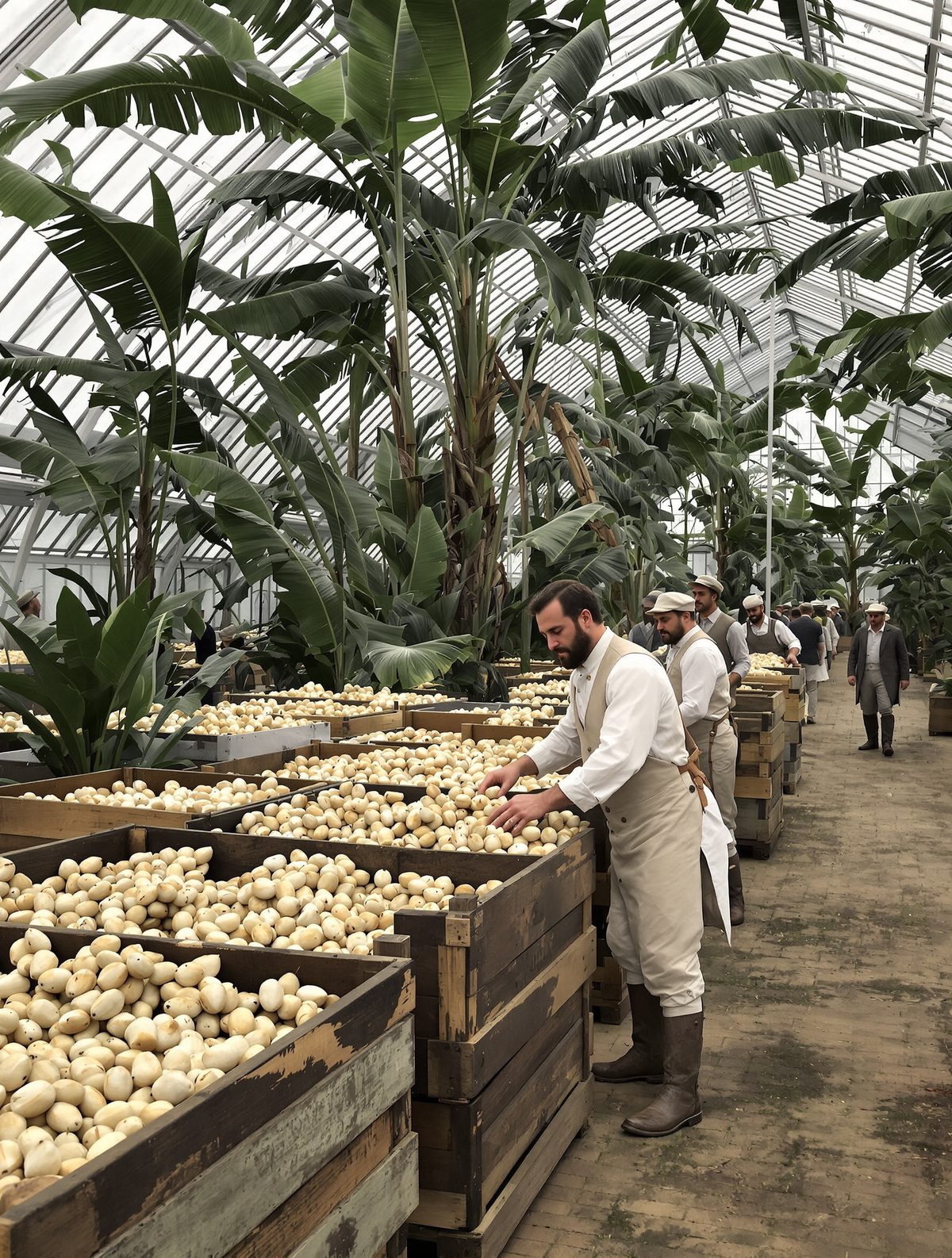
In the shadow of the English Peak District, where the River Derwent dances and dashes through lush countryside, a fundamental change in the tapestry of human civilization began. It was here, in 1771, that a man with neither pedigree nor privilege altered the course of history with the simple power of an idea. Richard Arkwright, a barber from Preston with a keen eye for mechanics, invented the water frame and transformed Britain into the epicenter of a global industrial revolution.
The Barber's Vision
Richard Arkwright was born in the humble streets of Preston in 1732. The youngest of seven siblings, he showed no early signs of his later genius. His parents, unable to afford formal education, left him to carve his own path through life. Arkwright took up the trade of barbering, a vital service in any town where hygiene was a public affair and wigs were a sign of status. Yet, his mind yearned for more than curling tongs and shaving bowls. Beneath the veneer of day-to-day trims, Arkwright’s heart beat for invention.
Ever the autodidact, Arkwright devoured whatever materials on mechanics he could find. By candlelight, he sketched, studied, and dreamed of machines that could spin yarn faster and more efficiently than ever before. The textile industry of the 18th-century Britain was ready for change, bogged down by the slow, labor-intensive process of hand spinning. Arkwright's skillful hands, precise on a customer's beard, now began mechanically shaping the future.
Engineering the Future: The Water Frame
Invention seldom brews in isolation, and Arkwright's story is no exception. By 1768, alongside a clockmaker named John Kay (no relation to the flying shuttle inventor), Arkwright created a prototype of the 'water frame'. This revolutionary contraption was a multi-spindle spinning frame, powered not by limited human hands but by the persistently rushing water of England’s rivers. It could spin four strands of cotton yarn simultaneously, an impossibility for a human spinner.
In 1771, Arkwright’s vision was crystallized at Cromford, where he capitalized on the steady flow of the River Derwent. Here, he built a mill that harnessed hydropower—turning water into wealth. The mill ushered in a new era, representing the embryo of what would become the factory system, changing landscapes as radically as it did livelihoods. Unlike the traditional spinning jenny, Arkwright's water frame allowed for stronger and high-quality yarn, which was essential for fine cotton textiles.
The Rise of Cromford Mill
Cromford Mill did not merely spin cotton—it spun fortunes. By 1776, Arkwright expanded, and with each additional spindle, the rhythmic churn of industry’s heartbeat grew louder. The success of Cromford Mill quickly inspired imitators and competitors, sprouting similar mills across Britain like mushrooms after rain, each driven by water wheels echoing Arkwright’s ingenuity. By the 1780s, his methods had turned Britain into the world's leading yarn manufacturer. A factory initially employing 200 workers burgeoned into a vast complex with thousands, symbolizing a socio-economic revolution.
Life for the workers at Cromford was harsh by today’s standards, yet, during the era, it represented opportunity and income unparalleled for the rural poor. Arkwright organized workers with military precision, introducing shifts to keep production continuous and creating a system that supported—and demanded—a new social order entirely based on industrial labor.
A World Transformed
Within just two decades, this one-time barber found himself knighted in 1786, showered with prestige and wealth. Arkwright didn’t just capture Britain’s imagination—he set the template for the rest of the world. The United States, seizing the spirit of the age, sent emissaries to study his methods, while across Europe, the wheels of change began to turn, assisted and accelerated by knowledge pilfering and adaptation of Arkwright's concepts.
The ramifications of Arkwright's work are visible even today, as the structures of modern industry owe their form to these early beginnings. Factories organized labor en masse, creating a foundation for contemporary economies. The move from handcrafting to machine manufacturing sowed seeds for global commerce and placed Britain at its lucrative apex.
Legacy and Lament: Arkwright’s Enduring Impact
The tale of Richard Arkwright’s water frame is indeed a story of industrial triumph but also carries the weight of its consequences. While it catalyzed economic growth, it also ushered in societal shifts that saw the rise of urban centers, the decline of agrarian lifestyles, and complex challenges of labor rights. As we marvel at the rapid pace of technology today, Arkwright's tale reminds us of innovation’s dual-edged sword—rich in opportunities yet rife with challenges.
Arkwright's genius was not merely in machinery but in envisioning a different form of society structured around efficient production. The water frame represents more than spinning wheels and river mills—it is a testament to the power of an idea, the relentless human drive to create and transform. In today’s digital age, as we stand on the precipice of new technological revolutions, Arkwright's story implores us to remember that each epochal shift carries both promise and responsibility.