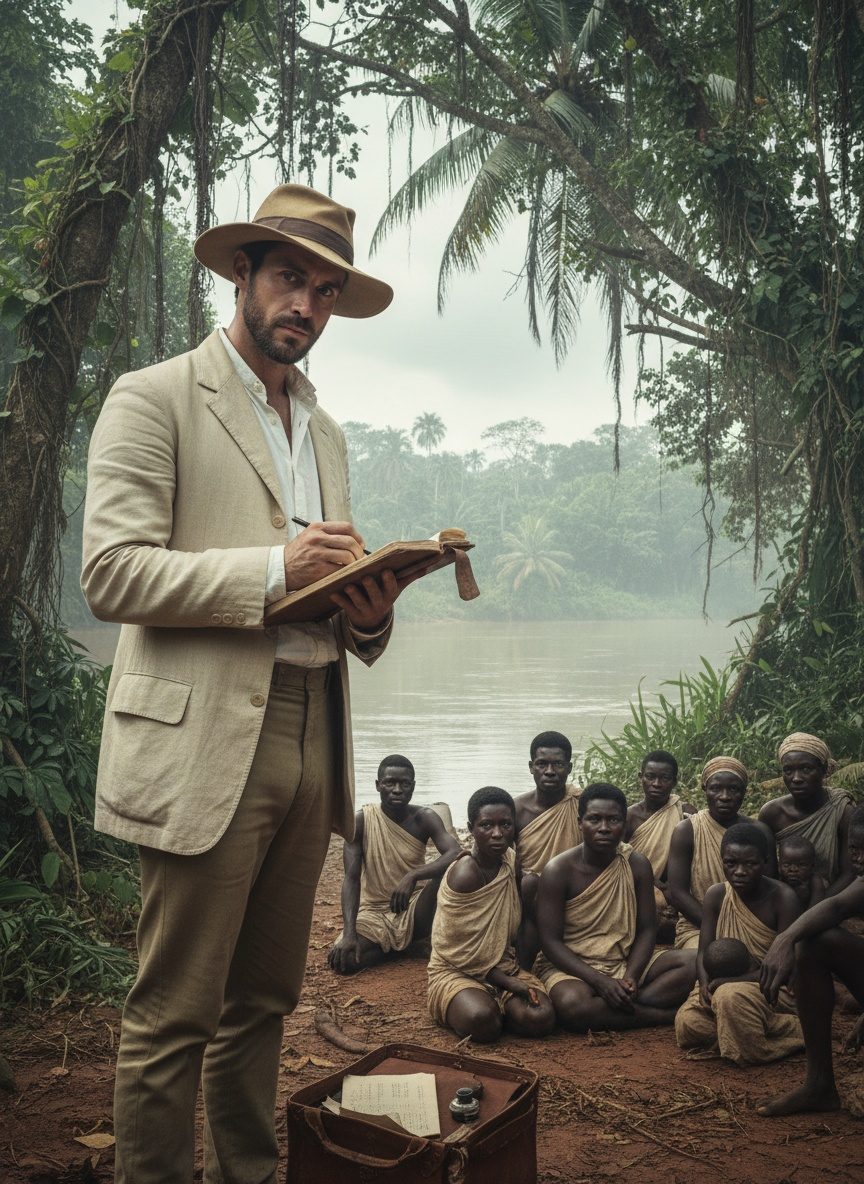
The oppressive heat hung like a shroud around him as Roger Casement pushed deeper into the Congo jungle, the air thick with the scent of foliage and fear. He could hear the faint rustle of chains before he saw them: weary eyes staring back at him, shackles biting into thin ankles and wrists. The sound of the chains clinked and clattered against the oppressive silence of the jungle, a haunting symphony of bondage echoing in Casement's ears as he set about documenting the horrors that none before him dared to name. In his notebook, he scribbled with furious urgency, driven by an unyielding sense of justice against the systemic brutality that had turned this corner of the earth into a human hell.
The Jungle's Silent Witnesses
The Congo Free State, roughly 1903—a regime under King Leopold II of Belgium that fancied itself a civilized endeavor. But what Casement saw bore little resemblance to the civility espoused by European imperialists. Instead, he encountered villages that wore despair like a shroud, each corner marked by grief and silence. Here, the jungle seemed not merely a setting but a participant and spectator to the suffering of those whose lives unfolded under Leopold's brutal rubber monopoly.
The veritable treasure trove of the Congo's natural resources came at a terrible human cost. Men and women labored interminably in rubber plantations, driven by the lash of overseers with little regard for life. The mutilated limbs of children—an unspeakable punishment for their elders' failure to meet rubber quotas—became the gruesome symbols of a company's drive for profit at the expense of human dignity. They were reminders of the silent screams that Casement's pen captured on worn pages, transforming the ephemeral cries into an inarguable chorus for justice.
Venturing through this verdant purgatory, Casement became the lone beacon of hope for those burdened by these unshed chains. He listened, observing the whispers of rebellion hidden beneath fearful compliance, and gave voice to the voiceless. With every story that came tumbling from trembling lips into his pages, Casement cast another stone into the churning sea of oppression, determined to change its tide.
Words That Shook the World
Back in London, Casement's findings were nothing short of explosive. His report was not just a diplomatic communiqué but a stark indictment—a direct confrontation with the conscious blindness of Europe. King Leopold's rain of terror had continued unabated, bolstered by the veil of ignorance and indifference, until Casement's meticulous chronicling pulled back the curtain with relentless clarity. The quill, once an instrument of beaurocratic trivialities, now wielded the power of revelation.
Casement's report detailed the savage treatment of Congolese workers and the systemic exploitation under Leopold's iron fist. It was a dossier of deep injustice wrapped in unflinching detail, a narrative compelling enough to stir the moral compasses of both politicians and the public. The British consul had, through the simple act of observation and inscription, injected an uncomfortable truth directly into the veins of European consciousness.
The world was forced to reckon with the notion of progress built on bloodied hands. Parliaments buzzed with debates, advocacy groups coalesced around the rallying cry for Congo's freedom, and the brute reality of colonial exploitation was exposed under the probing light of public scrutiny. It was as if Casement's report had awakened the collective soul of nations, demanding accountability where silence once reigned.
The Unyielding Echoes of Liberation
The reverberations from Casement's ink did not fade into oblivion. Instead, they rippled through the corridors of power, eventually drawing international condemnation upon Leopold's regime. The savage exploitations in the Congo would no longer remain hidden, sealed behind the oppressive barricades of secrecy and oblivion. Casement had cracked open the rigid edifice of colonial imperialism, allowing the first rays of humanity to reach its darkened heart.
While changes did not occur overnight, Casement's work galvanised efforts that would eventually lead to the Congo Free State transitioning to Belgian rule in 1908, inflicting considerable pressure on ending the most egregious abuses. While the administration remained colonial, it bore the improvement of scrutiny and oversight—a small but significant victory in a world accustomed to shrugging at atrocities distant from its collective hearths.
Roger Casement, armed with only his observations and compelling prose, set in motion a seismic shift that redefined the possibilities of individual agency against staggering injustice. His ability to expose the abhorrent truths of human exploitation invites us to reflect on the power and responsibility that knowledge imparts. With a single pen stroke, he transformed moral outrage into tangible change, reminding us that sometimes, the most potent freedom fighters wage their wars with words rather than weapons. In forging the legends left out of textbooks, we celebrate those who, like Casement, illuminate the paths from darkness with fearless, unyielding candor.