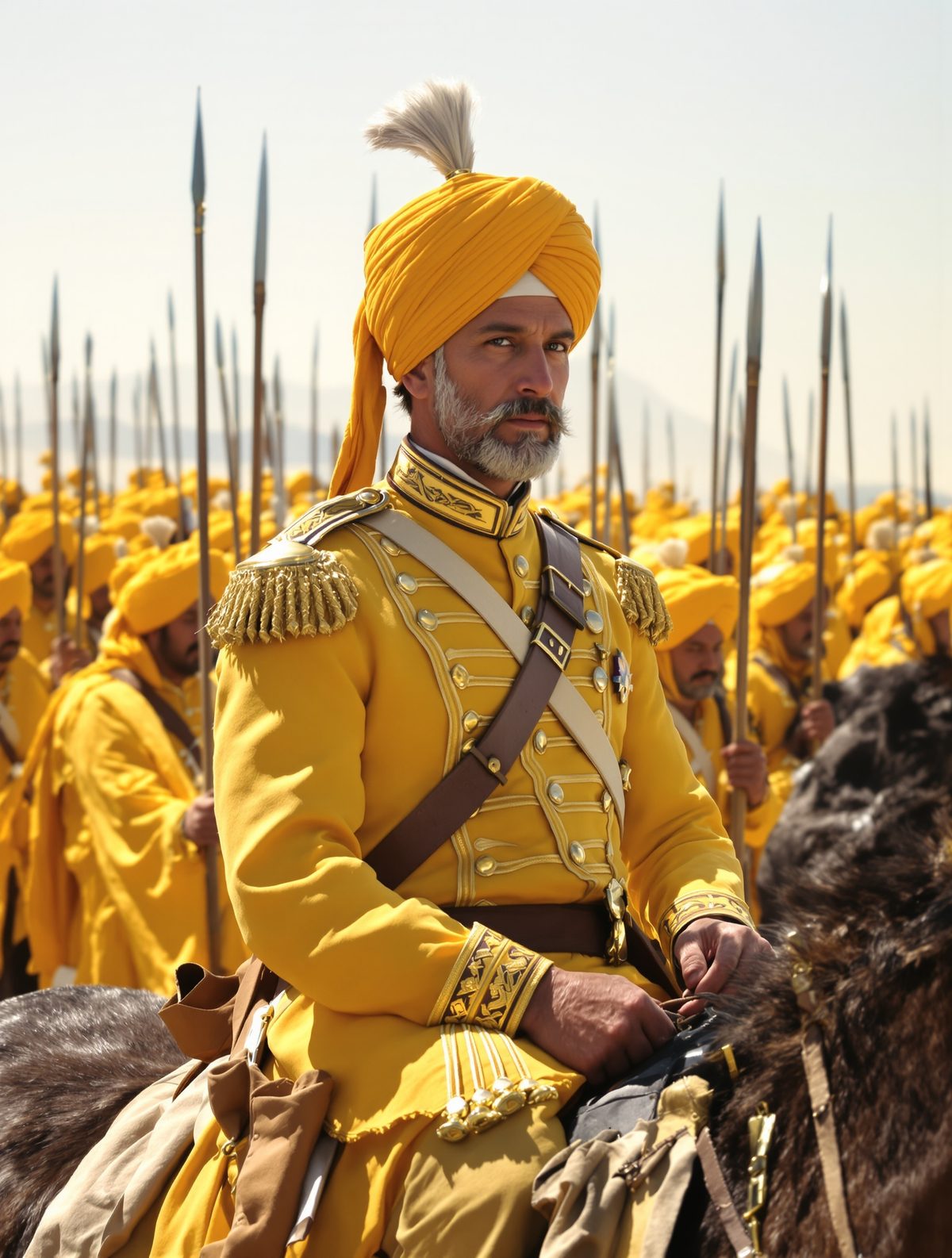
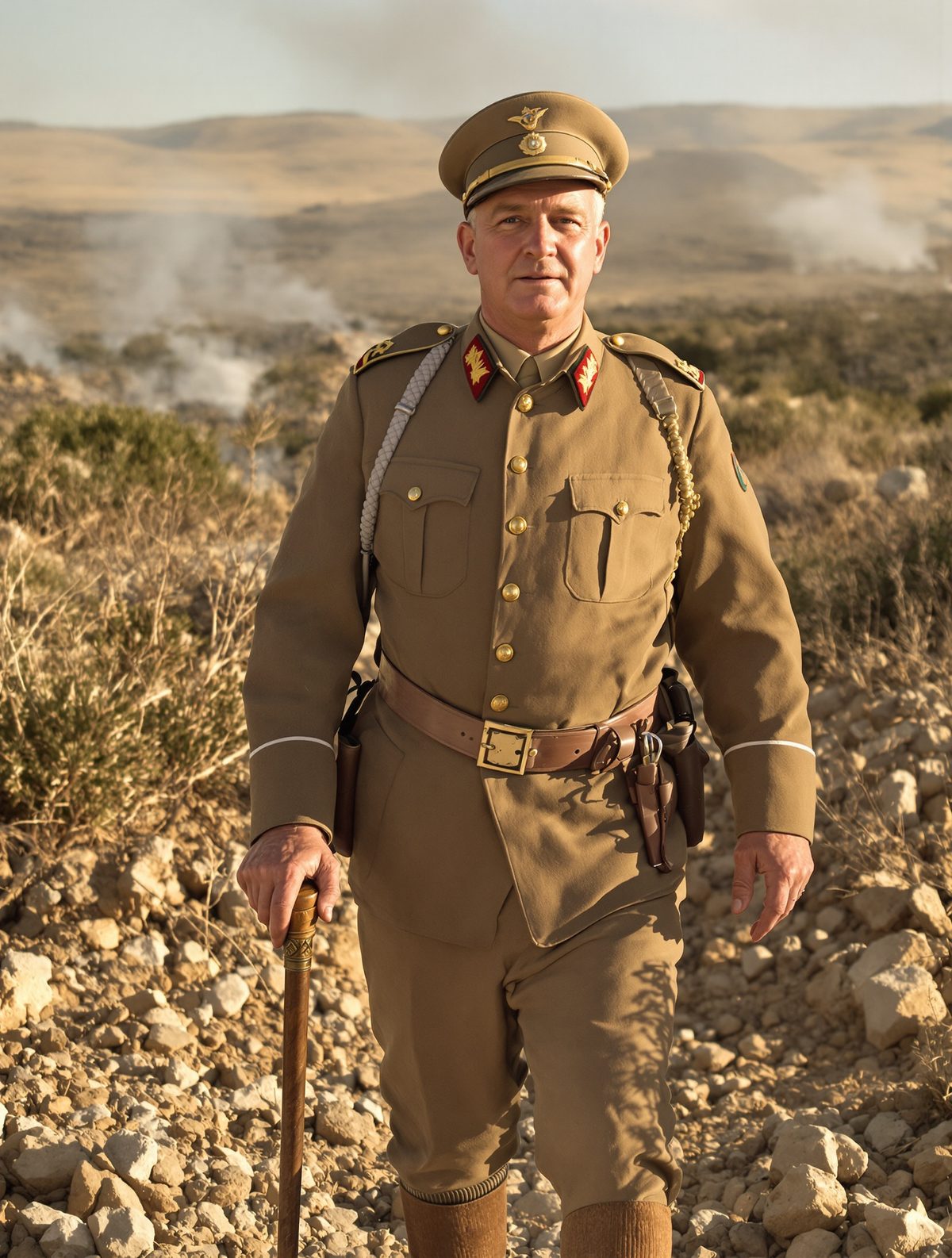
The monsoon had broken early that January morning in 1781, turning the red dust of Porto Novo into crimson mud. Through the pre-dawn mist, Sir Eyre Coote could see the flickering campfires of 40,000 enemy soldiers stretching across the horizon like fallen stars. His own force—a mere 7,000 British and sepoy troops—huddled in their makeshift camp, many too exhausted to sleep, all aware they were likely witnessing their final sunrise over the Coromandel Coast.
What happened next would determine whether the British Empire's hold on India would crumble into dust or emerge stronger than ever. It was a moment that textbooks often gloss over, yet it represents one of the most audacious military gambles in colonial history—a dawn attack so desperate, so seemingly suicidal, that it could only have been conceived by a man with absolutely nothing left to lose.
The General Who Refused to Quit
Sir Eyre Coote was not your typical British general. At 60 years old, he was ancient by military standards of the day, his body wracked by years of tropical disease and battlefield wounds. He had already "retired" twice from India, only to return when crisis called. His peers in London considered him past his prime—a relic from an earlier era of Company warfare.
But Coote possessed something more valuable than youth: he understood India in ways that armchair strategists back in Whitehall never could. He had first arrived in Madras as a young ensign in 1754, and over the decades had absorbed the rhythms of monsoon warfare, the psychology of sepoy soldiers, and the delicate dance of alliances that kept the subcontinent's complex web of power in balance.
By late 1780, that balance was collapsing. The ambitious Sultan of Mysore, Hyder Ali, had forged a devastating alliance with the French, led by the brilliant Comte de Bussy—a commander who had never lost a battle in twenty years of Indian campaigns. Together, they commanded the largest native army ever assembled against British rule: 40,000 infantry, 30,000 cavalry, and a train of artillery that stretched for miles.
The British position seemed hopeless. Fort after fort had fallen to Hyder Ali's advancing forces. The key fortress of Arcot was under siege, and if it fell, the road to Madras—the crown jewel of British India—would lie wide open.
The Impossible Mathematics of War
When Coote received his orders to march south and confront this seemingly unstoppable force, even his most loyal officers questioned the wisdom of the mission. The mathematics were stark and unforgiving: 7,000 men against 70,000. Even accounting for the superior training and equipment of British troops, those were odds that would make any reasonable commander seek terms rather than battle.
But Coote had calculated something his enemies hadn't: the hidden weaknesses within their massive coalition. Hyder Ali's vast army was actually a collection of smaller forces held together by success and plunder. Many of his cavalry were essentially mercenaries who fought for whoever paid them best. The French contingent, while professional, was relatively small and operating far from any hope of reinforcement.
Most crucially, Coote understood that large armies in tropical climates were as much victims of logistics as they were instruments of war. Feeding 70,000 men and thousands of camp followers required a supply train vulnerable to disruption. Disease spread faster through crowded camps. And the longer such a force remained in one place, the more its various factions began to eye each other with suspicion rather than focusing on their common enemy.
The Art of Calculated Desperation
As January 1781 dawned, both armies converged on the small coastal town of Porto Novo, about 60 miles south of Madras. Hyder Ali had chosen his ground well—the town sat astride the main coastal road, and controlling it would give him a launching point for the final assault on British India's southeastern stronghold.
For three days, the armies maneuvered around each other like prizefighters looking for an opening. Coote's troops were exhausted from their forced march south, many suffering from dysentery and heat stroke. But the old general had one final card to play: the element of surprise.
On the morning of July 1st, 1781, as the first pale light began to illuminate the enemy's sprawling camp, Coote gave the order that would either save British India or destroy what remained of its defenders. His entire force would attack in three columns, striking simultaneously at different points along the enemy line. It was a move so audacious that even Napoleon, studying the battle years later, would call it "either genius or madness—possibly both."
The assault began at dawn with a thunderous artillery barrage that shattered the morning calm. British cannon, lighter and more maneuverable than their enemy counterparts, had been moved into position during the night. The psychological effect was devastating—Hyder Ali's troops, confident in their overwhelming numbers, suddenly found themselves under attack by an enemy they had assumed was too weak to do anything but defend.
Six Hours That Changed an Empire
What followed was six hours of the most intense fighting the Coromandel Coast had ever witnessed. Coote, despite his age and infirmity, led from the front, his white hair visible to troops across the battlefield as he rode from crisis point to crisis point, shoring up his thin lines wherever they seemed ready to break.
The battle's turning point came when British cavalry, led by Colonel Hector Munro, smashed through Hyder Ali's left flank and captured the enemy's main artillery park. Suddenly, the mathematical advantage that had seemed so overwhelming began to work against the allied force. With their line stretched thin to encompass their vast numbers, they couldn't concentrate enough firepower at any single point to break Coote's compact, disciplined formations.
By noon, what had begun as Hyder Ali's coronation march to Madras had become a chaotic retreat. The great alliance began to fracture as various commanders decided discretion was the better part of valor. The French, professional to the end, conducted a fighting withdrawal. But many of Hyder Ali's allies simply melted away into the countryside, taking their forces with them.
When the dust settled, British casualties numbered fewer than 400. Allied losses were catastrophic—nearly 10,000 dead or wounded, with thousands more scattered to the winds. More importantly, the myth of Hyder Ali's invincibility was shattered. Across South India, rulers who had been preparing to join the winning side suddenly reconsidered their options.
The Victory That Saved an Empire
Porto Novo was more than just a military victory—it was a masterclass in the kind of calculated risk-taking that built the British Empire. Coote had gambled everything on a single throw of the dice, and in doing so had demonstrated a truth that his more cautious contemporaries often forgot: sometimes the most dangerous course is the safest one.
The battle's aftermath reverberated far beyond the immediate theater. Within months, British forces were back on the offensive across South India. Hyder Ali's coalition never recovered its momentum, and when the Sultan died the following year, his son Tipu Sultan inherited a much-diminished kingdom. The French, their Indian dreams shattered once again, would not return as serious contenders for another generation.
Perhaps most significantly, Porto Novo established a template for British success in India that would persist for the next century: a small, professional core of European troops, supported by larger numbers of well-trained sepoys, could defeat much larger native armies through superior tactics, logistics, and leadership. It was a lesson that would echo through conflicts from the Sikh Wars to the Indian Mutiny.
Yet today, while every schoolchild learns about Clive's victory at Plassey or Wellington's triumph at Waterloo, Coote's desperate gamble at Porto Novo remains largely forgotten. Perhaps that's because it reveals an uncomfortable truth about empire: that the grand sweep of history often turns on moments of pure desperation, when men with no good options choose the least bad one and somehow emerge victorious. In our age of calculated risk management and focus-grouped decisions, there's something both inspiring and terrifying about Coote's willingness to stake everything on a single dawn attack. It reminds us that sometimes, when the odds are impossible, the only rational response is to do something completely irrational—and pray that audacity can substitute for advantage.