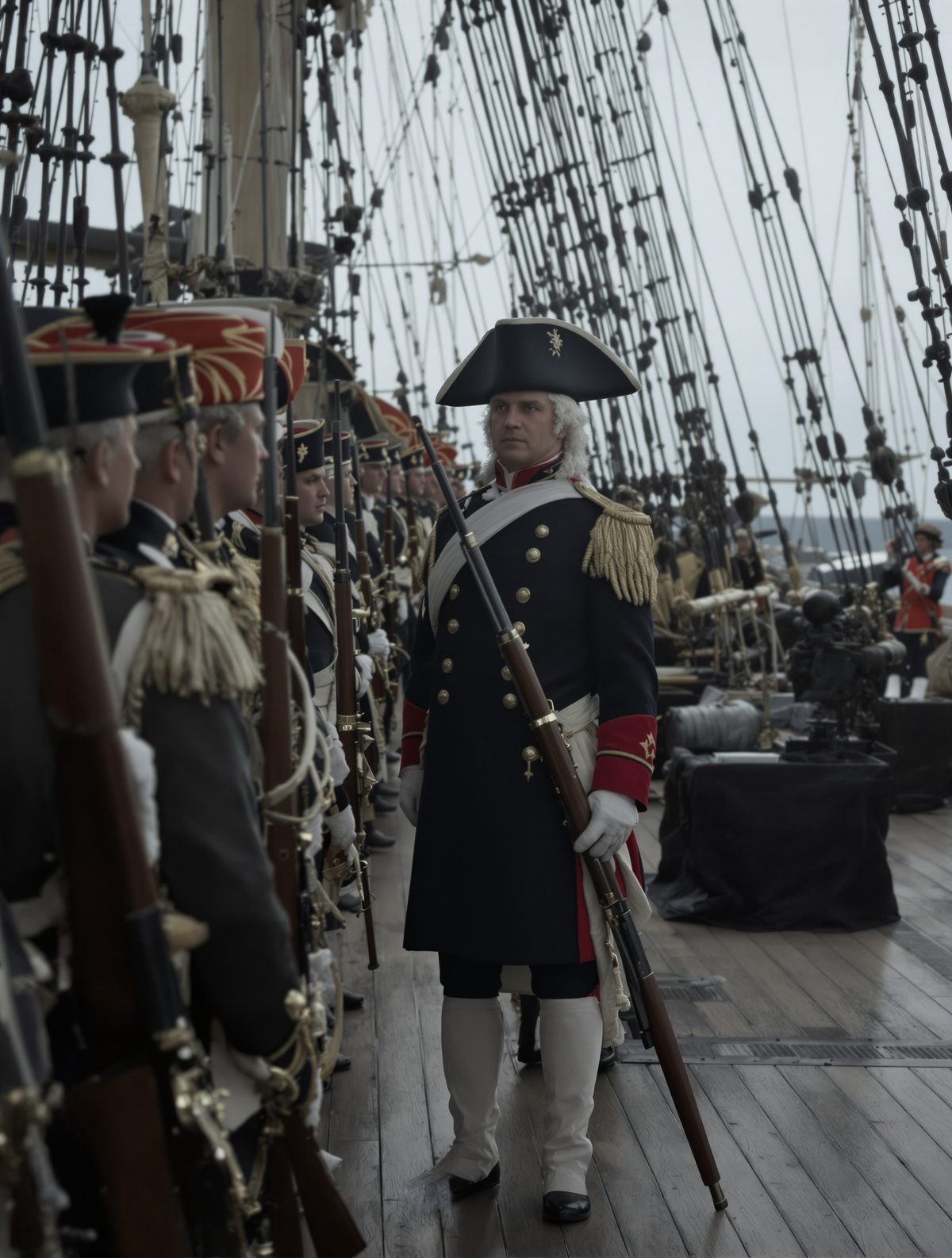
The weathered ship that crept into Plymouth harbour on September 26, 1580, looked nothing like the vessel that had departed three years earlier. Her hull was patched with foreign timber, her sails bore the scars of Pacific storms, and barnacles from three oceans clung to her waterline. But beneath her battered deck, the Golden Hind carried the most valuable cargo ever brought to English shores—Spanish silver worth £500,000, roughly equivalent to £200 million today. In the captain's cabin, a Devon sea captain named Francis Drake nursed a goblet of wine looted from a Spanish admiral, knowing full well that he'd either made himself the richest commoner in England or signed his own death warrant.
The Gentleman Pirate Sets Sail
Three years earlier, Drake had slipped out of Plymouth with five ships and 164 men on what Queen Elizabeth I publicly called a "trading voyage" to Alexandria. Privately, she'd given him far different instructions: sail through the Strait of Magellan, attack Spanish settlements along the Pacific coast, and bring home as much treasure as possible. It was state-sponsored piracy dressed up as exploration, and everyone involved knew the risks. If Drake failed, Elizabeth would disavow all knowledge. If he succeeded, England would have the funds to challenge Spanish dominance of the seas.
The expedition began disastrously. By the time Drake's remaining ships reached the treacherous waters off Cape Horn, storms had already claimed two vessels and dozens of men. The Golden Hind—originally called the Pelican until Drake diplomatically renamed her mid-voyage to honor a political patron—emerged as the sole survivor of the Atlantic crossing. What should have been a devastating setback became Drake's greatest advantage. A single, fast ship could strike Spanish targets and vanish before reinforcements arrived.
Terror on the Pacific Coast
The Spanish called the Pacific their private lake, and for good reason. No enemy ship had ever appeared in those waters. Spanish treasure galleons sailed unescorted, their captains so confident in their security that they often left their cannons unloaded. Drake exploited this complacency ruthlessly. Along the coasts of Chile and Peru, he captured ship after ship, seizing silver bars, chests of coins, and precious stones with barely a shot fired.
The most spectacular prize came in March 1579, when Drake's lookouts spotted a large galleon off the coast of Ecuador. The Nuestra Señora de la Concepción—mockingly nicknamed Cacafuego ("Spitfire") by English sailors—was carrying the annual treasure shipment from Lima to Panama. When Drake's men boarded her, they found thirteen chests of silver coins, twenty-six tons of silver bars, and jewels that would take three days to transfer. The ship's pilot later testified that the English spent six days "celebrating and toasting" their incredible fortune.
But Drake wasn't finished. He sailed north along the California coast, claiming the territory for England and establishing friendly relations with the native Miwok people, who may have believed the pale-skinned strangers were supernatural beings. The English built a fort and spent five weeks repairing their ship while Drake planned the most audacious part of his journey: rather than risk the dangerous return trip through the Strait of Magellan, he would sail west across the Pacific and around Africa, becoming only the second expedition in history to circumnavigate the globe.
The Long Road Home
What followed was a grueling 13-month odyssey across uncharted waters. Drake's men battled scurvy, starvation, and the constant fear of shipwreck as they navigated by crude charts and dead reckoning. In the Spice Islands, they traded for precious cloves and nutmeg, cramming the ship so full of treasure that she rode dangerously low in the water. Off the coast of Java, the Golden Hind ran aground on a coral reef and nearly broke apart. Drake ordered the men to dump precious cloves overboard—eight tons of spices worth a fortune—to lighten the ship and float free.
The psychological toll was enormous. Men who had sailed as friends turned suspicious, eyeing each other's share of the treasure. Drake maintained discipline through a combination of charisma, brutality, and the promise of unimaginable wealth waiting at journey's end. He also kept detailed logs and charts, knowing that the geographic intelligence he was gathering might prove as valuable as the silver in his hold.
By the time the Golden Hind rounded the Cape of Good Hope, she was a floating museum of global plunder. Her hold contained Spanish silver, Portuguese gold, Chinese silk, Indonesian spices, and captured charts showing secret Spanish trade routes. The ship herself had been patched with timber from three continents, her crew bearing the scars and stories of a thousand adventures.
A Hero's Welcome and a Queen's Dilemma
Drake's return created an immediate diplomatic crisis. Philip II of Spain demanded his head, calling him "the master thief of the unknown world" and threatening war if Elizabeth didn't execute him and return the treasure. The Spanish ambassador produced detailed inventories of stolen goods and testimony from captured Spanish officers. The evidence was overwhelming—Drake had committed acts of piracy that would normally result in the gallows.
Instead, Elizabeth played for time. She ordered the Golden Hind moved to a secure berth at Deptford, posted guards around the treasure, and launched a meticulous audit of Drake's haul. The final tally was staggering: £500,000 in precious metals and goods, plus intelligence that would give English navigators access to previously secret Spanish sea routes. After paying his crew and investors, Drake's personal share came to £10,000—making him one of the wealthiest men in England overnight.
The Queen kept the Crown's portion secret, but historians estimate she received around £160,000, roughly half her government's annual income. This windfall would fund the expansion of the Royal Navy and help finance England's eventual victory over the Spanish Armada eight years later. On April 4, 1581, Elizabeth herself boarded the Golden Hind and knighted Drake on her deck, sending an unmistakable message to Philip II: England would not be intimidated.
The Price of Glory
Not everyone celebrated Drake's return. Of the 164 men who had sailed with him, only 59 survived the three-year voyage. Families of the dead received small compensation payments, but nothing approaching the wealth that Drake and his officers enjoyed. The Spanish, meanwhile, began redesigning their colonial defenses and sailing their treasure ships in armed convoys, making future raids far more difficult and dangerous.
Drake himself struggled to adjust to life as a landed gentleman. He purchased Buckland Abbey, a grand estate in Devon, and married the daughter of a prominent family. But the man who had terrorized two oceans found peacetime boring. He would return to sea repeatedly, seeking new adventures and treasures, though he never again achieved the spectacular success of his circumnavigation voyage.
The Golden Hind herself was preserved as a tourist attraction at Deptford, where Londoners paid to walk her decks and hear tales of her incredible journey. She remained there for nearly a century before finally rotting away, but not before inspiring countless young Englishmen to seek their fortunes on the seas.
The Foundation of an Empire
Drake's voyage marked a turning point in global power dynamics. For the first time, England had demonstrated that Spanish dominance of the seas could be challenged. The treasure from the Golden Hind funded the naval expansion that would eventually make Britain the world's dominant maritime power, while Drake's detailed charts and navigation logs gave English captains the knowledge they needed to establish their own global trade networks.
Perhaps most importantly, Drake's success changed how the English saw themselves. No longer were they merely inhabitants of a cold, peripheral island kingdom. They were potential rulers of the seas, capable of striking at the heart of the world's greatest empire and sailing home rich as kings. That shift in national psychology would echo through the centuries, driving the expansion that would eventually create history's largest empire.
Today, as we debate globalization and international trade, Drake's voyage reminds us that economic warfare is nothing new. His success came not just from superior seamanship, but from understanding that control of trade routes meant control of wealth and power. In an age when data flows and supply chains have replaced treasure galleons, the lessons of the Golden Hind remain surprisingly relevant: sometimes the greatest victories come not from direct confrontation, but from disrupting your opponent's ability to do business as usual.