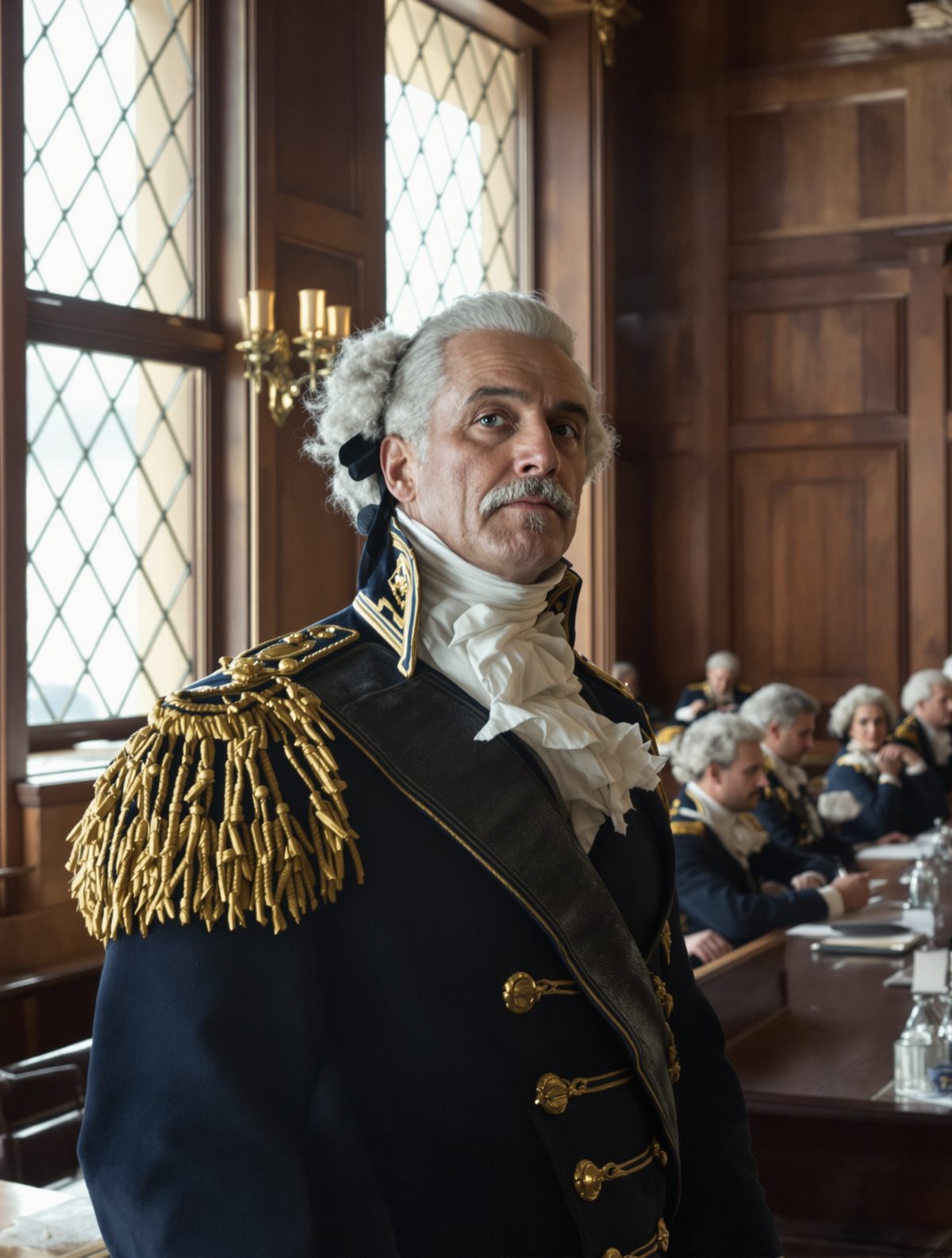
The cannonball whistled through the humid air of Lucknow on July 2nd, 1857, before crashing through the second-story window of the British Residency. Sir Henry Lawrence was examining maps when the iron sphere shattered his thigh, sending bone fragments and shrapnel tearing through his body. As his blood pooled on the floor of the room that had become the nerve center of British resistance, the 51-year-old administrator knew he was dying. But with his final breaths, he would issue an order that would echo through 87 days of hell—and save nearly a thousand lives.
Outside the compound's crumbling walls, 60,000 Indian rebels had surrounded the Residency complex, their war cries mixing with the thunder of artillery. Inside, 1,720 souls—British officials, soldiers, women, children, and loyal Indian servants—huddled in rooms that reeked of gunpowder, fear, and desperation. What happened next would become one of the most extraordinary survival stories in the blood-soaked annals of the Indian Rebellion.
The Prophet of Doom Who Saved Them All
In the sweltering weeks before the siege began, Sir Henry Lawrence had become an unwelcome Cassandra among Lucknow's British community. While his peers sipped gin and tonics on their verandas, dismissing reports of unrest as "sepoy nonsense," Lawrence was stockpiling grain, ammunition, and medical supplies with the fervor of a man preparing for Armageddon.
Lawrence understood India in ways that eluded most of his contemporaries. Unlike the typical colonial administrator who viewed Indians through the lens of racial superiority, he spoke fluent Urdu, Persian, and Hindi. He had spent years living among Indian communities, earning a reputation as one of the few British officials who genuinely respected local customs and grievances. This intimate knowledge now terrified him.
By May 1857, disturbing reports were flooding in from across northern India. In Meerut, sepoys had murdered their British officers and marched on Delhi. In Cawnpore, the trusted Nana Sahib had turned against his former allies with shocking brutality. Lawrence could read the signs that others chose to ignore: this wasn't just a military mutiny—it was a full-scale uprising that would sweep across Awadh like wildfire.
Working feverishly against time, Lawrence transformed Lucknow's sprawling Residency complex into a fortress. He ordered the construction of underground tunnels connecting key buildings, installed additional cannons on rooftops, and—most crucially—stockpiled enough provisions to feed over 1,000 people for months. His fellow British residents thought he was paranoid. They would soon discover he was prescient.
When Paradise Became Purgatory
The storm broke on May 30th, 1857, when the 71st Bengal Native Infantry at Lucknow's Machchi Bhawan cantonment raised the standard of revolt. Within hours, the carefully ordered world of British Lucknow collapsed into chaos. Mansions that had hosted elegant dinner parties the night before were reduced to smoking ruins by dawn. Gardens where children had played were transformed into killing fields.
As panicked British families fled through streets filled with smoke and screaming, Lawrence's preparations proved their worth. The Residency complex—a collection of buildings surrounding the chief commissioner's house—became Noah's ark in a deluge of violence. Along with British civilians and soldiers, hundreds of loyal Indian servants, guards, and their families sought refuge within its walls, creating an unlikely multicultural community bound together by desperation.
The rebels, led by the exiled Begum Hazrat Mahal and her young son (the nominal king of Awadh), established their positions in the surrounding buildings and gardens. From the Kaisarbagh palace complex to the city's ancient mosques, artillery pieces appeared like metal flowers blooming in a garden of war. The siege had begun.
What the defenders faced was unprecedented in scale. Unlike typical military sieges, this was urban warfare in one of India's most densely populated cities. Rebels could move through the labyrinthine streets and buildings of Lucknow, appearing and disappearing like ghosts, making every window a potential sniper's nest and every doorway a possible ambush point.
The Death That Became a Battle Cry
When that rebel cannonball found Sir Henry Lawrence on July 2nd, it struck more than flesh and bone—it threatened to shatter the garrison's morale. Lawrence had been the strategic mind behind their defenses, the steady hand that had guided them through the first month of siege. As he lay dying in the Residency's makeshift hospital, surrounded by the groans of other wounded men, the weight of command fell to his deputy, John Inglis.
But Lawrence wasn't finished. In a voice growing weaker with each word, he gave Inglis his final order: "Let there be no surrender." These five words, spoken by a dying man in a room thick with the smell of blood and chloroform, would become the garrison's sacred creed.
Lawrence died on July 4th—Independence Day in distant America, though the irony would not have been lost on the rebels fighting for their own independence outside the walls. His body was buried at midnight in a shallow grave within the compound, the funeral conducted by candlelight as enemy snipers waited in the darkness beyond.
What happened next revealed the true genius of Lawrence's preparations. The garrison had enough grain to bake bread, enough ammunition to maintain their defensive fire, and enough medical supplies to treat their wounded. More importantly, they had enough hope to endure the psychological torture of siege warfare—the constant bombardment, the ever-present threat of assault, and the agonizing uncertainty about whether relief would ever come.
87 Days in Hell's Antechamber
The siege of Lucknow became a masterclass in survival under impossible circumstances. Inside the compound, British memsahibs who had never lifted anything heavier than a teacup were now loading muskets and tending to wounded soldiers. Children played games between artillery barrages, their laughter providing an eerie counterpoint to the thunder of guns.
The rebels employed tactics that would be familiar to modern urban warfare specialists. They dug tunnels beneath the compound's walls, packed them with gunpowder, and detonated massive mines that sent geysers of earth and debris skyward. The defenders countered by digging their own tunnels, leading to terrifying subterranean battles fought by candlelight in passages barely wide enough for a man to crawl through.
Above ground, snipers on both sides played deadly games of cat and mouse. A British soldier named Private Henry Metcalfe became legendary for his marksmanship, picking off rebel gunners from his position atop the Residency's highest tower. The rebels responded by positioning their own sharpshooters in the minarets of nearby mosques, turning the spiritual heart of the city into a network of killing positions.
Perhaps most remarkably, the siege created an unusual social laboratory. Class distinctions that had seemed immutable in peacetime began to blur as survival became the only priority. British officers found themselves taking orders from enlisted men who knew more about defensive tactics. Indian servants who might have been dismissed as inferiors proved their courage daily, carrying messages through sniper-infested courtyards and sharing their own food rations with hungry British children.
The Miracle of September 25th
By September 1857, the situation inside the Residency had become critical. Despite Lawrence's stockpiling, food supplies were running dangerously low. The garrison was surviving on a daily ration of four ounces of flour per person—barely enough to prevent starvation. Disease was rampant in the overcrowded, unsanitary conditions, with cholera and dysentery claiming lives daily. Of the original 1,720 people who had sought refuge in the compound, fewer than 1,000 remained alive.
Then, on September 25th, the impossible happened. Through the smoke and chaos of another day's bombardment, sharp-eyed defenders spotted something that made their hearts leap: British uniforms advancing through the city streets. General Sir Henry Havelock and Sir James Outram had fought their way through 60 miles of hostile territory to reach Lucknow, their Highland regiments cutting through rebel positions with bayonet charges that would become the stuff of legend.
The relief of Lucknow wasn't the end of the siege—that wouldn't come until November when Sir Colin Campbell finally evacuated the survivors. But it was the moment when Lawrence's dying words were vindicated. There had been no surrender. The garrison had endured 87 days of hell and emerged, if not victorious, then at least unbroken.
Echoes Across Time
The siege of Lucknow reveals uncomfortable truths about colonial rule, rebellion, and the human capacity for both cruelty and extraordinary resilience. While British accounts celebrated the heroism of the defenders, they often ignored the legitimate grievances that drove Indians to rebellion—the cultural insensitivity, economic exploitation, and racial arrogance that had poisoned relationships between rulers and ruled.
Yet within this larger tragedy, Sir Henry Lawrence's final order illuminates something profound about leadership in crisis. His five words—"Let there be no surrender"—weren't just military instructions. They were a declaration that some things are worth enduring any hardship to preserve: dignity, loyalty, and the bonds that hold communities together when everything else falls apart.
In our own age of global uncertainties and social divisions, Lawrence's story reminds us that true leadership often requires the courage to prepare for disasters others refuse to acknowledge, and the wisdom to understand that survival sometimes depends not on grand gestures, but on the quiet accumulation of small acts of foresight and compassion. The grain he stockpiled and the tunnels he ordered dug saved more lives than any heroic charge or stirring speech ever could.
The graves in Lucknow's old British cemetery still bear witness to those 87 days of siege. But perhaps the most fitting memorial to Sir Henry Lawrence lies not in stone, but in the simple recognition that sometimes the most important battles are won not by those who fight the longest, but by those who prepare the best.