The stench of death hung over Jamestown like a shroud in the summer of 1611. Of the 500 colonists who had arrived with such hope just months before, fewer than 60 skeletal figures remained, their hollow eyes reflecting a settlement balanced on the knife's edge of extinction. The fort's wooden walls were rotting, crops lay unharvested, and men wandered aimlessly, many having given up all pretense of civilization. Then, on May 19th, a ship appeared on the horizon carrying a man who would either save Virginia—or destroy what remained of its humanity.
Sir Thomas Dale stepped ashore with a reputation forged in the blood-soaked battlefields of the Low Countries, where he'd earned his knighthood fighting the Spanish. What he found in Jamestown horrified even this veteran of Europe's most brutal wars. Men were "bowling in the streets" while others starved. The dead were left unburied. Some colonists had fled to live among the Powhatan, preferring the uncertainty of indigenous life to the chaos of English "civilization."
Dale's solution would echo through American legal history for centuries to come—a code so merciless that it would earn the nickname "Dale's Laws," though officially known as the "Lawes Divine, Morall and Martiall." What happened next was nothing short of a social experiment in absolute control, one that would determine whether England's first permanent foothold in the New World would survive or join the ghostly roll call of failed colonial ventures.
The Marshal Takes Command
Thomas Dale arrived in Virginia not as a typical colonial administrator, but as High Marshal—essentially a military dictator with absolute power over every aspect of colonial life. His credentials were impeccable: a veteran of campaigns in Ireland and the Netherlands, a man who understood that discipline could mean the difference between victory and annihilation. But Jamestown wasn't a battlefield in the traditional sense—it was something far more challenging.
The colony Dale inherited was a masterclass in how not to establish a settlement. The Virginia Company had sent waves of "gentlemen" who considered manual labor beneath their station, artisans whose skills proved useless in the wilderness, and adventurers who'd expected to find gold lying on Virginia's beaches. Instead, they found endless forests, hostile natives, and the brutal reality that survival required backbreaking work that many simply refused to perform.
Dale's first act was to impose martial law—not just on the military garrison, but on every single colonist. This wasn't unprecedented in English colonial ventures, but the scope and severity of what came next certainly was. Within weeks of his arrival, Dale had published his legal code: 37 articles that governed everything from morning prayers to crop rotation, backed by punishments that would make a Spanish Inquisitor blanch.
Death for a Loaf of Bread
The specifics of Dale's Laws read like a catalog of human fears. Steal food during a time of scarcity? Death. Desert your post? Death. Speak blasphemously against God? Death. But the truly chilling aspect wasn't just the number of capital offenses—it was the creative brutality of lesser punishments that revealed Dale's understanding of psychological warfare against his own people.
A colonist caught trading with the Powhatan without permission wouldn't just face execution—he'd first have a bodkin thrust through his tongue before being chained to a tree until he starved. A man who killed a domesticated animal without permission would have his ears cut off and serve a year as a galley slave. Women caught gossiping about the colony's leadership faced public whipping and exile to the outer settlements, where survival was far from guaranteed.
Perhaps most telling was Dale's treatment of what he called "idleness"—the capital sin in his new order. Every colonist was required to attend morning and evening prayers, work six days a week from sunrise to sunset, and spend their Sundays in religious instruction. Those caught "loitering" during work hours faced increasingly severe punishments: first confinement in chains, then whipping, and finally—for repeat offenders—death.
The psychological impact was immediate and profound. John Smith, no stranger to harsh discipline himself, would later write that Dale's arrival transformed Jamestown from a "misery" into a "terror." Colonists who had been lackadaisical about survival now worked with the desperate energy of men who knew their lives literally depended on their productivity.
The Price of Order
Dale's methods worked—but at a cost that would haunt Virginia for generations. By 1614, just three years after his arrival, Jamestown was not just surviving but expanding. Dale had established new settlements at Henricus and Bermuda Hundred, cleared thousands of acres for cultivation, and created the first stable agricultural foundation in English America. The colonists were building, farming, and trading with a efficiency that would have seemed impossible just years before.
But this transformation came through what can only be described as state terror. Contemporary accounts suggest that Dale executed or brutally punished dozens of colonists, though exact numbers remain murky—record-keeping was often spotty, and Dale had little incentive to advertise his methods to potential investors back in London. What we do know comes from scattered letters and journals that paint a picture of a community living under constant surveillance and fear.
Ralph Hamor, Dale's secretary and one of his few defenders, wrote glowingly of the "good order" that martial law had brought to Virginia. But even Hamor couldn't hide the reality that this order was maintained through what he euphemistically called "sharp laws sharply executed." Other accounts are less diplomatic: colonists lived in terror, worked like slaves, and existed under a legal system that made the Star Chamber look merciful.
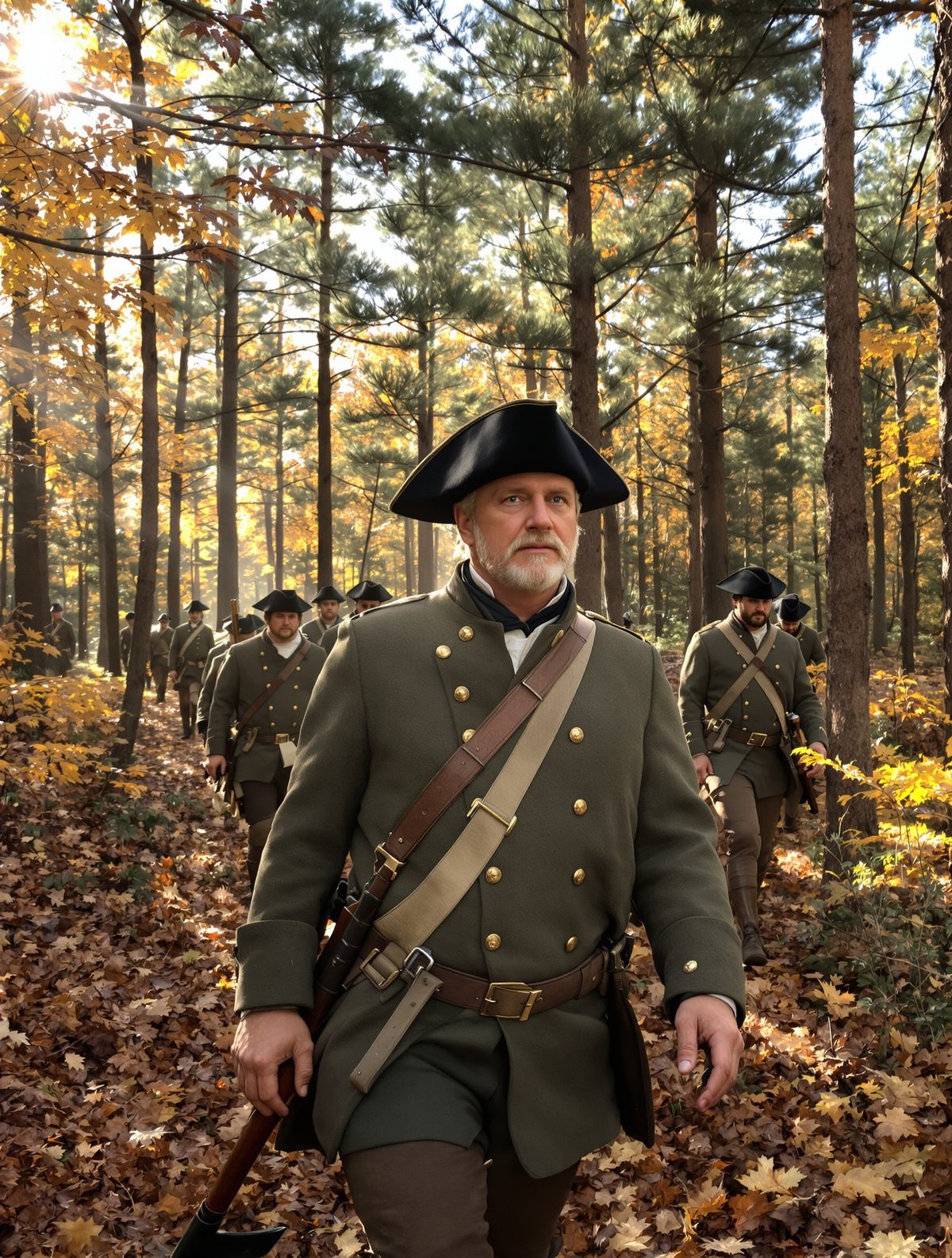
The most revealing aspect of Dale's reign wasn't what he did to potential lawbreakers, but how thoroughly he militarized civilian life. Colonists were organized into companies with military ranks. They marched to work in formation. They ate communal meals at specified times. Privacy became nonexistent—Dale's informers were everywhere, reporting on everything from work habits to private conversations to religious devotion.
When the Iron Fist Cracked
By 1616, even Thomas Dale seemed to recognize that his system was unsustainable. The man who had saved Jamestown through sheer brutality was now facing a different kind of crisis: his iron laws were preventing the very growth they had been designed to foster. Potential colonists were reluctant to emigrate to what had become known as a "prison colony." Those already in Virginia were so cowed by fear that innovation and enterprise—qualities essential for long-term colonial success—were being systematically crushed.
The beginning of the end came with Dale's most ambitious project: the city of Henricus, which he envisioned as a model Christian community that would demonstrate the success of his methods. Located on a bend of the James River about 65 miles upstream from Jamestown, Henricus was designed to be the crown jewel of Dale's Virginia—a planned community with a college, church, and hospital that would serve as the colony's new capital.
But Henricus revealed the fatal flaw in Dale's system. A community built entirely on fear and compulsion might survive, but it could never truly thrive. The settlement grew according to Dale's plans, but it never developed the organic vitality that would make it self-sustaining. When Dale departed Virginia in 1616, taking with him Pocahontas and her husband John Rolfe for their famous journey to England, he left behind a colony that was stable but brittle—like a sword that had been tempered too hard.
Within a few years of Dale's departure, his legal code was quietly abandoned. The Virginia Company, desperate to attract new colonists, began offering private land ownership, representative government, and the basic civil liberties that Dale had suspended. The colony that emerged was far messier than Dale's militarized utopia, but it was also more resilient, more attractive to potential immigrants, and ultimately more successful.
The Marshal's Dark Legacy
Thomas Dale's five years in Virginia present one of American history's most troubling paradoxes. Without his harsh discipline, Jamestown would almost certainly have joined the long list of failed colonial experiments. The "Starving Time" of 1609-1610 had nearly ended English hopes in North America before they began, and Dale's iron laws provided the shock therapy that transformed a dying settlement into Britain's first permanent American foothold.
Yet Dale's success came through methods that fundamentally contradicted everything the eventual United States would claim to represent. His legal code made no distinction between civil and military authority, offered no protection for individual rights, and treated colonists as subjects to be controlled rather than citizens to be governed. In saving Jamestown, Dale created what was essentially a police state—efficient, orderly, and utterly incompatible with the liberal ideals that would later define American political culture.
The most chilling aspect of Dale's legacy isn't what he did, but how easily his contemporaries accepted it. The Virginia Company endorsed his methods. The English Crown supported his authority. Colonists who survived his rule often defended it as necessary, even admirable. It was only later generations, viewing his era through the lens of established American institutions, who recognized Dale's laws for what they truly were: a working model of authoritarian control that succeeded precisely because it abandoned any pretense of governing with the consent of the governed.
In our own time, when democratic institutions face challenges both foreign and domestic, Thomas Dale's Virginia offers a stark reminder of how quickly civilized societies can accept authoritarian solutions to existential problems. Dale's colonists traded their freedom for survival—and for a time, it worked. The question that haunts his legacy is whether such bargains ever truly end, or whether they simply change form, echoing through generations like the ghostly drumbeat of soldiers marching to work in the forests of a very different America.