The dust of Delhi still hung in the September air when Major William Stephen Raikes Hodson made a decision that would echo through history. It was September 21st, 1857, and the ancient Mughal capital lay broken and bleeding after months of siege. But somewhere in the maze of tombs and ruins south of the city, three princes of the Mughal dynasty were hiding—the last living symbols of an empire that had once stretched from Kashmir to the Deccan. What happened next in the shadow of Humayun's tomb would take just a few hours, but it would slam shut the final chapter of a 331-year-old dynasty with the cold finality of a carbine's crack.
The Gambler Who Rode Alone
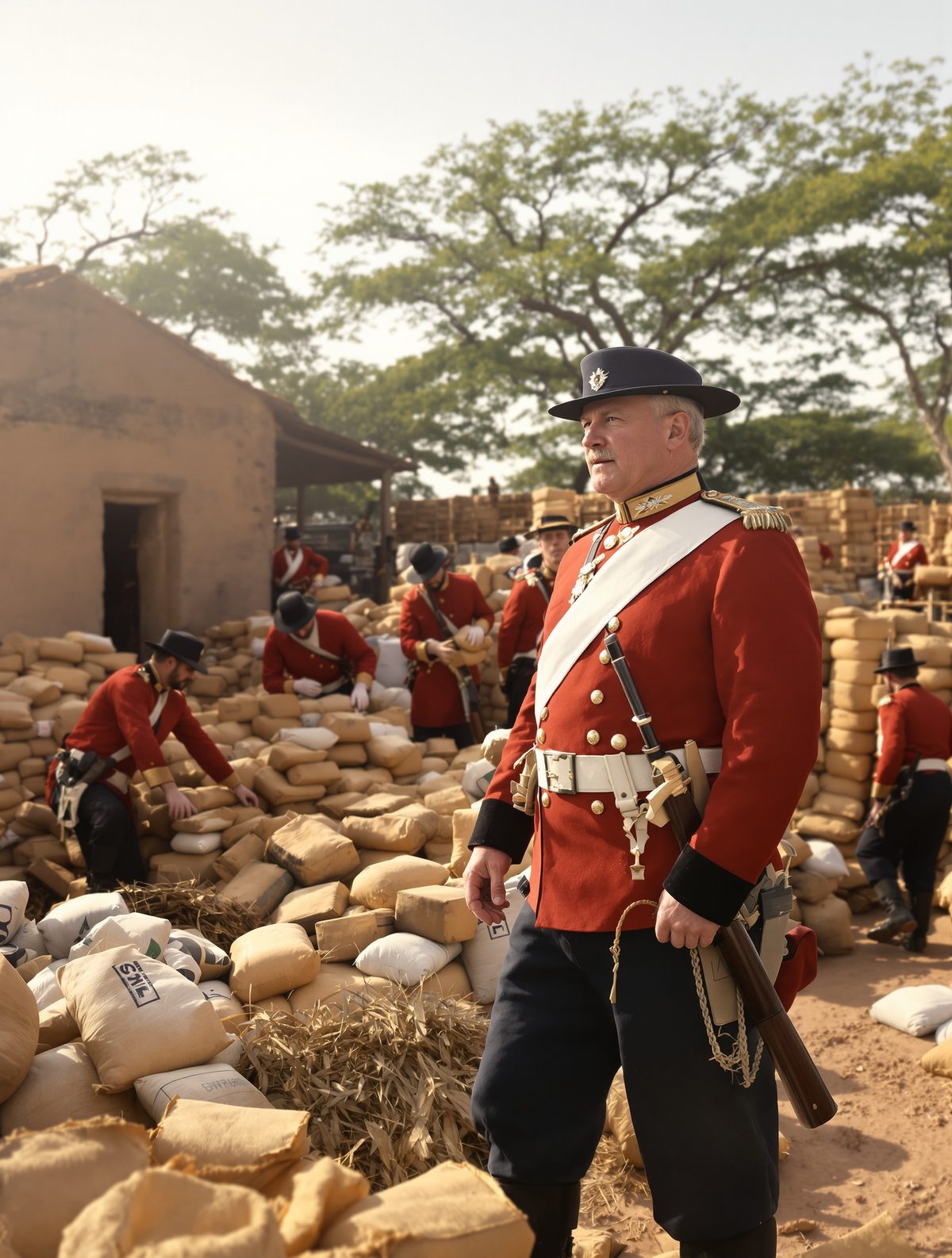
William Hodson was not your typical Victorian officer. At thirty-six, he was a man who seemed to attract both glory and controversy in equal measure. His fellow officers whispered about his gambling debts and questioned his methods, but none could deny his almost supernatural ability to extract intelligence from the chaos of rebellion. Tall, lean, with piercing eyes that missed nothing, Hodson had already captured Emperor Bahadur Shah Zafar himself just the day before—a feat that had stunned both British and Indian observers.
But the emperor was an old man, powerless and poet-like in his defeat. His sons were different. Mirza Mughal, Mirza Khizr Sultan, and Mirza Abu Bakr represented something far more dangerous: the possibility of future rebellion, future claims to the throne, future rallying points for those who still believed in Mughal legitimacy. As long as they lived, the dynasty lived.
On that crisp September morning, Hodson received intelligence that the three princes had taken refuge at Humayun's tomb, six miles south of Delhi. The tomb was more than just a mausoleum—it was a fortress-like structure surrounded by gardens and walls, a place where desperate men might make a final stand. Any sensible military commander would have sent a full company, perhaps a regiment. Hodson chose fifty Indian cavalry sowars and rode out into history.
The Fortress of the Dead
Humayun's tomb rises from the Delhi plain like a red sandstone dream, its massive dome and arched chambers built to house the bones of the second Mughal emperor. In 1857, it was already three centuries old, its gardens wild and overgrown, its chambers echoing with the ghosts of empire. But it wasn't empty that September day—intelligence suggested that nearly 6,000 rebels, sepoys, and civilians had gathered there, turning the tomb complex into an armed camp.
As Hodson's small band approached the tomb, the mathematical impossibility of his situation became clear. Fifty men against six thousand. Even accounting for the usual exaggeration of numbers in wartime reports, the odds were staggering. His sowars—Indian cavalry who had remained loyal to the British—must have wondered if their commander had finally succumbed to the madness that seemed to infect so many sahib officers in the heat and chaos of rebellion.
But Hodson had something more powerful than numbers: he had the psychological weight of Delhi's fall. The great fortress city had been the rebels' prize, their symbol of resurgent Indian power. Its recapture by the British had shattered more than walls—it had shattered the dream of restored Mughal glory. The men sheltering at Humayun's tomb weren't confident rebels anymore; they were desperate fugitives.
The Art of Imperial Bluff
What Hodson did next was a masterpiece of psychological warfare wrapped in the silk glove of negotiation. Positioning his fifty men strategically around the tomb complex, he sent word to the princes: surrender unconditionally, and their lives would be spared. Resist, and face the consequences when British reinforcements arrived.
The bluff was audacious. There were no immediate reinforcements coming. Hodson's tiny force could be overwhelmed in minutes if the defenders chose to fight. But the major understood something crucial about the psychology of defeat: desperate men don't always make rational calculations. They grasp at hope, even when that hope comes from their enemies.
Inside the tomb, urgent consultations took place. The princes were not natural warriors—they were products of a decadent court system where poetry mattered more than swordsmanship. Mirza Mughal, the eldest, had been proclaimed emperor by the rebels, but it was a hollow title without the substance of real power. Now, faced with the choice between certain death in a hopeless fight and the possibility of British mercy, they made their decision.
The gates of Humayun's tomb opened. In one of history's most remarkable surrenders, 6,000 men laid down their arms to fifty. The three princes emerged, still dressed in the faded finery of their imperial heritage, still carrying themselves with the dignity of their bloodline. They climbed into a bullock cart for the journey back to Delhi, probably believing they would live to see another sunrise.
The Executioner's Road
What happened next remains one of the most controversial moments of the entire Indian Rebellion. As the convoy made its way back toward Delhi, it was stopped by an increasingly hostile crowd of local residents. These weren't rebels—they were ordinary people whose rage had been stoked by months of warfare, tales of atrocity, and the simple human need to blame someone for their suffering.
Hodson later claimed that the crowd was growing dangerous, that the princes might be rescued or that his own men might be overwhelmed. Standing in his stirrups, he made an announcement that would haunt his reputation forever: the princes were no longer under his protection. They were to be executed immediately, without trial, without ceremony, without the dignity that their royal blood might traditionally have commanded.
The major drew his carbine—a short-barreled cavalry rifle—and personally shot all three princes dead by the roadside. Their bodies were stripped and displayed at the Kotwali, Delhi's main police station, where crowds gathered to gawk at the corpses of the last Mughal heirs. In a single afternoon, a bloodline that had ruled much of the Indian subcontinent since 1526 was extinguished forever.
The Weight of a Dynasty's End
Hodson's actions sent shockwaves through both British and Indian society. Even in an age of imperial brutality, the summary execution of surrendered princes seemed to cross a line. British officials were quietly horrified, though many publicly defended Hodson's decision. Indians were stunned by the casual elimination of a royal line that had seemed as permanent as the Red Fort itself.
The major himself seemed untroubled by the controversy. In letters to his wife, he wrote matter-of-factly about ending the "race of tyrants" and ensuring that no future rebellion could rally around Mughal legitimacy. For Hodson, it was a practical military decision—the permanent solution to a recurring problem.
But history had its own judgment waiting. Less than eight months later, Hodson was dead, shot by a sniper while looting a palace in Lucknow. The man who had ended the Mughal dynasty with such calculated ruthlessness met his own end in a moment of greedy carelessness, reaching for treasure that wasn't worth his life.
Echoes in an Empty Tomb
Today, visitors to Humayun's tomb see a UNESCO World Heritage site, its gardens restored, its red sandstone glowing in the Delhi sun. Few pause to consider that this beautiful monument was once the site of one of history's most successful bluffs—and one of its most ruthless conclusions. The tomb that was built to celebrate Mughal glory became the place where Mughal hope finally died.
Hodson's actions that September day raise questions that still resonate in our age of global conflict and imperial ambition. When does military necessity justify moral compromise? How do empires truly end—with grand treaties and formal ceremonies, or with a major's carbine by a dusty roadside? And what responsibility do individuals bear when they become the instruments of historical transformation?
The last Mughal emperor, Bahadur Shah Zafar, would live on for another five years in British exile, writing poetry about his lost kingdom. But the dynasty's real death came that afternoon when Hodson pulled the trigger. In the end, empires don't always fall with the drama of collapsing palaces and fleeing armies. Sometimes they simply end with three shots on a road outside Delhi, fired by a gambling man who understood that history belongs to those ruthless enough to write its final chapters.