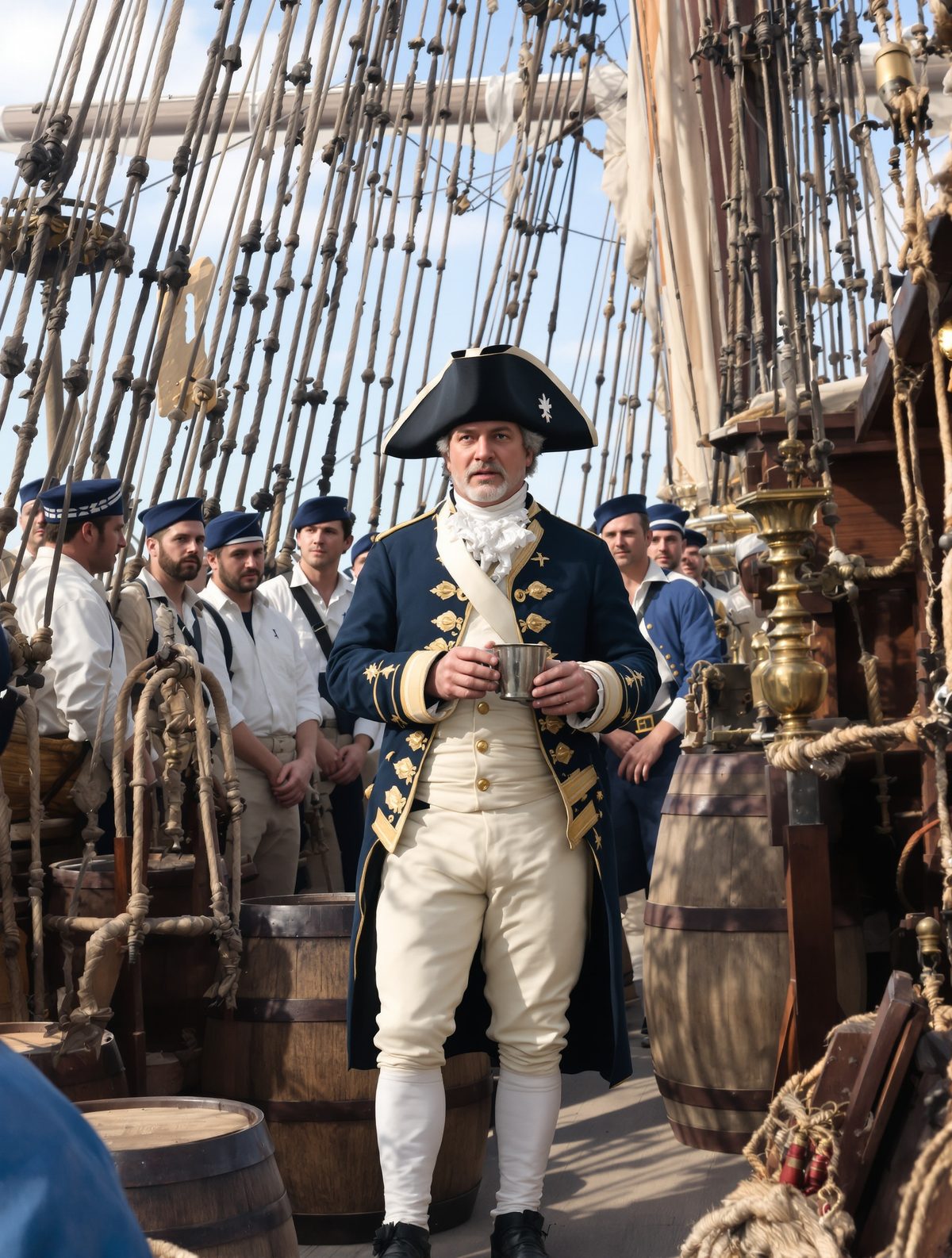
Picture this: you're an army engineer who thought you'd signed up for bridge-building and road construction. Instead, you find yourself staring across the Buffalo River at 4,000 Zulu warriors painted for war, their cowhide shields glinting in the African sun. Your "fortress"? A Swedish mission station with whitewashed walls, a thatched roof, and absolutely no military fortifications whatsoever. Welcome to Major John Rouse Merriott Chard's worst day—and finest hour.
It was 3:30 PM on January 22nd, 1879, when two dust-covered riders galloped into Rorke's Drift with news that would make any soldier's blood run cold. The main British force at Isandlwana had been annihilated—1,300 men slaughtered to the last. Now the victorious Zulu army was heading straight for their tiny outpost. Chard had 139 men, most of them sick or wounded, and exactly twelve hours to perform a miracle.
The Accidental Commander
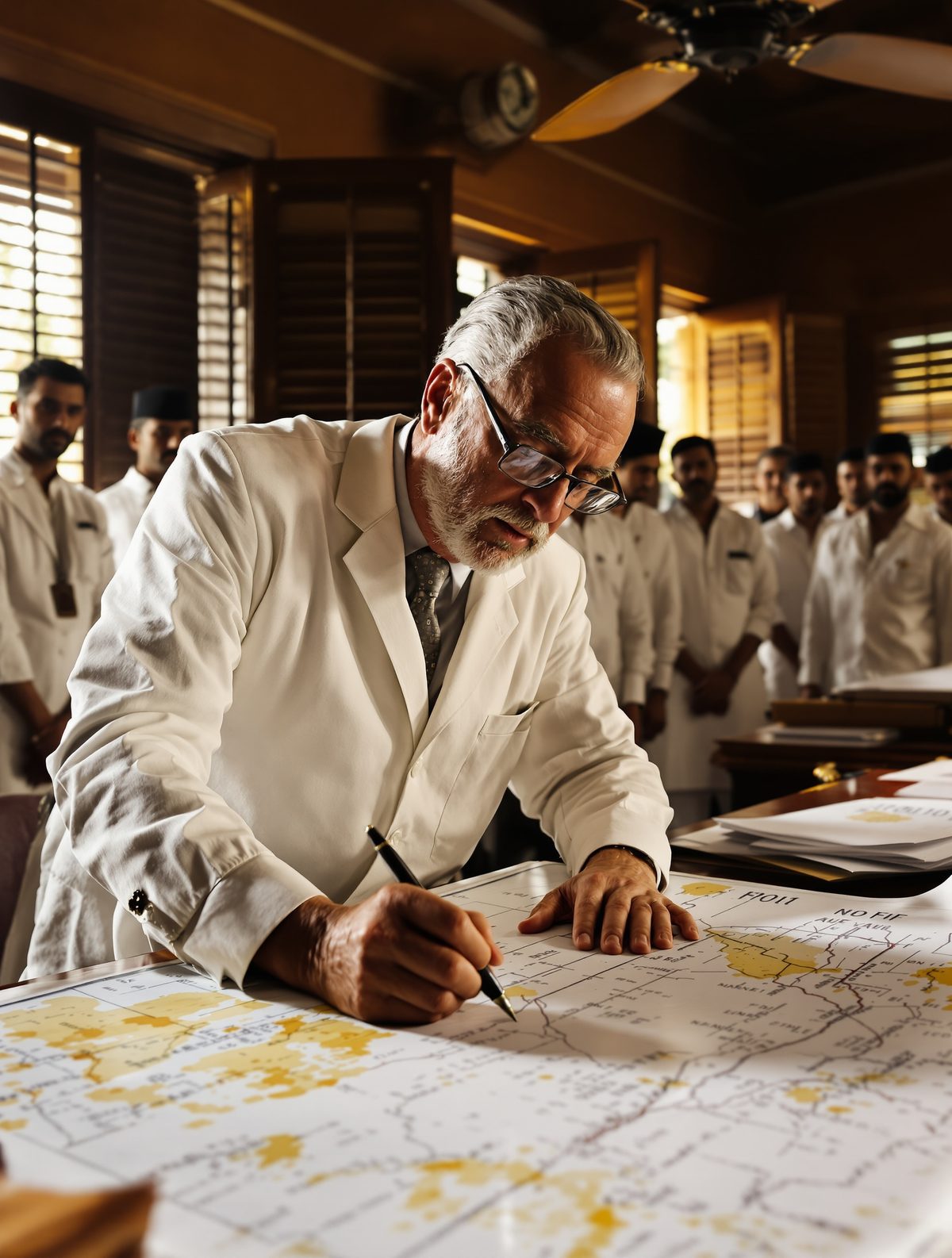
Major John Chard hadn't even supposed to be in command that day. At 31, this Royal Engineers officer was technically outranked by Lieutenant Gonville Bromhead of the 24th Foot, but Chard held his commission five days longer—a bureaucratic quirk that would change history. While Bromhead commanded the infantry, Chard was supposedly there to repair a pontoon bridge. Instead, he found himself facing the most lopsided odds in military history.
The irony wasn't lost on anyone: an engineer was about to prove that sometimes the best offense really is a good defense. But first, he had to build one from scratch using whatever he could scavenge from a mission station that had been designed to save souls, not stop spears.
When Lieutenant Horace Smith-Dorrien rode in with the devastating news from Isandlwana, chaos nearly broke out. Some of the colonial troops wanted to flee immediately—and honestly, who could blame them? The Zulus had just destroyed a force ten times larger than theirs. But Chard made a split-second decision that revealed either extraordinary courage or complete madness: they would stand and fight.
Turning Biscuits into Battlements
What followed was perhaps the most creative feat of military engineering ever attempted under fire. Chard had to transform two ordinary buildings—the mission house and the hospital—into an interconnected fortress using whatever materials lay at hand. His weapons? Mealie bags (corn sacks), biscuit boxes, spare timber, and sheer desperation.
The men worked with superhuman speed, creating a perimeter wall four feet high connecting the two main buildings. But here's what most people don't know: Chard was building more than just walls. He was creating what military engineers call "defense in depth"—a series of fallback positions that would allow his men to retreat from room to room, making the Zulus pay in blood for every inch.
The hospital presented a unique nightmare. Inside lay 35 sick and wounded soldiers, some delirious with fever, others barely able to walk. Private Henry Hook, initially assigned as a malingerer to hospital duty, would soon become an unlikely hero. As the Zulus closed in, Hook and his comrades began knocking holes through the interior walls with pickaxes and bayonets, creating escape routes from room to room.
Meanwhile, Chard positioned his sharpshooters on the hospital roof and behind the mealie-bag barricades. Every man who could hold a rifle—including the walking wounded—took a position. They had approximately 20,000 rounds of ammunition and one question burning in every mind: would it be enough?
The Tide of Spears
At 4:30 PM, the horizon came alive. Four thousand Zulu warriors of the uThulwana, iNdluyengwe, and uDloko regiments crested the hills surrounding Rorke's Drift. These weren't random raiders—they were elite warriors fresh from their victory at Isandlwana, carrying British rifles as trophies alongside their traditional assegais and knobkerries.
The first attack came like a human tsunami. Zulu warriors, their war cries echoing off the hills, charged directly at the hastily constructed barricades. The Martini-Henry rifles of the British cracked in disciplined volleys, cutting swaths through the attackers. But for every Zulu who fell, two more seemed to take his place.
What the defenders quickly discovered was that their enemy had learned from previous encounters with British firepower. The Zulus attacked in coordinated rushes, using the mission station's own buildings and scattered rocks as cover. Some warriors had even acquired firearms from Isandlwana, turning the battle into something resembling modern urban warfare.
By 6 PM, the outer perimeter was becoming untenable. Zulu warriors had managed to set fire to the hospital's thatched roof using flaming spears—a tactic that caught the British completely off guard. Suddenly, Chard's carefully planned defense was literally going up in smoke.
Room by Room, They Held the Line
What happened next in that burning hospital defies belief. As flames spread across the roof and smoke filled the wards, Private Hook and his comrades began one of the most extraordinary evacuations in military history. They had to move 35 sick and wounded men through holes in walls while Zulu warriors were literally breaking down the doors.
In one room, Private Cole held off attackers single-handedly while his comrades evacuated patients through a hole in the wall. In another, Privates Williams and Hitch fired through loopholes while dragging wounded men to safety. The Zulus, meanwhile, were systematically working through the hospital room by room, forcing the defenders into an increasingly desperate fighting withdrawal.
Here's a detail that rarely makes it into the official accounts: some of the "patients" being evacuated were suffering from typhoid and dysentery. These men were literally being carried on stretchers while rifle bullets whined overhead and assegai blades crashed against doors. Several of these "invalids" grabbed rifles and joined the fighting from their stretchers.
As the hospital became untenable, Chard executed the second phase of his defense. The surviving defenders fell back to a smaller perimeter around the mission house and storehouse, using the very mealie bags they'd stacked hours earlier. But now they were facing attacks from multiple directions, including Zulu marksmen who had positioned themselves in the burned-out hospital.
Dawn of the Desperate
The fighting raged through the night with an intensity that left men on both sides near collapse. Zulu attacks came in waves—sometimes separated by hours of nerve-wracking silence, other times in rapid succession that left the defenders no time to reload properly. The British were now firing over barricades made from their own supply crates, literally standing on their last reserves of food and ammunition.
Around 2 AM, the Zulus launched what everyone assumed would be their final assault. Warriors charged from three directions simultaneously, some carrying ladders to scale the walls, others attempting to tunnel under the barricades. For twenty terrifying minutes, the defense hung by a thread. Men fought hand-to-hand with rifle butts and bayonets when they ran out of ammunition.
But then something extraordinary happened. As dawn broke on January 23rd, the Zulu attacks began to falter. The warriors, who had fought with incredible bravery through the night, started to withdraw. They had lost an estimated 400 men against the tiny garrison—a price too high even for victory. More importantly, scouts reported that British reinforcements were approaching.
When Lord Chelmsford's relief column arrived at 8 AM, they found 139 men who had held off an army. Seventeen British soldiers lay dead, but they had achieved something that military historians still study today: a perfect example of how superior tactics, engineering ingenuity, and sheer bloody-minded determination can overcome impossible odds.
The Fortress That Wouldn't Fall
The defense of Rorke's Drift resulted in eleven Victoria Crosses—the most ever awarded for a single action. But the real victory wasn't in the medals or the headlines back in London. Major Chard had proven that with enough creativity and courage, any position can become a fortress, and any soldier can become a hero.
Today, as we face our own impossible challenges, there's something profoundly inspiring about Chard's example. He didn't have ideal conditions, superior numbers, or perfect equipment. What he had was the ability to see potential where others saw problems—to look at mealie bags and see battlements, to turn a hospital into a fortress, to transform ordinary men into legends.
Perhaps that's the real lesson of Rorke's Drift: sometimes the best defense isn't what you're given, but what you're willing to build with your own hands when everything depends on holding the line.