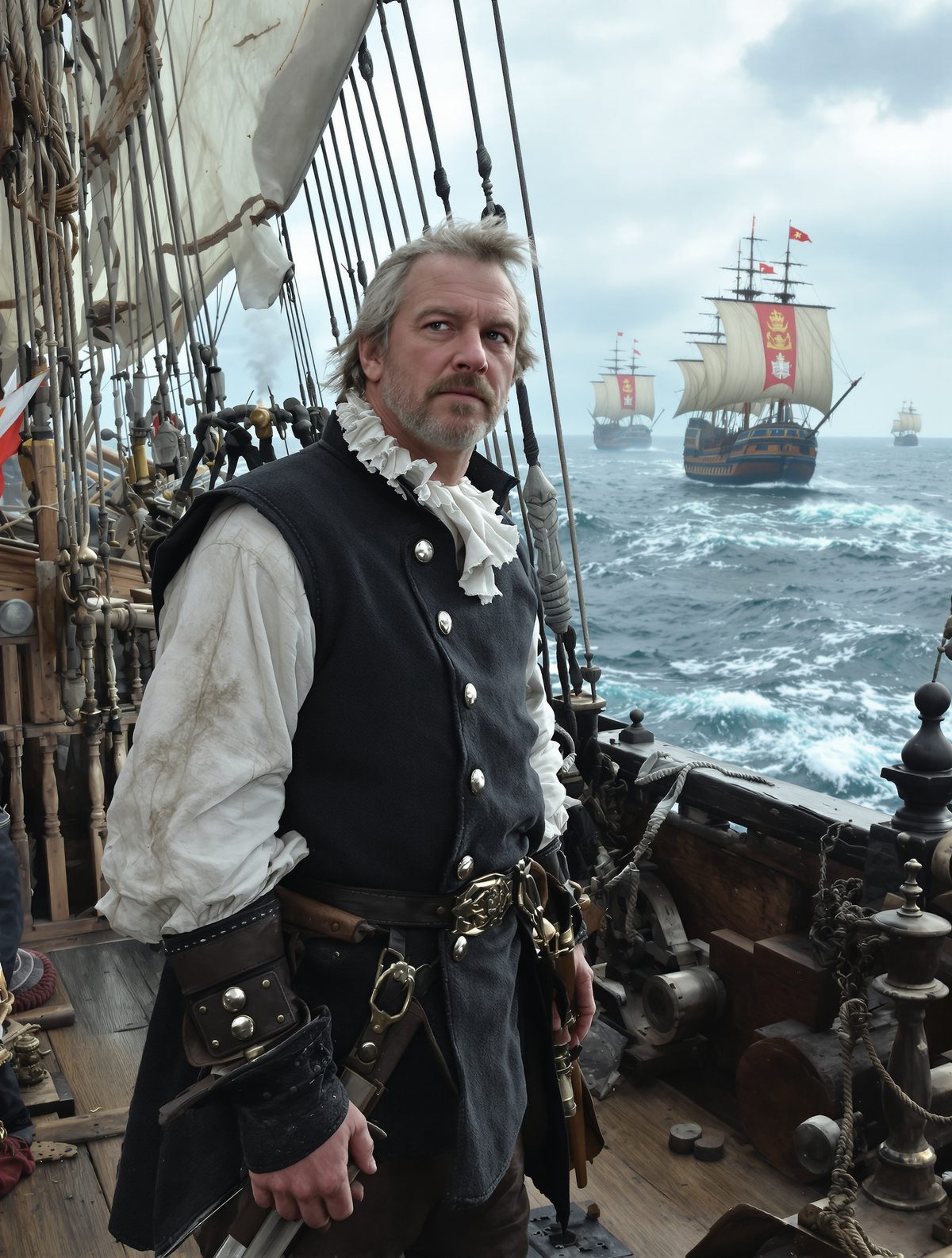
The Caribbean sun blazed mercilessly over HMS Burford as Admiral Edward Vernon watched his crew stumble across the deck like drunken scarecrows. It was July 1740, and the Royal Navy's most decorated commander had a problem that threatened to sink his entire fleet without firing a shot. His sailors were consuming their daily half-pint of neat rum—151 proof liquid fire—and by midday, they could barely tie a knot, let alone fight the Spanish. Something had to change, and fast.
Vernon's solution would seem almost absurdly simple: mix the rum with water and lime juice. But this single order, issued on August 21st, 1740, would accidentally create the world's most famous cocktail, save thousands of lives, and establish a naval tradition so sacred it would outlast the British Empire itself.
The Admiral in the Grogram Cloak
Edward Vernon was no ordinary naval officer. Known throughout the Caribbean as "Old Grog" for his distinctive grogram cloak—a coarse fabric woven from silk and wool—the 56-year-old admiral had already earned legendary status by capturing the heavily fortified Spanish port of Porto Bello with just six ships. His victory had been so spectacular that grateful Britons named streets, inns, and even George Washington's future estate after him.
But Vernon's greatest challenge wasn't Spanish cannons—it was keeping his own men alive and functional. The Royal Navy's daily rum ration, introduced in 1655 when the British captured Jamaica, had evolved into a maritime disaster. Sailors received a half-pint of neat rum twice daily, creating a crew of functional alcoholics who were perpetually either drunk, hungover, or desperately craving their next tot.
The situation had grown critical during Vernon's campaign against Spanish colonies. Ships' surgeons reported alarming rates of accidents, with sailors falling from rigging, tumbling overboard, or simply collapsing at their posts. Worse still, the neat rum was accelerating cases of scurvy—the dreaded disease that had killed more sailors than all of Britain's naval enemies combined.
Death in Paradise: The Scurvy Epidemic
To understand Vernon's dilemma, picture the reality aboard an 18th-century warship. Below decks, in suffocating heat that regularly exceeded 100 degrees Fahrenheit, hundreds of men lived in conditions that would horrify modern sensibilities. Their diet consisted primarily of salt pork so hard it could be carved into buttons, ship's biscuits crawling with weevils, and whatever fish they could catch.
Scurvy stalked these floating prisons like a methodical executioner. The disease began quietly—a sailor would notice his gums bleeding while eating his meager rations. Within weeks, his teeth would loosen and fall out. Purple blotches would spread across his skin like grotesque flowers blooming in reverse. Old wounds would reopen spontaneously, and eventually, the sailor would simply waste away, his body consuming itself from within.
What Vernon and his contemporaries didn't understand was that scurvy resulted from vitamin C deficiency. But the admiral had observed something crucial: sailors who consumed citrus fruits seemed less susceptible to the disease. Spanish and Portuguese sailors, who regularly ate limes and oranges, suffered far lower rates of scurvy than their British counterparts.
The Order That Changed Naval History
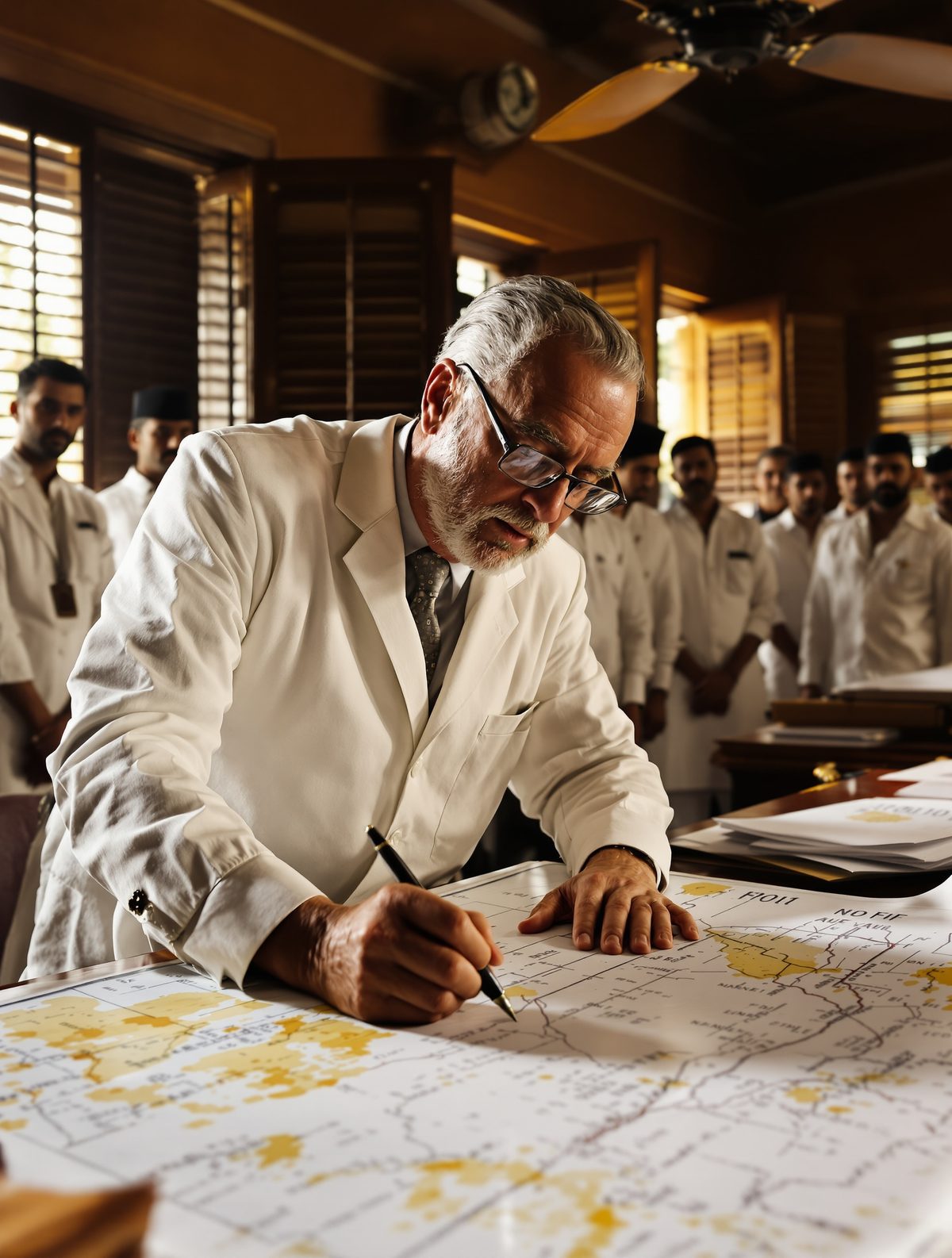
On that sweltering August morning in 1740, Vernon summoned his ship's purser and issued what would become Naval Order Number 349. The daily rum ration would henceforth be mixed with water in a 1:4 ratio—one part rum to four parts water. But Vernon went further: he mandated that lime or lemon juice be added to the mixture, along with brown sugar to make it palatable.
The order was met with something approaching mutiny. British sailors considered their neat rum a sacred right, compensation for the hell they endured at sea. They saw Vernon's dilution as theft—watered-down grog instead of proper rum. The grumbling was so intense that Vernon had to threaten floggings to enforce compliance.
But within weeks, the results were undeniable. Accident rates plummeted as sailors maintained better coordination throughout their duties. More remarkably, cases of scurvy began dropping dramatically. The lime juice was providing the vitamin C these men desperately needed, while the diluted alcohol was still strong enough to kill harmful bacteria in the ship's questionable water supply.
From Naval Ration to Global Phenomenon
Word of Vernon's "grog" spread throughout the Royal Navy like wildfire. Other admirals, initially skeptical of diluting their crews' rum, couldn't argue with results. Ships serving grog reported healthier, more effective crews. The Admiralty, never quick to embrace change, grudgingly acknowledged that Vernon's innovation was saving both lives and money.
By 1756, grog had become the official naval ration throughout the British fleet. The recipe was standardized: half a pint of rum mixed with a pint of water, sweetened with sugar, and acidulated with lime juice. The mixture was served twice daily—at noon and evening—in a ceremony that became as ritualized as any religious service.
Sailors developed an elaborate culture around their grog ration. They created specialized cups and ladles, established hierarchies for distribution, and even developed a primitive quality control system. "Gunpowder proof" became the standard for rum strength—spirit that was potent enough to ignite gunpowder when mixed. If the powder wouldn't light, the rum was considered too weak, and the purser would face the crew's wrath.
The Drink That Conquered the World
What Vernon couldn't have anticipated was how his utilitarian mixture would escape the confines of naval vessels to become a global phenomenon. Caribbean tavern keepers, serving Royal Navy personnel on shore leave, began offering "grog" as a specialty drink. Colonial Americans adopted the recipe, and by the time of the Revolution, grog houses dotted every major port city.
The drink evolved as it traveled. Some establishments used different citrus fruits—lemons instead of limes, or even oranges. Others experimented with spices: cinnamon, nutmeg, or allspice. The proportions shifted based on local preferences and available ingredients. What remained constant was the basic formula Vernon had established: rum, water, citrus, and sweetener.
Perhaps most surprisingly, grog became a catalyst for international diplomacy. British naval officers shared the recipe with their French, Spanish, and Dutch counterparts during periods of peace. The drink transcended national boundaries, becoming a common language among sailors regardless of which flag they served under.
The End of an Era
For 235 years, the Royal Navy maintained Vernon's tradition with almost religious devotion. Through the Napoleonic Wars, the Battle of Trafalgar, both World Wars, and countless smaller conflicts, British sailors received their daily tot of grog. The practice became so entrenched that abolishing it seemed unthinkable.
But modernity eventually caught up with tradition. By the 1960s, naval warfare had become a highly technical affair requiring sharp reflexes and clear thinking. The idea of sailors operating sophisticated radar equipment or nuclear reactors while under the influence of alcohol seemed not just antiquated but dangerous. On July 31st, 1970—forever known in Royal Navy lore as "Black Tot Day"—the last official grog ration was served aboard British warships.
The end came with appropriate ceremony. Ships' companies gathered on deck as their rum supplies were ceremonially poured into the sea or distributed to naval museums. Some sailors wept openly, mourning the death of a tradition older than their great-grandfathers.
Legacy in a Glass
Today, as you sip a daiquiri in a trendy cocktail bar or order a mojito at a beach resort, you're participating in a tradition that began with Admiral Vernon's practical problem-solving in 1740. Every rum cocktail owes its existence to that moment when Old Grog decided his sailors needed watered-down spirits more than liquid courage.
The impact extends far beyond mixology. Vernon's accidental discovery that citrus prevents scurvy would eventually influence James Cook's Pacific voyages, help establish Britain's global empire, and save countless lives. Modern naval medicine, workplace safety protocols, and even contemporary approaches to substance abuse in high-risk occupations all trace their lineage back to that Caribbean morning when an admiral chose pragmatism over tradition.
Vernon's story reminds us that history's most significant innovations often emerge not from grand visions but from practical solutions to immediate problems. Sometimes the most revolutionary act is simply mixing things up—literally.