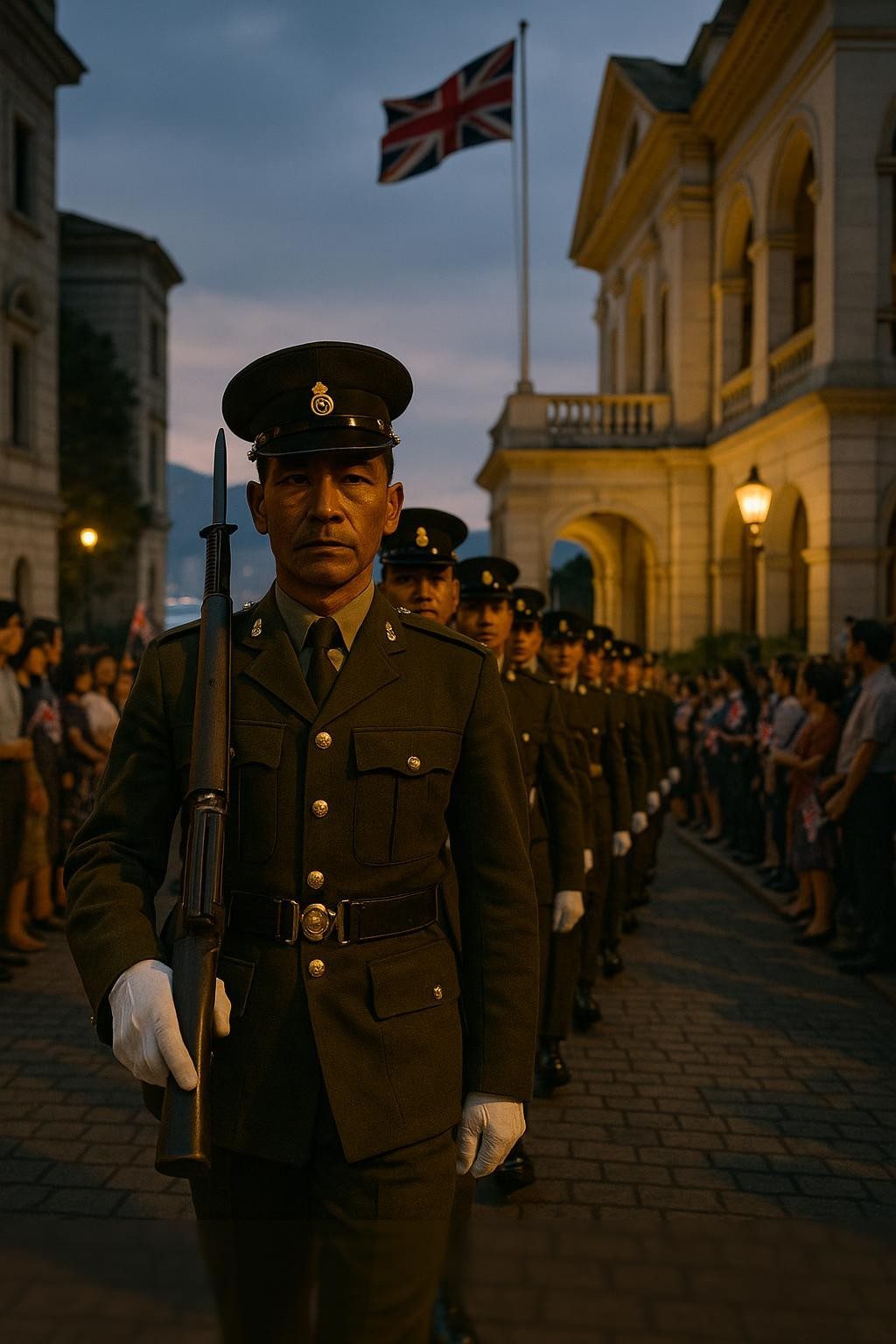
June 30, 1997. The air carried a palpable weight of anticipation as the Queen's Gurkha Engineers assembled for what would be their final march across the familiar grounds of Hong Kong. Each soldier's steps echoed a storied legacy, the polished leather of their boots meeting the ground with a rhythmic certainty that belied the undercurrents of emotion.
For 156 years, the Gurkhas had been more than just soldiers in the employ of the British Empire; they had been the living embodiment of loyalty and courage. Originating from the hills of Nepal, these formidable warriors had earned renown and respect across the globe, and nowhere were they more ingrained in the fabric of colonial life than in Hong Kong. From their first deployment in 1841, they had formed the backbone of military defense in a land that, for generations, teetered on the periphery of power struggles and geopolitical intrigue.
As the regiment formed up this last time, their history in this vibrant city seemed to unfold with each steady stride. The Gurkhas’ introduction to Hong Kong was set against colonial expansion at a time when the British sought to bolster their presence in the Far East. They quickly proved their mettle, not only through martial prowess but also through their impact on the community. During tumultuous periods of civil unrest and external threats, the Gurkhas stood as vigilant protectors. The very streets and alleys of Hong Kong bore the imprint of their patrols, instilling a sense of security amidst uncertainty.
Their journeys away from home led them to embrace Hong Kong as a new homeland, creating an indelible bond that transcended the barracks. They participated in rescues during natural disasters, aided in community building, and provided a steadfast presence during tense times. This was how the Gurkhas became an integral thread of the city's social fabric, their stories interwoven with those of the Hong Kong people.
As the sun rose higher on that June morning in 1997, officers looked out over their men with a mixed gravitas of pride and nostalgia. The march would soon commence, marking the end of an era not just for the Gurkhas but for British rule itself. The handover of Hong Kong to China was but hours away, bringing to a close a chapter that had begun ignobly with the Opium War and unfurled through decades of development and turmoil.
Despite the manifestations of political change, what truly distinguished the Gurkhas was their resilience and adaptability. Theirs was not merely a tale of battles fought — though they had seen plenty — but of lives lived in devotion to duty. It was this steadfastness that endeared them to the people they served, leaving a legacy of trust and admiration.
In all their years stationed abroad, the Gurkhas never forgot their roots. Their cultural heritage suffused through the ranks, with traditions upheld and celebrated even as they engaged in new customs. This melding of identities enriched the lives of both the soldiers and the communities they served, an exchange far more potent than any political treaties or military victories.
As they marched that final day, the Gurkhas carried more than just their military kit; they bore the weight of their shared history. With every solemn step, Hong Kong grew more distant and yet vividly closer, a place etched in their hearts forever. The rhythmic cadence of their march was accompanied by the quiet murmurings of onlookers who had gathered to watch, their whispers of respect a testament to the bonds formed over generations.
The last steps of the march transitioned into another form of service. While the regiment's official duties in Hong Kong concluded, the story of the Gurkhas was far from over. Many went on to serve in other parts of the world, maintaining the rigorous standards and unyielding loyalty that had defined them for so long. Others chose to remain, finding new purposes amid the now-familiar skyline that marked their history.
This march was not an end but a new beginning, a testament to the enduring human spirit. It underscored the transformations that history demands from us, the intertwined narratives that emerge out of necessity and human resilience.
As sunset approached, the inevitable handover loomed nearer, a landmark moment that would radically reshape Hong Kong's trajectory. Yet, even as the political landscape shifted, the contributions of the Gurkhas remained, an invisible thread knitting the past with the unfolding present. Their vigilance and sacrifice had protected a burgeoning metropolis, their service a constant amidst change.
The Gurkhas' last march on that seminal day in 1997 serves as a reminder of the often-overlooked stories that underlie historical events. While the transfer of Hong Kong sovereignty marked the close of a significant chapter in world history, the legacy of the Gurkhas has endured, a testament to the profound impact of individuals on the grand stage of empires. Their story illustrates that history is as much about personal dedication and collective honor as it is about the actions of nations and the passage of power.