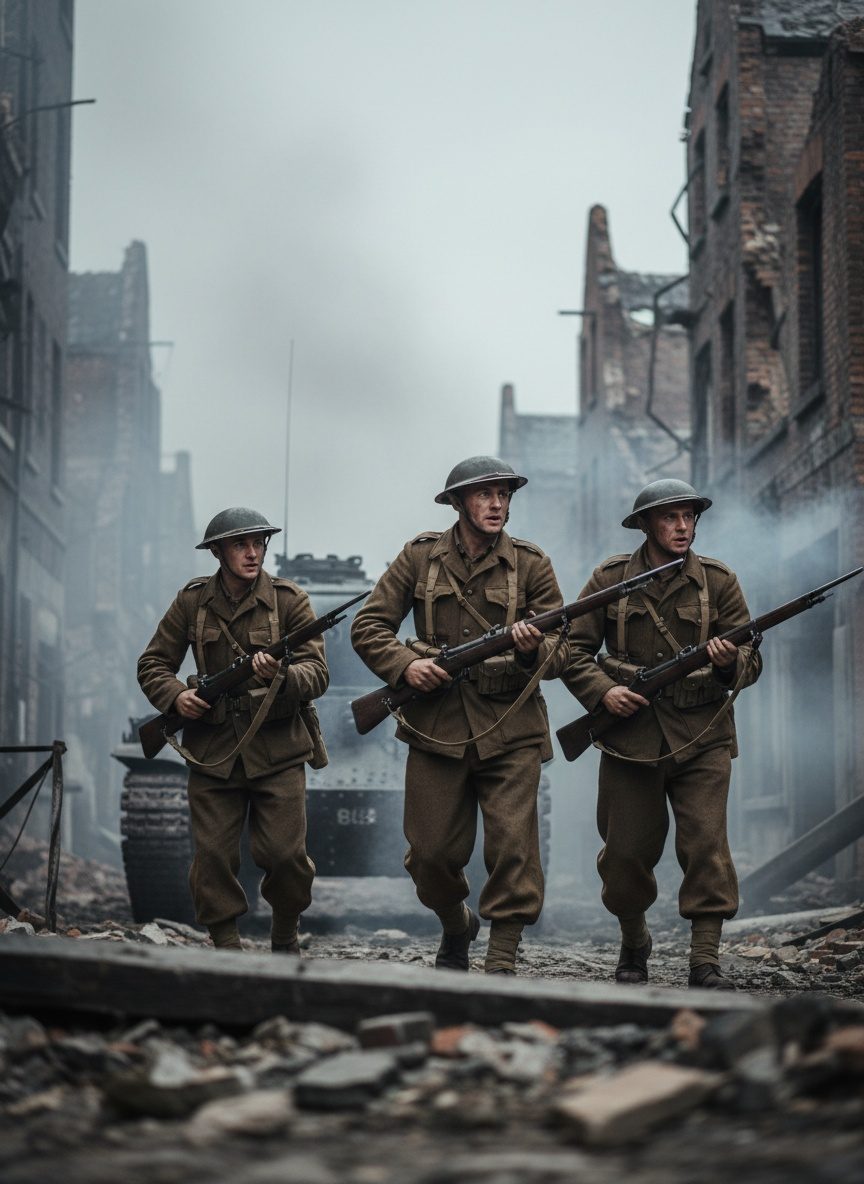
The men of the Wiltshire Regiment marched toward Lübeck on May 2, 1945. There was still blood to be shed, even as peace quietly approached from the shadows.
In the Shadow of Surrender
May 1945. The foundations of the Third Reich buckled as the Allied forces closed their vice grip on Germany. Hitler was dead, Berlin lay in ruins, and the inevitable surrender hung unsettlingly in the air. Yet, across the smoldering remnants of this devastated land, isolated pockets of resistance clung to a bitter and damned cause.
On the outskirts of Lübeck, the 2nd Battalion of The Wiltshire Regiment moved deliberately through a landscape marked by devastation. This region of northern Germany was one of the last where duty called them into action. The sight of Churchill tanks from the 6th Guards Tank Brigade advancing at their flanks reassured, casting an almost mythical silhouette as they pushed through the haze of war. These tanks, named for the indomitable leader of the United Kingdom, represented the might and determination of the Allied forces.
The assignment that day was more than just a military maneuver; it was an exercise in closure. Clearing the last armed German roadblock here was not merely a tactical necessity; it was an act of finality in a conflict that had claimed millions of lives. Yet, this confrontation has largely escaped the annals of common history, overshadowed perhaps by the grand narratives of entire battles and pivotal moments cemented in textbooks.
Through the Fog of Exhaustion
For the men of the Wiltshire Regiment, the journey south of Lübeck was one shrouded in both literal and figurative fog. The smoke of burnt-out buildings wafted through the air, a grim testament to war’s destructive passage. It was an environment as unforgiving as the enemy they marched to meet.
These soldiers, despite the energy-sapping agonies of prolonged conflict, stayed resolute. Discipline drove them forward, even when exhaustion clawed at their will. The days leading to this moment had been relentless, but there was a cruel irony in the timing: peace was tantalizingly near, yet these men could not afford to embrace it prematurely. They might still face desperate last stand skirmishes, engagements that would bleed at the dawn of victory. The reality of battle, however close it was to its end, demanded total commitment.
The Wiltshire Regiment was composed of men from diverse backgrounds, united by circumstance and steadfast in their resolve. Here, on paths tracked only by harrowing conflict, their unyielding spirit became another thread in the fabric of their storied history. Had this task been penned by fiction, it might have carried the weight of a final act in a great saga: weary heroes fighting through one last trial for an elusive peace.
The Last Resistance
Their objective was clear—a stronghold of resistance that had not yet been broken by the shifting tides of war. As they approached, the regiment was acutely aware of the strange juxtaposition of their mission's urgency and its apparent futility. Germany, for all intents and purposes, had been beaten. Yet these fighters stood firm, the sense of surrender not yet permeating their ranks.
The corridor to Lübeck needed to be secured; an open pathway would smooth over the forthcoming terms of peace and put the Allies in a position of manifest stability. Though the German defense was numerically minor, any soldier holding a weapon in defense of a doomed empire was a soldier capable of taking lives. Negotiations were not in the remit of that day's work.
The Churchill tanks roared into action, their treads crushing the unyielding terrain beneath. Their presence was both impetus and protection. The tanks' thick armor served as mobile shields for the infantry as it maneuvered through sparse but dogged gunfire. Onward they pressed, driven by a stalemate’s urgency. Breaking resistance was not simply symbolic; it was mission critical to ensuring no Allied lives were squandered in vain, so close to the war's bitter conclusion.
Lessons from the Unsung
On that day, the Wiltshire Regiment and their rolling steel counterparts achieved their goal. South of Lübeck, the line of resistance broke, much like the broader dreams of the Reich. A localized act, overshadowed in the greater scope of a global war, yet brimming with profound relevance.
As the silence of life post-combat descended, they stood amidst the ghosts of unplanned sacrifice and unshed tears. Those who had fallen in the final hours of this great calamity were mourned quietly. Their stories would not fill pages in exhaustive histories nor receive the valorous spotlight of fame. But their contribution, just as vital as any grander act of war, paved the way for the sun to set on one of history's darkest chapters.
In a war defined by its broad sweeps and monumental turns, the clearance led by the Wiltshire Regiment south of Lübeck serves as a powerful reminder of the human spirit's ability to persist amidst the grim normality of war. These men, their determination unyielded by the promises of armistice, illustrate the unending courage required not just to wage war, but to end it. In recognizing their role, readers may come to appreciate the many small acts that collectively bear the weight of history's grand arcs.