
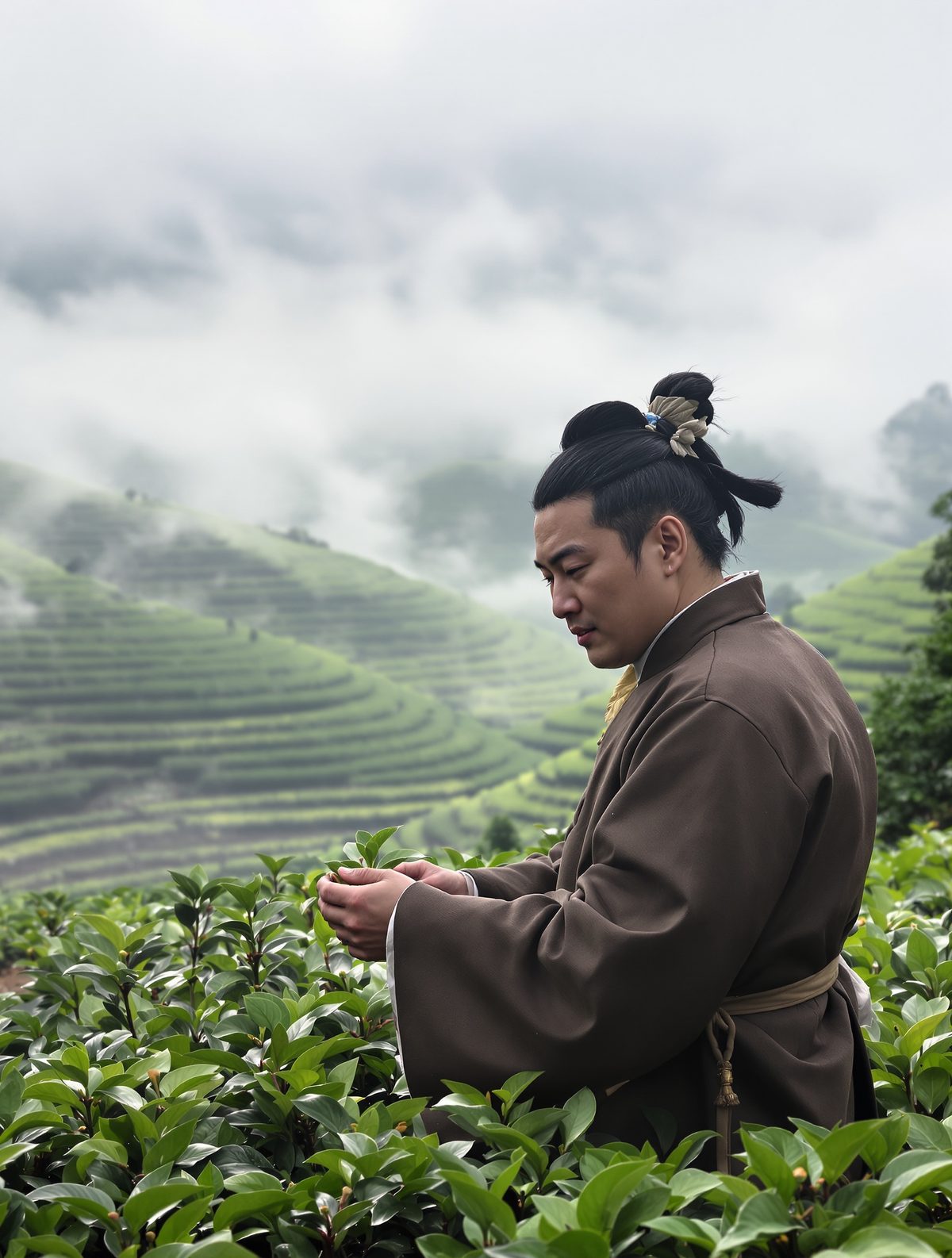
The junk lurched violently as the pirates' war cry echoed across the South China Sea. Robert Fortune, disguised in silk robes with his hair braided in a traditional queue, clutched the precious cargo hidden beneath deck—tea plants that would reshape the British Empire. It was 1848, and this mild-mannered Scottish botanist had just pulled off the most audacious act of industrial espionage in history. But first, he had to survive the pirates.
What Fortune had accomplished in the forbidden interior of China would break a monopoly that had lasted for millennia and shift the balance of global power. Armed with nothing but fake Chinese papers, a convincing accent, and nerves of steel, he had penetrated regions where foreigners faced death, stolen the closely guarded secrets of tea cultivation, and was now smuggling them to British India. The pirates attacking his ship were just the latest obstacle in a mission that would change the world's relationship with its most beloved beverage forever.
The Great Tea Conspiracy
By the 1840s, Britain had a problem that threatened to bankrupt the Empire. The nation consumed over 40 million pounds of tea annually, but every single leaf came from China. The Chinese Emperor's trade restrictions meant that Britain hemorrhaged silver to pay for its national obsession, creating a trade deficit that drained the treasury and forced the government into the morally dubious opium trade to balance the books.
The East India Company's directors knew that whoever could break China's tea monopoly would save the Empire millions. They needed someone who could infiltrate the most secretive industry in the world, steal its methods, and transplant them to British soil. Enter Robert Fortune, a 35-year-old botanist from the Scottish Borders who had already made a name for himself collecting plants in dangerous territories.
Fortune wasn't an obvious choice for international espionage. Standing barely five feet six inches tall with a scholarly demeanor, he looked more like a country pastor than a master spy. But appearances deceived—this quiet Scotsman possessed an almost supernatural ability to blend in anywhere and an iron constitution that had already survived countless adventures in hostile lands.
The Company's instructions were devastatingly simple: get into forbidden China, discover how tea was really made, steal the plants and seeds, and bring them back alive to the Himalayan gardens of British India. The penalty for being caught? Almost certain death.
Becoming Chinese: The Ultimate Disguise
Fortune's transformation began in the British settlements of Hong Kong. Working with local Chinese accomplices, he learned to shave his head in the traditional manner, leaving only a long braided queue hanging down his back. He practiced walking with the distinctive shuffle of a Chinese merchant, mastered the art of eating with chopsticks, and memorized enough Mandarin phrases to convince casual observers.
The disguise was remarkable for its simplicity. Fortune darkened his skin with theatrical makeup, donned the flowing silk robes of a prosperous trader, and adopted the name Sing Wa. His naturally dark hair and ability to tan well served him perfectly—at a distance, he was utterly convincing.
But the real genius lay in the details. Fortune observed that Chinese merchants of his supposed class traveled with specific types of luggage, hired particular kinds of servants, and followed rigid social protocols. He spent weeks perfecting these nuances, knowing that a single mistake could expose him to authorities who showed foreign spies no mercy.
In February 1848, Fortune and his small team of loyal Chinese assistants set out for the tea country of Fujian province. They traveled by junk up rivers where no European had ever sailed, staying in inns where discovery meant death, all while maintaining the elaborate fiction that they were respectable Chinese businessmen on a trading expedition.
Into the Forbidden Gardens
The tea regions of 19th-century China were industrial secrets protected by centuries of tradition and imperial law. Local farmers had perfected techniques passed down through dozens of generations, creating different varieties of tea through methods so closely guarded that even Chinese people from other provinces weren't welcome.
Fortune discovered that what Europeans thought they knew about tea was almost entirely wrong. The prevailing theory in Britain held that green and black tea came from completely different plants. Fortune found that they were the same plant, Camellia sinensis, processed differently. Green tea was simply dried quickly after picking, while black tea was allowed to ferment—a revelation that would revolutionize cultivation techniques.
More shocking still was his discovery of how tea was actually processed in Chinese factories. Fortune watched in horror as workers added toxic substances like Prussian blue and gypsum to make tea leaves look more appealing to foreign buyers. The Chinese kept the pure tea for themselves and exported the adulterated version to gullible foreigners who paid premium prices for poison.
Working with infinite patience, Fortune collected samples of the finest tea plants, carefully noting growing conditions, soil types, and climate requirements. He discovered that the best tea grew in specific altitudes and microclimates, information that would prove crucial when transplanting to the Himalayas. His botanical training allowed him to identify not just the obvious varieties, but subtle regional differences that Chinese growers had developed over centuries.
But collecting the plants was only half the challenge—he still had to get them out of China alive.
Pirates, Storms, and Narrow Escapes
Fortune's journey back to British territory read like an adventure novel. His first encounter with pirates came near the mouth of the Min River, when a fleet of war junks surrounded his small vessel. The pirates, assuming they were attacking Chinese merchants, demanded tribute and threatened violence.
Fortune's disguise held perfectly—too perfectly. The pirate captain, convinced he was robbing wealthy Chinese traders, became increasingly aggressive when the "merchants" claimed to carry only botanical specimens. Only Fortune's quick thinking and his genuine Chinese assistants' negotiating skills saved them from being murdered for their supposed hidden treasure.
The second pirate attack was even more dramatic. Sailing through the Taiwan Strait, Fortune's junk was boarded by a crew of over thirty armed men. This time, Fortune abandoned his peaceful merchant persona and produced a pair of pistols, firing warning shots that convinced the attackers they had chosen the wrong target. The pirates retreated, but not before several tense minutes when Fortune's entire mission—and his life—hung in the balance.
Between pirate encounters, Fortune faced the constant challenge of keeping his precious cargo alive. Tea plants are notoriously difficult to transport, requiring specific amounts of water, light, and temperature control. He had developed an ingenious system of portable greenhouses—glass cases that protected the plants while allowing them to breathe—but storms, extreme temperatures, and the basic challenges of 19th-century sea travel killed hundreds of specimens.
By the time Fortune reached British India in late 1848, he had survived two pirate attacks, three major storms, interrogation by suspicious Chinese officials, and countless smaller adventures that would have broken lesser men. More importantly, he had successfully transported over 2,000 tea plants and 17,000 seeds to the experimental gardens of Darjeeling.
The Seeds of Empire
Fortune's stolen tea plants thrived in the Himalayan climate of British India. Within a decade, the plantations he established were producing significant quantities of high-quality tea. By the 1870s, Indian tea was competing directly with Chinese imports. By the end of the century, British India had become the world's largest tea producer, completely ending China's ancient monopoly.
The economic impact was staggering. India's tea exports eventually generated millions of pounds annually for the British Empire, while China's tea trade—once the foundation of its relationship with the outside world—collapsed. The strategic balance of power in Asia shifted dramatically, contributing to China's decline and Britain's continued dominance.
Fortune himself returned to China several more times, each mission adding to his botanical discoveries. He introduced dozens of other plants to British cultivation, from chrysanthemums to ornamental grasses, but nothing matched the historical significance of his tea theft.
The irony wasn't lost on contemporary observers—a mild-mannered Scottish botanist had accomplished what armies and diplomats could not, fundamentally altering the global economy through careful observation, patient cultivation, and extraordinary personal courage.
Legacy of a Gentleman Spy
Today, as you sip your morning tea—whether it's Darjeeling, Assam, or Ceylon—you're tasting the direct result of Robert Fortune's extraordinary espionage mission. Every cup of Indian tea is descended from the plants he smuggled out of forbidden China while disguised as a merchant named Sing Wa.
Fortune's story illuminates the often-hidden connections between botanical science and imperial power. His mission wasn't just about plants—it was about reshaping global commerce, breaking monopolies, and demonstrating how knowledge, carefully applied, could prove more powerful than military force. The tea in your cup is a reminder that some of history's most consequential moments happened not on battlefields or in throne rooms, but in remote gardens where quiet scholars risked everything to steal secrets hidden in leaves.
In our modern world of instant global communication and industrial transparency, it's difficult to imagine how completely China once controlled the tea trade. Fortune's adventure reminds us that the everyday luxuries we take for granted often have extraordinary origin stories—tales of courage, deception, and adventure that rival any fiction.