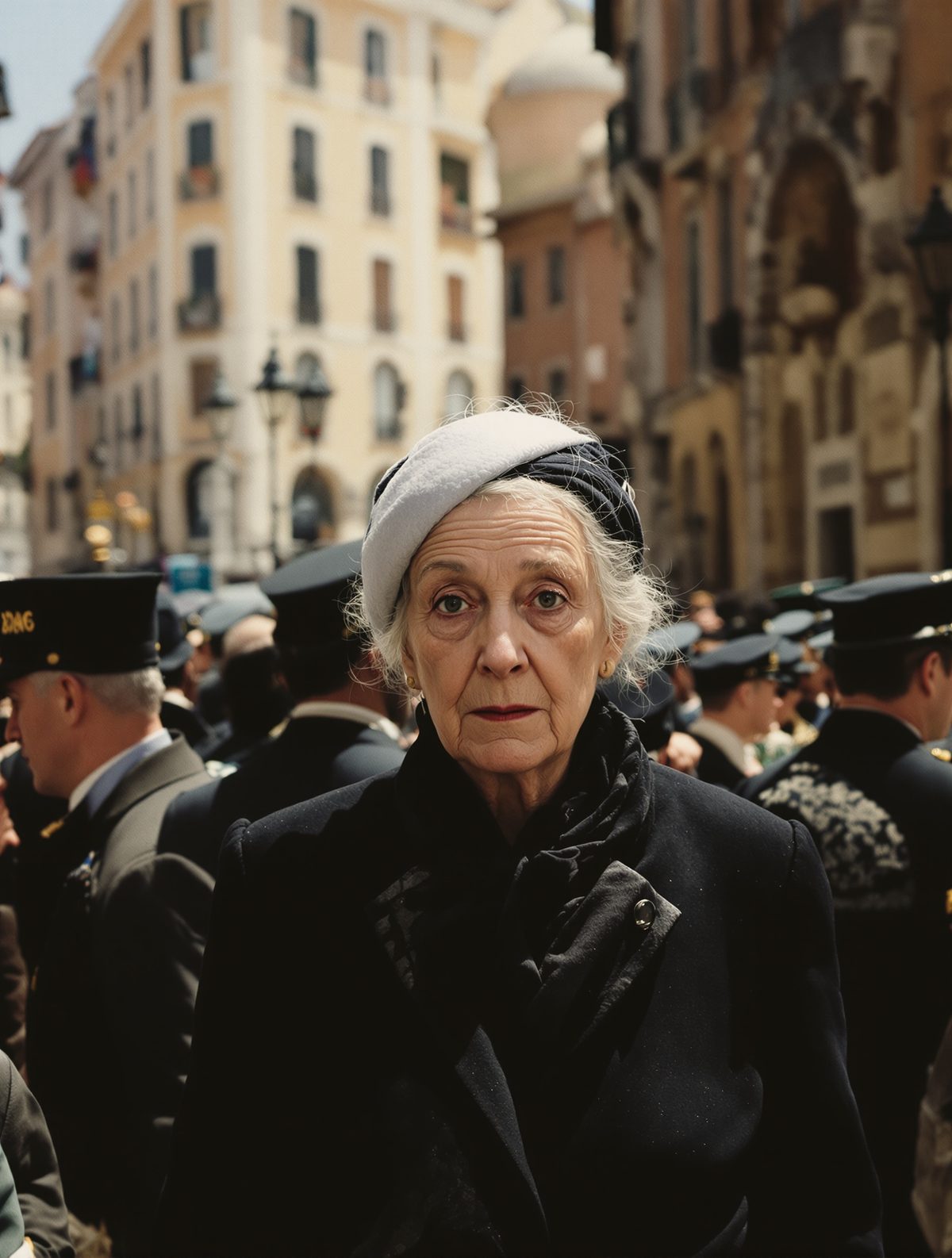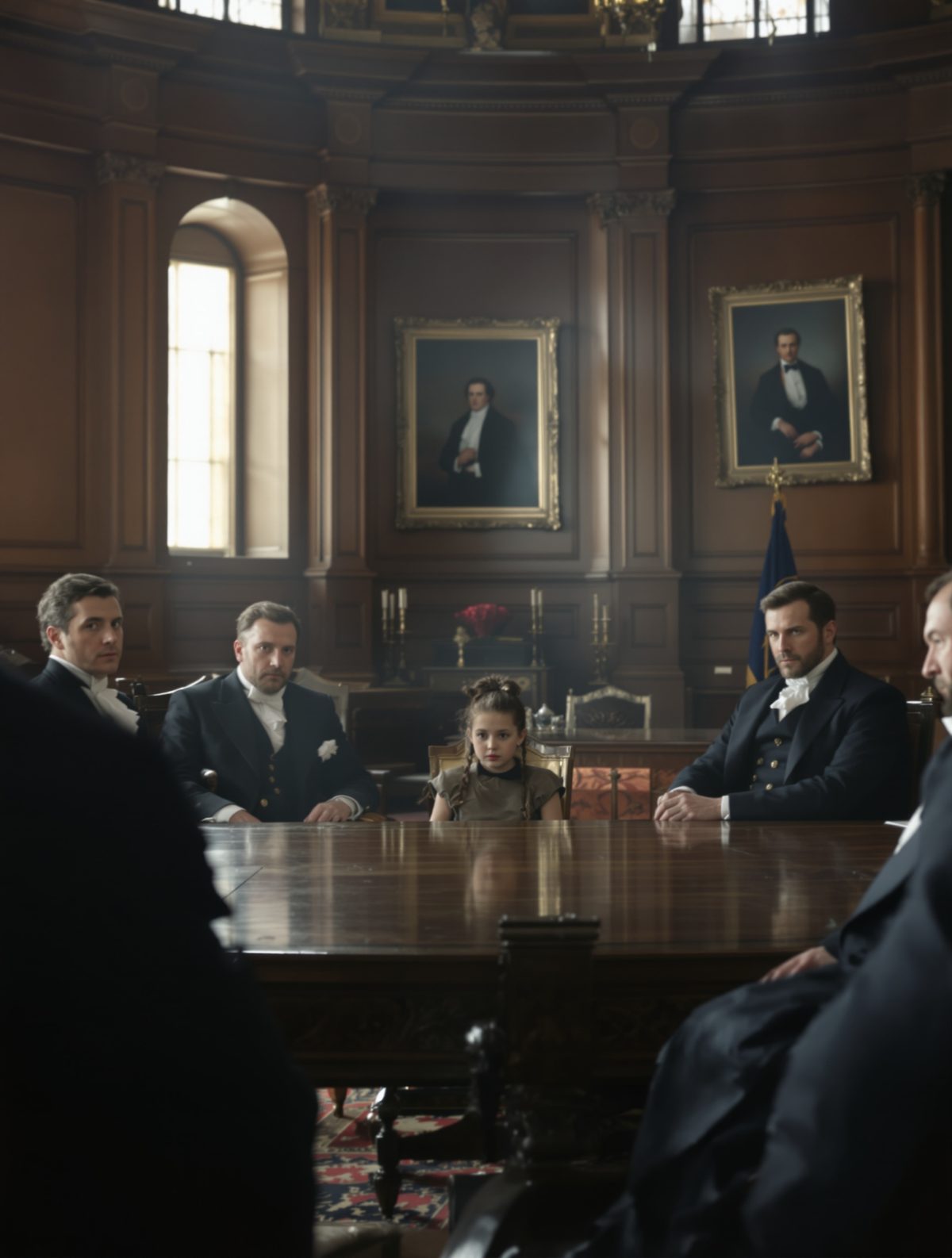
The rain lashed against the crude stone walls of the shieling on South Uist as twenty-four-year-old Flora MacDonald stared at the most wanted man in Britain. Crouched before her in the dim candlelight sat Charles Edward Stuart—Bonnie Prince Charlie himself—his once-pristine silk coat now torn and filthy, his face gaunt from weeks of living rough in the Hebridean wilderness. Outside, British warships patrolled the waters while redcoat soldiers scoured every island, cottage, and cave. The reward for his capture had been set at an astronomical £30,000—equivalent to millions today. One word from Flora could make her family rich beyond their wildest dreams. Instead, she was about to risk her life in the most audacious escape plan of the 18th century.
The Prince in Petticoats
It was June 1746, just two months after the catastrophic Battle of Culloden had shattered Jacobite dreams forever. Prince Charles had fled the battlefield on horseback, beginning a five-month odyssey through the Scottish Highlands and Islands that would become the stuff of legend. But by the time he reached the Outer Hebrides, even his most loyal supporters were growing desperate. The net was closing, and it seemed impossible that the prince could evade capture much longer.
That's when Captain Con O'Neill, one of Charlie's Irish supporters, proposed a plan so outrageous it just might work. The prince would disguise himself as an Irish spinning maid called "Betty Burke" and travel as Flora MacDonald's servant to the Isle of Skye, where they hoped to find a French ship to carry him to safety. Flora later recalled her shock at the proposal: "The very mention of it startled me," she wrote, "and I told them it was impossible for me to think of it."
What made the plan even more remarkable was Flora's background. She wasn't some desperate Jacobite romantic—quite the opposite. Her stepfather, Hugh MacDonald, was a captain in the government militia actively hunting for the prince. Flora herself had Hanoverian sympathies and had never met Charles before that fateful evening. Yet something about the bedraggled young man's plight moved her to compassion. She agreed to help, knowing full well that capture meant death.
The Art of Deception
Transforming a six-foot-tall prince into a convincing Irish maid required more than just putting him in a dress. Charles Stuart had spent his life in the refined courts of Europe—he walked like nobility, spoke like nobility, and had hands softer than most ladies. Flora and her conspirators had to coach him in the art of being invisible, of moving like a servant, of keeping his eyes down and his voice quiet.
The transformation was both hilarious and terrifying. Charles was fitted with a floral calico dress, quilted petticoat, white apron, and a large hood that would conceal his distinctive features. But the prince proved a reluctant pupil in the feminine arts. "I hope I shall see you handsomer in your nightgown," Flora reportedly teased him as they struggled with the unfamiliar garments. When handed a pair of women's shoes, Charles complained bitterly—they were far too small for his large feet, and he worried about how he would manage to walk convincingly.
Perhaps most challenging of all was teaching the prince to curb his aristocratic instincts. This was a man accustomed to being the center of attention, to having others defer to his every wish. Now he would have to blend into the background, to become so unremarkable that soldiers' eyes would pass right over him. One slip—one moment of princely bearing—would doom them all.
A Perilous Passage
On the evening of June 27, 1746, Flora MacDonald and her unusual "maid" made their way to the shore where a small boat waited to carry them across the treacherous waters to Skye. The journey should have taken just a few hours, but the elements seemed determined to thwart their escape. Fierce winds and driving rain battered their small vessel, while the boatmen—Roderick MacDonald and his crew—fought to keep them on course through the darkness.
As dawn broke, their worst fears were realized. Government warships loomed out of the morning mist, their guns trained on the tiny fishing boat. Flora's heart must have hammered against her ribs as uniformed officers hailed them, demanding to know their business. This was the moment of truth—would their desperate disguise hold up under official scrutiny?
Flora stepped forward with remarkable composure, explaining that she was traveling to Skye with her servants and spinning maid. The officers seemed satisfied, but then one of them peered more closely at "Betty Burke." Charles, perhaps forgetting his role, had lifted his head too proudly, revealing his height and bearing. "What sort of maid is that?" the suspicious officer demanded. "So tall and ill-shaped?"
Flora's quick thinking saved the day. With perfect calm, she replied that Betty was indeed ungainly, "but she is good at her work." The casual dismissiveness of her tone—treating the most wanted man in Britain like an unremarkable domestic servant—was so convincing that the officers waved them through. They had passed within yards of capture, saved by Flora's nerves of steel.
The Dragon's Den
Landing safely on Skye should have been a moment of triumph, but in fact, it delivered them straight into the heart of danger. The island was crawling with government troops, and their first port of call was Monkstadt House—home to Sir Alexander MacDonald, a prominent government supporter. Even more perilously, the house was currently hosting Lieutenant MacLeod, the local military commander actively searching for the prince.
Flora walked boldly up to the front door while Charles lurked in the background, still playing his role as the awkward Irish maid. Inside, she calmly chatted with Lady MacDonald about family news and local gossip, all while the man with a £30,000 price on his head waited just outside. When Lady MacDonald asked about her companion, Flora casually mentioned her new spinning maid, adding that the girl was rather tired from the journey.
What happened next was so audacious it defies belief. Lady MacDonald, unaware of the deception, actually sent out refreshments for "Betty Burke"—meaning that British officers unknowingly served food and drink to the fugitive prince they were desperately seeking. Charles later recalled this as one of the most nerve-wracking moments of his entire escape, sitting in full view of enemy soldiers while dressed in petticoats, accepting their hospitality with demure nods and curtseys.
Beyond the Legend
The story of Flora MacDonald and Betty Burke didn't end with that successful crossing to Skye—it was just the beginning of Charles's long journey back to France, and the start of Flora's transformation from unknown crofter's daughter to international celebrity. When she was eventually captured and imprisoned in the Tower of London, her dignity and courage won her admirers even among her captors. Dr. Johnson later wrote that her name would be mentioned in history alongside the most celebrated women of all ages.
But perhaps the most remarkable aspect of this tale is what it reveals about the power of human compassion over political calculation. Flora MacDonald had everything to lose and nothing tangible to gain from helping the prince. Her decision wasn't driven by political fanaticism or romantic infatuation, but by something far simpler and more profound: the recognition of another human being in desperate need.
In our own age of bitter political divisions and tribal loyalties, Flora MacDonald's story reminds us that our shared humanity can transcend the boundaries we so often construct around ourselves. Sometimes the most revolutionary act isn't picking up a sword—it's simply choosing kindness when hatred would be easier, courage when safety beckons, and hope when all seems lost. That rainy night in 1746, a young Scottish woman looked at a defeated prince and saw not a political symbol or a bounty, but simply someone who needed help. In making that choice, she secured her place not just in Scottish legend, but in the eternal story of human decency triumphing over expediency.