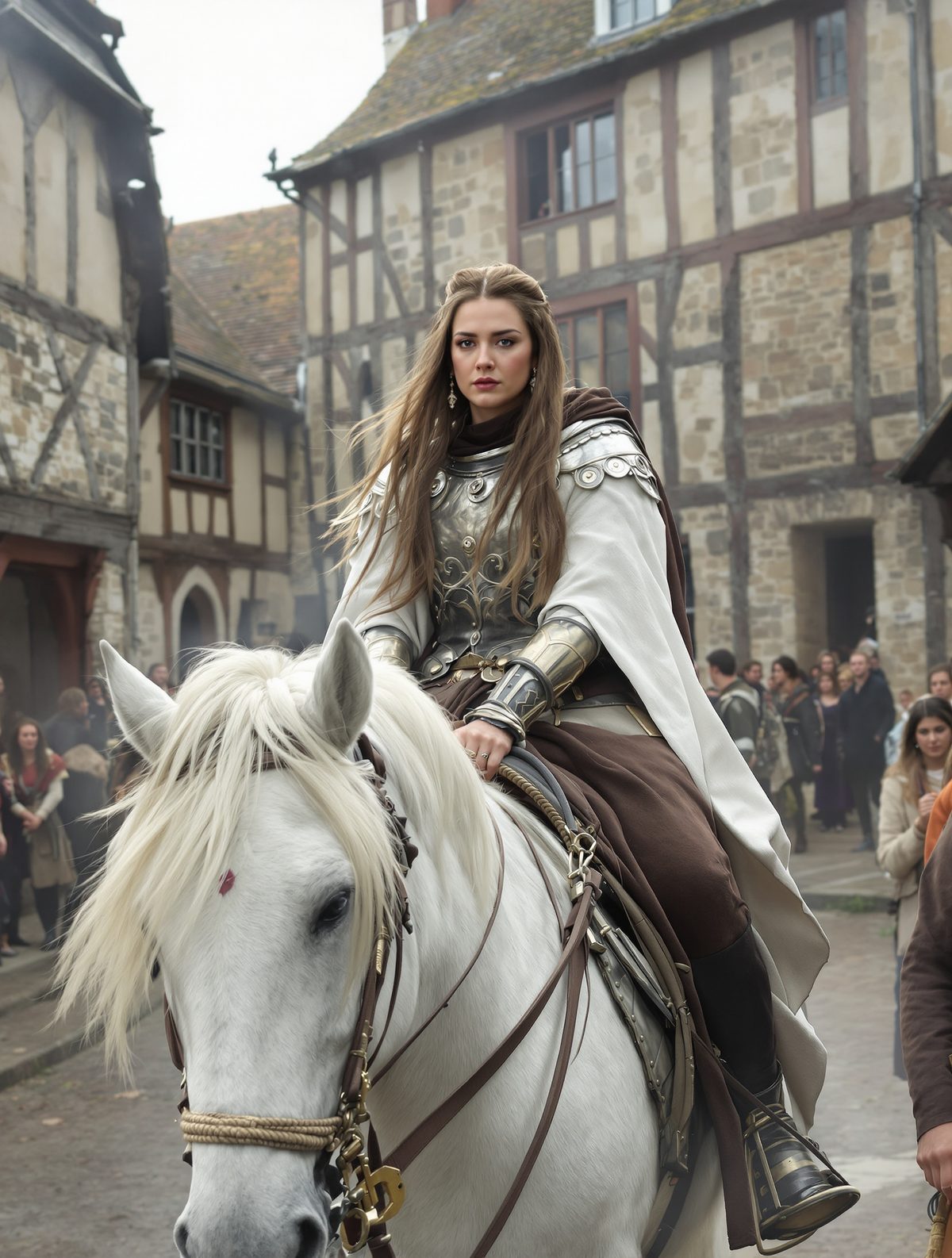
The morning mist clung to Coventry's cobblestones as Lady Godiva mounted her horse in the courtyard of her manor. It was sometime around 1040 AD, and what she was about to do would echo through history for nearly a thousand years. Beneath her flowing golden hair, she wore nothing but her resolve and the weight of an entire town's suffering on her bare shoulders.
This wasn't madness—this was calculated courage. The woman preparing to ride naked through the marketplace wasn't some attention-seeking noble playing games. She was about to sacrifice her dignity, her reputation, and her social standing to save the people of Coventry from starvation. And it all began with an impossible wager made in desperation.
The Earl Who Squeezed Too Hard
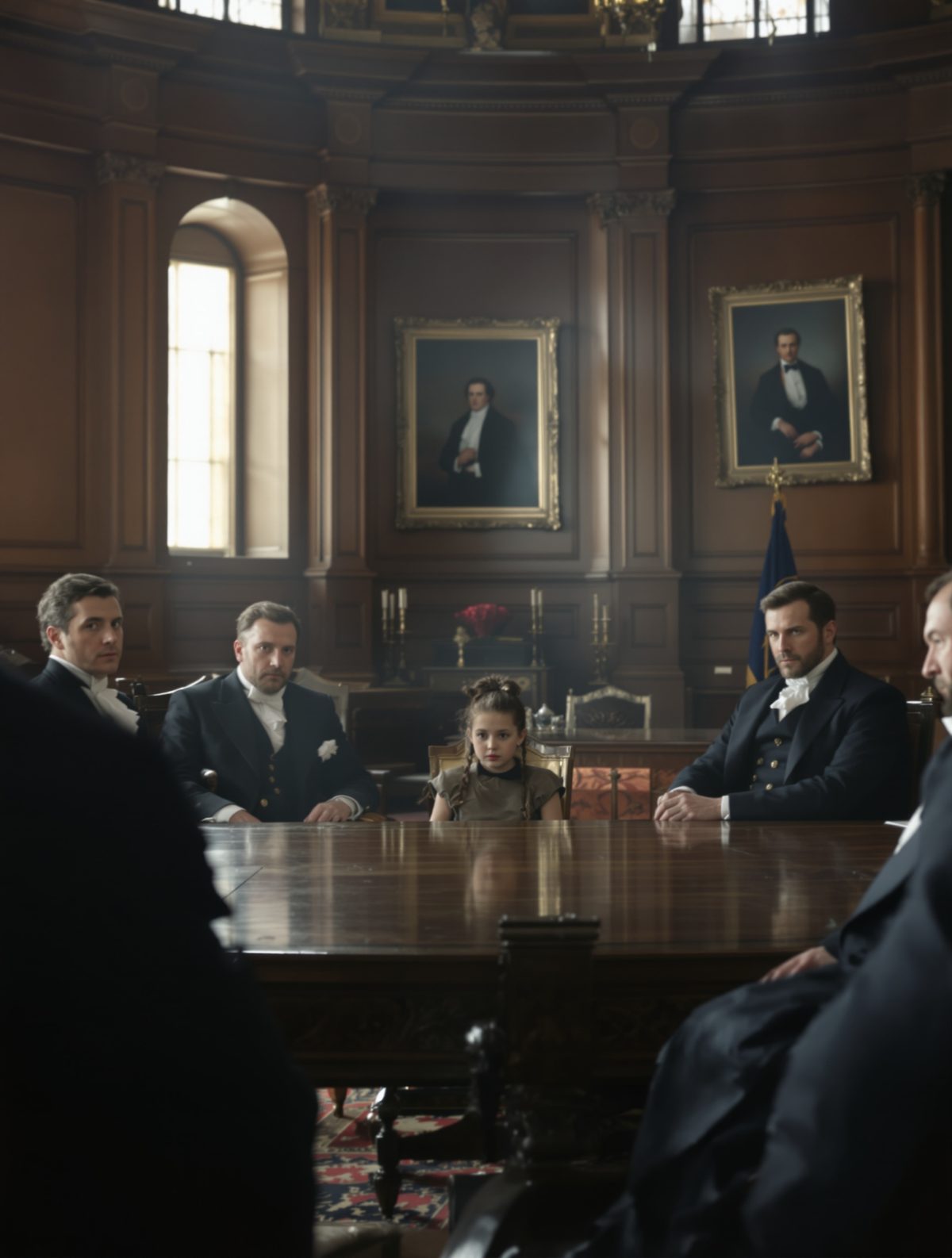
Leofric, Earl of Mercia, was one of the most powerful men in 11th-century England. His domain stretched across the heart of the kingdom, and his influence reached the court of Edward the Confessor himself. But power and wisdom don't always walk hand in hand, and Leofric's approach to taxation was bleeding his people dry.
The medieval tax system was brutal by modern standards, but even by those harsh measures, Leofric's demands were crushing. The heregeld—a tax originally imposed to pay off Viking raiders—continued long after the Danish threat had diminished. On top of this came local levies for everything from road maintenance to the earl's military campaigns. Archaeological evidence from the period suggests that ordinary families were handing over as much as 30% of their income in various taxes and feudal obligations.
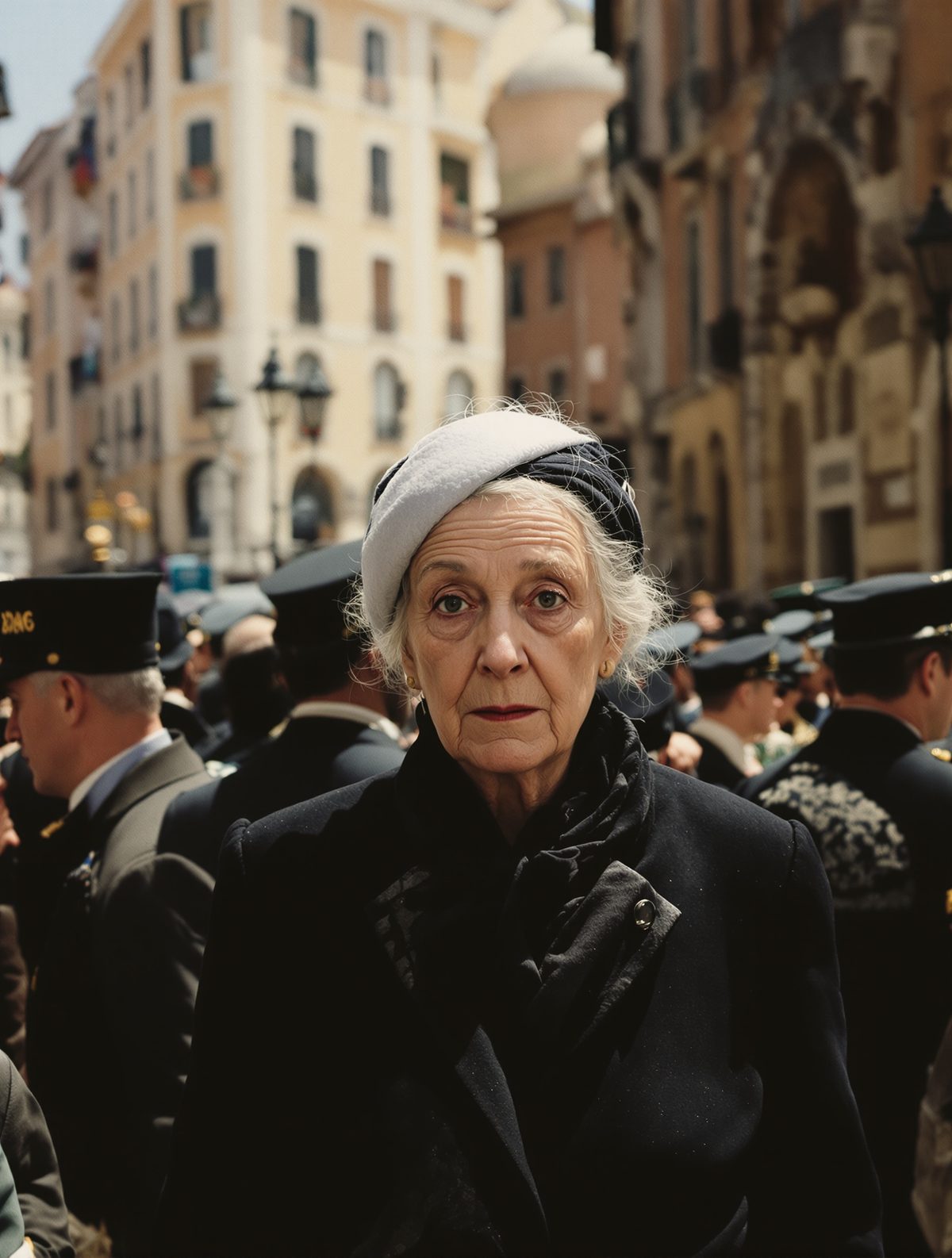
In Coventry, a prosperous market town that had grown up around a Saxon monastery, the situation was becoming desperate. The town's position at the crossroads of major trading routes had made it wealthy, but that very prosperity had made it a tempting target for Leofric's tax collectors. Merchants were abandoning their stalls, craftsmen couldn't afford their materials, and families were choosing between paying taxes and feeding their children.
What made this tragedy even more poignant was that Leofric wasn't some distant tyrant—he lived among these people. His manor overlooked the very marketplace where his policies were causing such hardship. And watching it all unfold was his wife, Godgifu—better known to history as Lady Godiva.
A Marriage of Minds and Money
Lady Godiva wasn't just some decorative aristocratic wife. Born around 990 AD, she was a formidable woman in her own right, with extensive land holdings that made her one of the wealthiest people in England. The Domesday Book, compiled after the Norman Conquest, lists her as the only woman apart from the queen to be a major landowner, controlling vast estates across the Midlands.
Her marriage to Leofric around 1017 had been a political alliance that created one of the most powerful couples in Saxon England. But unlike many arranged marriages of the period, theirs seems to have been genuinely affectionate. Contemporary chronicles describe them as devoted to each other, and their joint religious foundations suggest shared values and interests.
This makes what happened next even more remarkable. Medieval marriages, especially among the nobility, rarely saw wives openly challenging their husbands' political decisions. A woman who contradicted her husband in public risked not just social censure but potential accusations of rebellion against the natural order. Yet Godiva had watched the suffering in Coventry for months, perhaps years, before she finally decided to act.
The breaking point may have come during one of the town's market days. Picture the scene: Godiva's entourage passing through the marketplace, past stalls that should have been bursting with goods but stood half-empty, past craftsmen whose workshops had fallen silent, past children whose hollow cheeks told their own story about Leofric's tax policies.
The Bargain That Changed Everything
What happened next has been embellished by centuries of storytelling, but the core facts seem remarkably consistent across different sources. Lady Godiva approached her husband and pleaded with him to reduce the taxes on Coventry. The exact words are lost to history, but we can imagine the intensity of that private conversation between two of the most powerful people in England.
Leofric's response would become legendary. According to the chroniclers, he told his wife that he would lift the oppressive taxes on one condition: she must ride naked through Coventry's marketplace at the busiest time of day. It was meant to be an impossible challenge—a way to silence her pleas without outright refusing them.
But Leofric had underestimated the woman he'd married. Rather than retreat in shame, Godiva accepted the challenge. The psychological impact of this moment cannot be overstated. For a woman of her status in medieval society, public nudity wasn't just embarrassing—it was potentially devastating to her reputation and social standing. Noble women were expected to be paragons of modesty and virtue. What Godiva was contemplating would have been considered scandalous beyond imagination.
Yet she also understood something her husband perhaps didn't: the symbolic power of her sacrifice. By agreeing to endure public humiliation to save her people from poverty, she was turning his cruel jest into a powerful statement about duty, compassion, and the responsibilities of power.
The Ride That Echoed Through History
On the appointed morning, Lady Godiva made her preparations with the same care she might have taken for a state ceremony. Her long hair, described by chroniclers as reaching nearly to the ground, would serve as her only covering. She had sent word throughout Coventry asking the townspeople to remain indoors and close their shutters—not from shame, but to preserve what dignity she could while still fulfilling the letter of her husband's challenge.
The image that has come down to us through art and literature—a beautiful woman riding sidesaddle through empty streets, covered only by her flowing hair—captures something profound about courage and sacrifice. But the reality was probably even more powerful. This was a middle-aged woman, probably around 50 years old, risking everything she had for people who weren't even her direct subjects.
The route she took likely followed Coventry's main thoroughfare, from the manor house down through the market square and back again. Archaeological evidence suggests this journey would have covered roughly a mile through the town's most public spaces. Every hoofbeat of her horse on the cobblestones would have echoed off the shuttered buildings, carrying with it the hopes of an entire community.
The famous story of Peeping Tom—the one person who supposedly looked when everyone else had respectfully averted their eyes—doesn't appear in historical records until centuries later. It's almost certainly a later addition to the legend, possibly reflecting changing attitudes about voyeurism and punishment. The original story is more powerful without it: a community so moved by their lady's sacrifice that they honored her privacy even in her moment of greatest vulnerability.
The Aftermath: Did It Actually Work?
Here's where the story gets even more interesting. Historical records suggest that Leofric did indeed reduce taxes on Coventry following his wife's dramatic gesture. Charter evidence from the period shows the town receiving various exemptions and privileges that would have significantly reduced the tax burden on its inhabitants.
But the real victory may have been broader than just tax relief. Lady Godiva's ride seems to have sparked a wider change in how Leofric approached governance. Contemporary sources suggest he became more responsive to his subjects' needs in his later years, and the couple together founded several religious institutions that provided practical help to the poor.
Godiva herself emerged from the episode with her reputation not diminished but enhanced. Far from being scandalized by her naked ride, medieval chroniclers treated her as a model of Christian virtue and wifely devotion. She continued to wield significant political influence until her death around 1067, and her extensive charitable works made her beloved throughout the Midlands.
Why Lady Godiva Still Matters
Nearly a thousand years later, Lady Godiva's story continues to resonate because it speaks to something fundamental about power, sacrifice, and moral courage. In an age when political leaders often seem insulated from the consequences of their decisions, her willingness to endure personal humiliation to relieve her people's suffering offers a striking contrast.
The story also challenges our assumptions about medieval women. Too often, we imagine them as powerless figures confined to domestic roles. But Godiva was a landowner, a political actor, and ultimately a successful reformer who used her intelligence and determination to change unjust policies. Her nudity, far from being a symbol of vulnerability, became a demonstration of strength.
Perhaps most importantly, Lady Godiva's ride reminds us that real leadership sometimes requires personal sacrifice. In a world where politicians' approval ratings rise and fall with economic indicators, her story asks a challenging question: how much would today's leaders risk of their own comfort and status to genuinely help the people they serve?
The cobblestones of Coventry have long since been replaced, and the medieval marketplace where Lady Godiva made her historic ride is now covered by modern buildings. But somewhere beneath the concrete and tarmac, the echo of her horse's hooves still carries a message about courage, compassion, and the price of standing up for what's right. In an age of spin doctors and focus groups, perhaps we need more leaders willing to risk everything—even their dignity—for the people they serve.