November 17, 1910. A chill morning mist clung to the brick walls of the asylum.
An Unlikely Collaborator
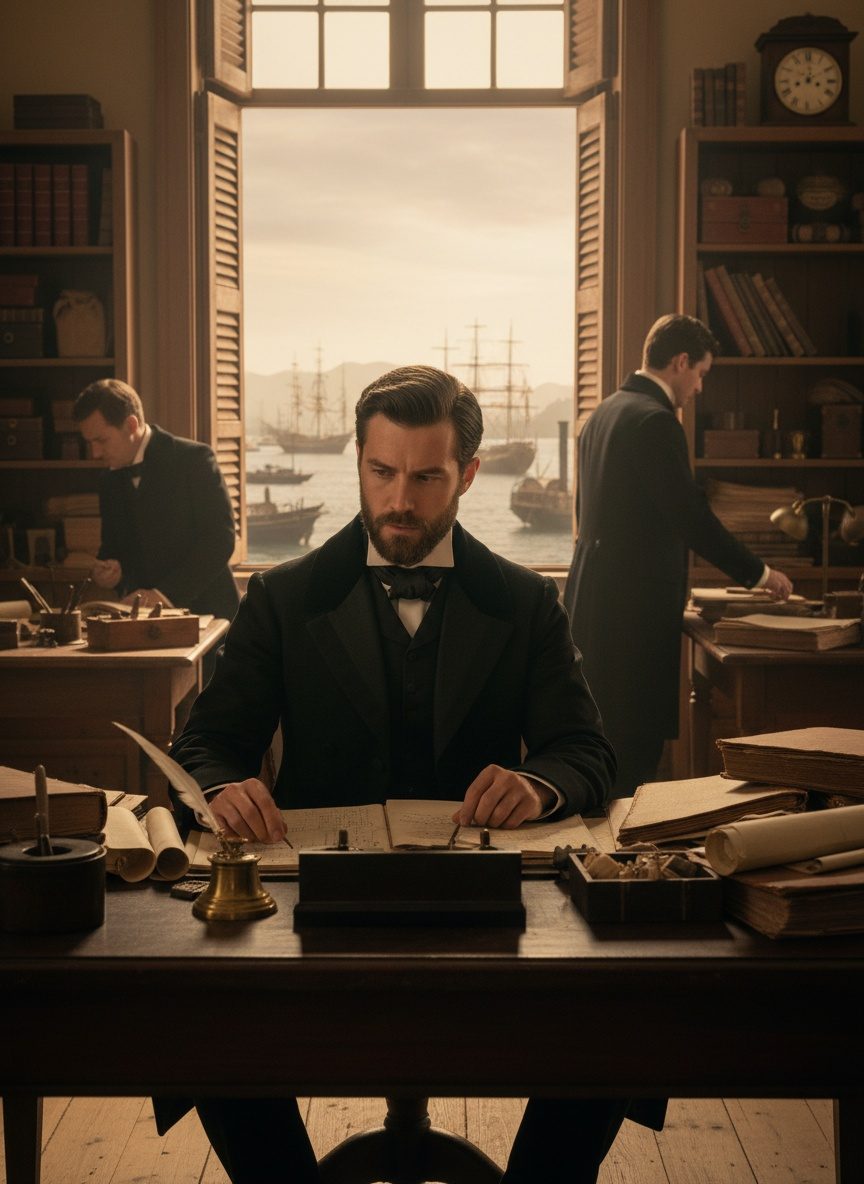
In the file-laden offices of the Oxford English Dictionary, project overseer James Murray marveled at the arrival of yet another parcel stuffed with insightful linguistic citations. These came, like clockwork, from the mysterious Dr. W.C. Minor, a supposed gentleman scholar. But this contributor, who had provided thousands of valuable references, lived not in a tranquil library corner, but behind the walls of Broadmoor Criminal Lunatic Asylum.
The OED, a monumental effort in linguistic cataloging, aimed to document every word in the English language along with its nuances and historical context. Such was the enormity of this task that it required the assistance of knowledgeable volunteers from across the globe. The editor’s trust in Dr. Minor was complete, as his submissions were both timely and erudite, proving invaluable to one of the century's greatest scholarly endeavors.
The Unexpected Meeting
Upon receiving yet another exemplary contribution from Minor, curiosity gnawed at James Murray. Who was this bibliophile, this scholar with an almost encyclopedic command of language? And why was he so unreachable? Determined to express his gratitude and perhaps glean further aid in the project, Murray resolved to visit the reclusive Minor.
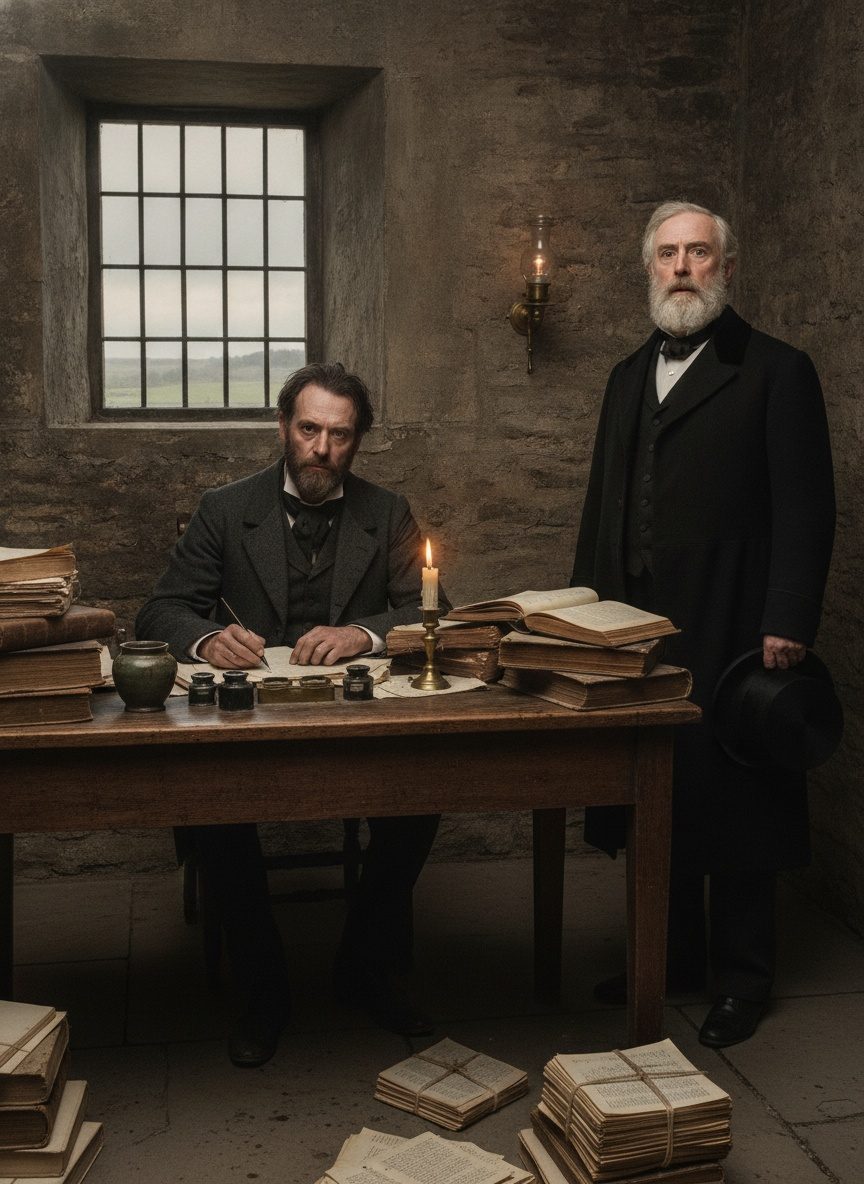
Imagine Murray’s shock when he arrived in Berkshire, only to learn that Minor’s residence was not the idyllic study he imagined, but a cell. Broadmoor was an architectural structure both imposing and isolating, with high stone walls that seemed to barricade it from the world. There, amid the asylum’s confines, Murray found a man not of madness, but of rare intellectual brilliance.
The Soldier’s Struggle
Dr. W.C. Minor's path to Broadmoor was as troubled as it was paradoxical. Born to American missionaries in Ceylon (present-day Sri Lanka), Minor's early life was a blend of exotic locales and rigorous Christian discipline. His education in medicine led to a career as a surgeon in the U.S. Army during the brutal years of the Civil War, where he bore witness to the savagery of human conflict.
It was said that the war left indelible marks on Minor's psyche, unsettling his once-stable mind. Plagued by delusions and paranoia, Minor eventually found himself in England, where a tragic act — the murder of a London man named George Merrett — sealed his fate. Adjudged insane, he was sentenced to Broadmoor, where he was to spend the rest of his days in confinement.
The Asylum Scholar
Despite such troubling circumstances, Minor’s incarceration allowed a peculiar freedom. He was housed in a comfortable suite, maintained a collection of valuable books, and corresponded with the outside world. From within this environment, he immersed himself in a passion for lexicography, diving into the depths of the English language with unparalleled fervor.
The asylum’s relative solitude and ample time provided Minor with a unique opportunity for focused, scholarly pursuit. Culling through his extensive library, he meticulously sourced examples and elucidations for the OED project. His correspondences with Murray and the other editors continued to intrigue, categorized by thoroughness and insightful reflection.
A Legacy of Words
Murray’s encounter with Minor was not just an unexpected revelation but a testament to the curious intersections of human history. The narrative of Dr. W.C. Minor serves as an unusual chapter in the tale of the Oxford English Dictionary, highlighting how profound contributions can arise from the unlikeliest corners.
What can we learn from this tale of brilliance and tragedy? Perhaps it’s a reminder of the indomitable spirit of the human mind. In a world often quick to dismiss those troubled by their inner demons, Minor’s story shows us that our legacies are often multifaceted, and that within the layers of despair, there may be a spark capable of illuminating the world. As we leaf through the pages of the dictionary he helped shape, we are reminded that knowledge and redemption can flourish in the most unexpected of places.