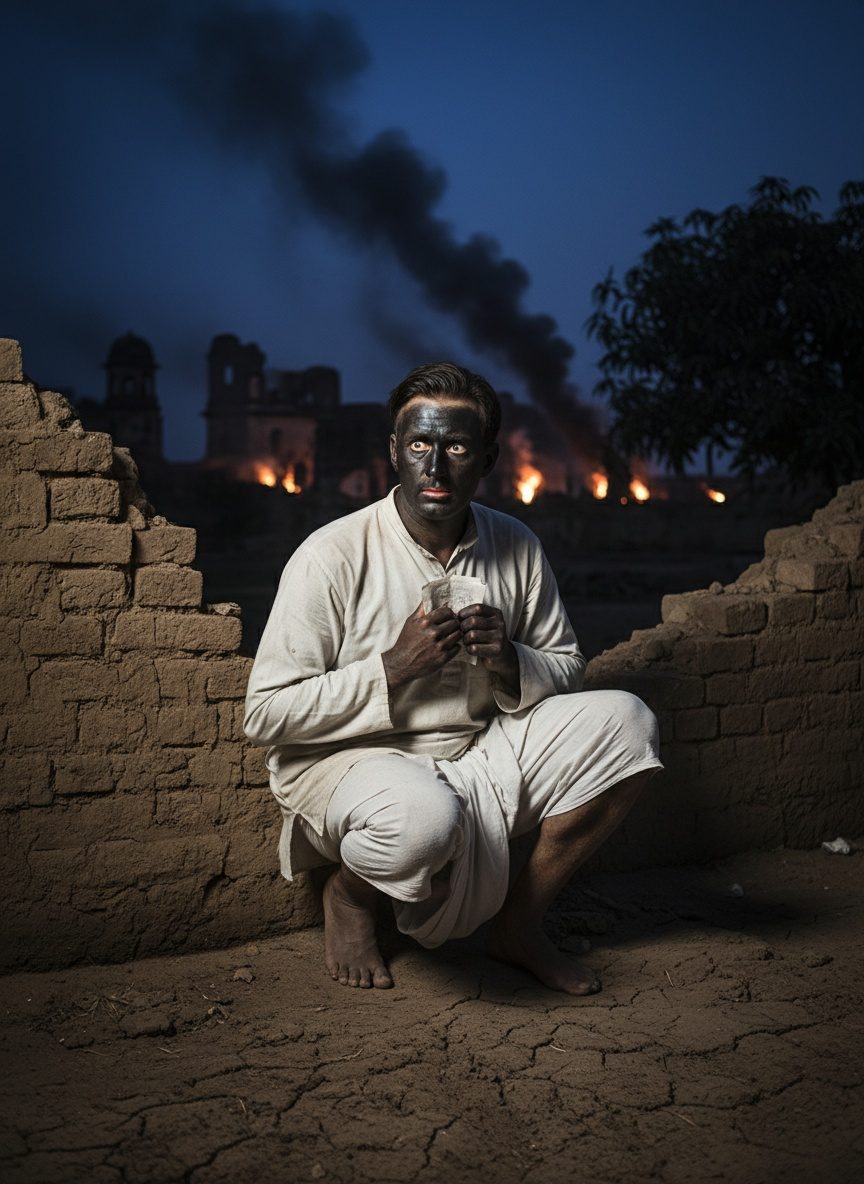
November 1857. The chill of the Indian winter seeped into the bones of Lucknow's beleaguered defenders.
The Siege of Lucknow: A City in Shadows
In a city once adorned with the splendor of Nawabs, defiance reigned amidst the crumbling ruins. The Residency of Lucknow stood as a defiant bastion against the overwhelming forces of the Indian Mutiny. For months, its defenders, a motley gathering of British soldiers, loyal sepoys, and civilians, bravely resisted the tides of mutiny. Each dawn, they faced another day of bombardment, hunger gnawing as fiercely as the enemy at the gate.
Inside their makeshift fortress, the situation was dire. The garrison was half-starved, medical supplies were dwindling, and morale was frayed, threadbare like the clothes that clung to their weary forms. Yet, as hope dimmed, an unlikely hero emerged from the siege's shadows, his audacity and determination shattering the despair that loomed over Lucknow.
Henry Kavanagh: A Civilian Turned Adventurer
Henry Kavanagh was no soldier forged in battle. He was a civilian clerk, a man whose life had been colored by ink and ledger rather than the smoke and powder of war. Yet it was precisely his civilian status that would empower his daring gambit. As the walls of the Residency strained under the weight of their defense, a plan brewed within the clerk's mind — risky and unorthodox, yet the very thread by which salvation could be woven.
To slip through the encircling net of mutineers, Kavanagh proposed a transformation as dramatic as any tale of metamorphosis. Swapping the sober garb of an Englishman for the flowing robes of an Indian villager, he planned to pass unnoticed through the enemy-held streets. In the midnight hour, when shadows danced with the flicker of lantern light, he would embark on his perilous trek to guide the long-awaited relief column to their aid.
Imagine it — a man ill-prepared for a military expedition, drawing solely upon nerve and a fervent desire to see his comrades freed from their torment. His disguise was more than mere fabric; it was a fragile veil between life and death, as precarious as the balance of power within those besieged walls.
Through the Heart of the Mutiny: A Night Unlike Any Other
Slipping into the veil of night, Kavanagh's heart beat in rhythm with the sound of distant gunfire, a haunting accompaniment to his every footfall. Lucknow, with its once-bustling bazaars now ghostly quiet, became an arena of danger where every shadow could betray his presence.
His journey spanned four miles, a distance that, under different circumstances, might have seemed trivial. Yet with each step, he delved deeper into a labyrinth of uncertainty, where the only map was his courage and resolve. The very streets that had once been a lively artery of trade and culture were now deserted ruins, haunted by the specter of conflict.
This solitary voyage through a city at war's heart was a test not only of Kavanagh's disguise but of his nerve. He was a stranger in this skin, yet must appear native enough to fool eyes trained by suspicion. And as he moved, the mutineers, unaware of the stranger in their midst, bivouacked dangerously close to his path, their flickering fires teasing a discovery Kavanagh could not afford.
Salvation at Dawn: A City's Triumph and a Legend Forged
As dawn threatened to unveil his clandestine passage, Henry Kavanagh crossed into friendly lines, greeted by incredulous ears and thankful hearts. His mission had been a miraculous success, one that seemed to blur the borders of reality and fiction in a city thirsty for heroes.
The relief of Lucknow had been made possible by a man who, against all odds and expectations, turned civilian nerve into a weapon mightier than the arms he could not wield. The relief column, guided by his hand, brought with it the supplies and reinforcements needed to break the siege that had strangled the city for so long.
The tale of Henry Kavanagh's night journey through the besieged streets of Lucknow might not adorn the pages of grand textbooks or etch itself brightly into the annals of empire. Yet it remains an indelible testament to the human spirit's capacity for courage and improvisation in the face of overwhelming odds.
Why should this story matter to us, removed as we are by time and distance from the echoes of 1857? It reminds us that in every narrative of war, there are countless threads woven by hands uncelebrated, lives transformed in moments of perilous improvisation, and bravery not confined by rank or sword. For in the siege of Lucknow, it was the humble clerk, Steeped in both fear and fortitude, who dared to traverse an ocean of uncertainty to light the beacon of hope.