Picture this: a dusty attic in Maidenhead, 1988. A woman rummages through old boxes when her fingers brush against a weathered scrapbook. Inside, she discovers photographs of children — hundreds of them — alongside meticulously kept lists, train schedules, and official documents. Her husband of decades had never mentioned any of it. What Grete Winton had stumbled upon was evidence of one of World War II's most extraordinary rescue operations, orchestrated by the quiet man downstairs who had somehow saved 669 children from the Nazi death machine.
Nicholas Winton, by then a 79-year-old retired stockbroker, had kept this secret for nearly fifty years. Not from shame, but from something far more remarkable: he simply didn't think it was worth mentioning.
A Holiday That Changed Everything
December 1938. While most young Londoners were planning their Christmas festivities, 29-year-old Nicholas Winton received an unexpected phone call. His friend Martin Blake, working with refugees in Prague, urgently needed help. "Forget about your skiing holiday," Blake pleaded. "Come to Prague. You're needed here."
Winton, a successful stockbroker with a comfortable life ahead of him, made a decision that would echo through history. He cancelled his Swiss skiing trip and boarded a train to Czechoslovakia instead. What he found there would haunt and drive him for the next eight months.
Prague in early 1939 was a city holding its breath. Hitler had already annexed the Sudetenland, and everyone knew the rest of Czechoslovakia would follow. In the freezing winter streets, Jewish families huddled in desperate groups, clutching suitcases and children's hands with equal desperation. The lucky ones had visas to somewhere — anywhere — else. The rest simply waited for the inevitable.
At the Esplanade Hotel, Winton set up an improvised office in his room. What he saw from his window was a humanitarian catastrophe unfolding in slow motion. Someone, he realized, needed to save the children. And if not him, then who?
The Impossible Bureaucracy of Salvation
What Winton accomplished next seems almost impossibly complex by today's standards. With no internet, mobile phones, or modern communication systems, he began orchestrating a rescue operation that would span multiple countries and thousands of miles.
The British government had agreed to accept refugee children — but only if Winton could guarantee £50 for each child (approximately £3,000 in today's money) to cover their eventual repatriation. He also needed to find families willing to foster them, secure safe passage through Nazi Germany, and navigate the labyrinthine bureaucracy of three different governments.
Working eighteen-hour days, Winton photographed every child, filled out endless forms, and wrote hundreds of letters. His makeshift operation in the hotel room became a lifeline for desperate families. Parents would queue outside his door, clutching photographs of their children, begging him to add them to his lists.
Here's what makes the story even more remarkable: Winton had no official authority, no government backing, and no organization behind him. He was just a young man with a conscience and an extraordinary talent for cutting through red tape. When he returned to London in February 1939, he continued the work from his mother's dining room table in Hampstead.
Trains Through Hell
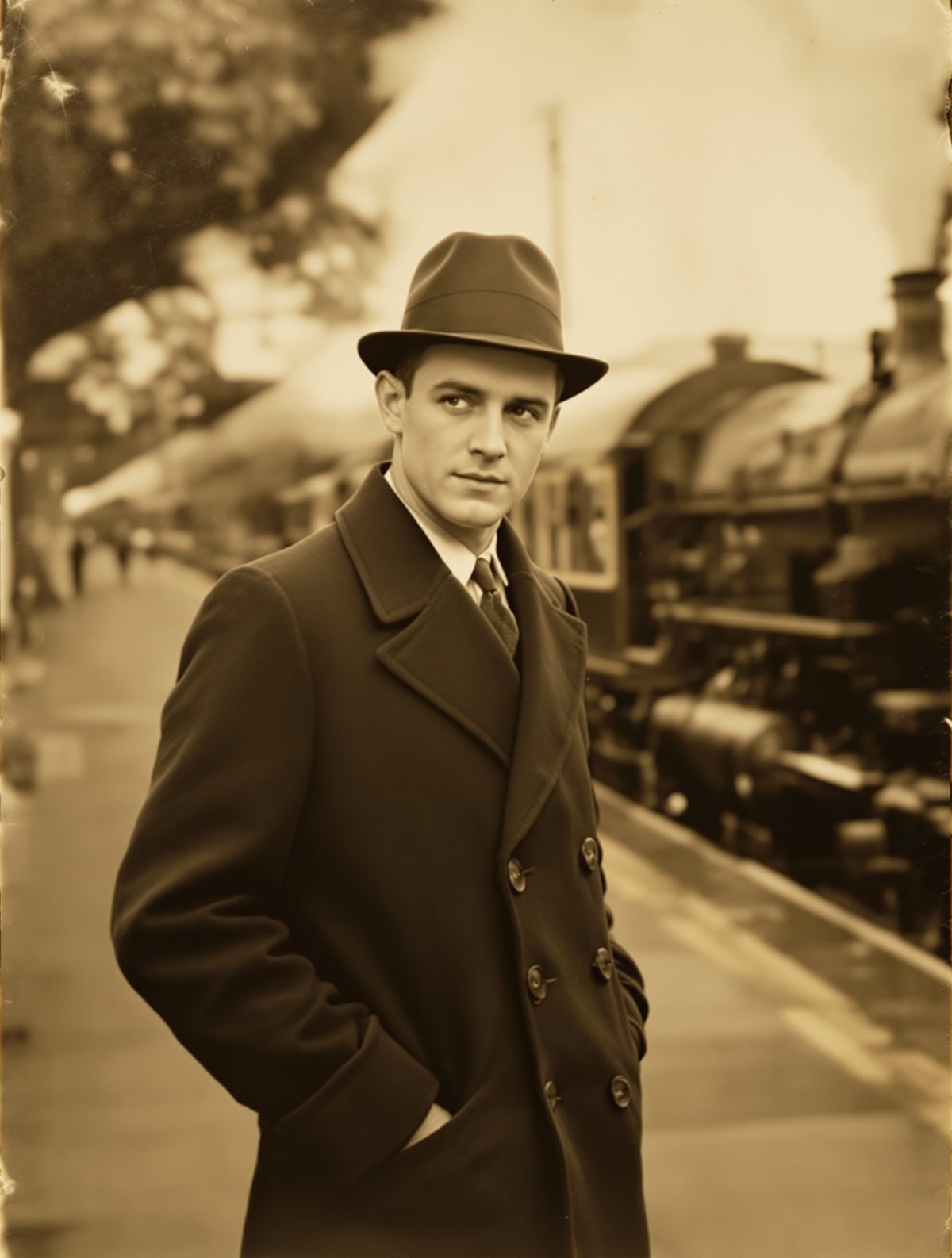
Between March and August 1939, Winton organized eight trains that would carry children from Prague through Nazi Germany to safety in Britain. Each journey was a masterpiece of timing and nerve — one delay, one suspicious border guard, one bureaucratic hiccup could doom hundreds of children.
The trains departed from Wilson Station in Prague, packed with children aged 2 to 17. Most had never been separated from their families before. They carried single suitcases and wore labels around their necks with their names and destination details — heartbreakingly similar to luggage tags.
The route was treacherous: Prague to the German border, then through Nazi territory to the Dutch frontier, and finally via ferry to Harwich. At each checkpoint, Nazi officials could halt the trains and send the children back. Many parents had made the agonizing calculation that their children's only chance of survival lay in this desperate gamble.
Trevor Chadwick, one of the rescued children, later recalled: "I remember my mother lifting me up to the train window for what I didn't know would be the last time I would see her. She was crying, but trying to smile. I was five years old and thought it was an adventure."
The largest train, carrying 241 children, was scheduled to depart on September 1, 1939. That morning, Germany invaded Poland. Britain declared war. The train never left the station. None of those 241 children survived the war.
The Secret Keeper
When the war ended, Winton did something that seems almost incomprehensible to our modern, social-media obsessed world: he simply got on with his life. He returned to his stockbroking career, married Grete in 1948, raised three children, and never spoke about what he had done in 1939.
His rescued children — now scattered across Britain and beyond — grew up, built careers, raised families of their own. Many spent years trying to discover who had organized their rescue, knowing only that some anonymous benefactor had saved their lives. The name "Winton" meant nothing to them; most of the paperwork had been handled by his assistants.
For fifty years, the scrapbook sat in the attic. Winton didn't hide it deliberately — he simply filed it away like any other completed project. When asked later why he never mentioned it, he gave a typically understated British response: "I never thought anybody would be interested."
This wasn't false modesty. Winton genuinely believed he had done nothing more than what any decent person would do in the same circumstances. The fact that most people didn't do what he did never seemed to occur to him.
The Reunion That Stopped a Nation
After Grete discovered the scrapbook, she contacted Holocaust researchers and journalists. The story broke in 1988, sending shockwaves through Britain and beyond. Suddenly, elderly people across the country realized that the quiet man they'd heard about on the news was the person who had saved their lives half a century earlier.
The most famous moment came in 1988 on the BBC television program That's Life. Host Esther Rantzen had invited Winton as a guest, ostensibly to talk about his charitable work. What he didn't know was that the entire studio audience had been filled with people he had rescued as children, now successful adults with children and grandchildren of their own.
"Is there anyone in our audience tonight who owes their life to Nicholas Winton?" Rantzen asked. "If so, could you stand up?"
The entire audience rose to their feet. Winton, visibly shocked, looked around at the faces — his children, now grandparents themselves. The camera caught him dabbing his eyes with a handkerchief, finally confronted with the magnitude of what he had accomplished.
Among those standing was Lord Alf Dubs, who would become a prominent politician and refugee advocate. Vera Gissing, who became an author and dedicated her life to telling the stories of the Kindertransport children. Joe Schlesinger, who became a renowned BBC correspondent. Each had built remarkable lives from the second chance Winton had given them.
The Ripple Effect of One Man's Conscience
The mathematics of Winton's legacy are staggering. Those 669 children grew up, married, and had families. Researchers estimate that by 2015, there were more than 6,000 people alive because of what Nicholas Winton did in eight months in 1939. Today, that number has grown to tens of thousands.
But perhaps the most important lesson of Winton's story isn't about the scale of what he accomplished — it's about the ordinariness of the man who accomplished it. He wasn't a superhero or a saint. He was a young stockbroker who saw suffering and decided to act.
In our age of social media activism and performative charity, Winton's story offers a different model of heroism. Real change, his life suggests, often happens quietly, without fanfare or recognition. It happens when ordinary people make extraordinary moral choices and then simply get on with their lives.
Nicholas Winton died in 2015 at the age of 106, having lived to see his story inspire a new generation of humanitarian workers. His final years were spent not basking in belated recognition, but continuing to support refugee causes, proving that his compassion in 1939 wasn't a moment of youthful idealism but a fundamental part of who he was.
In a world that often feels divided by hatred and indifference, Winton's story reminds us that individual conscience still matters. That bureaucracy can be defeated by determination. That the greatest heroes are often the ones who don't think of themselves as heroes at all. And sometimes, the most important thing you'll ever do might be something you'll keep secret for fifty years — not from shame, but from the quiet knowledge that saving lives isn't something you do for recognition. It's something you do because it's right.