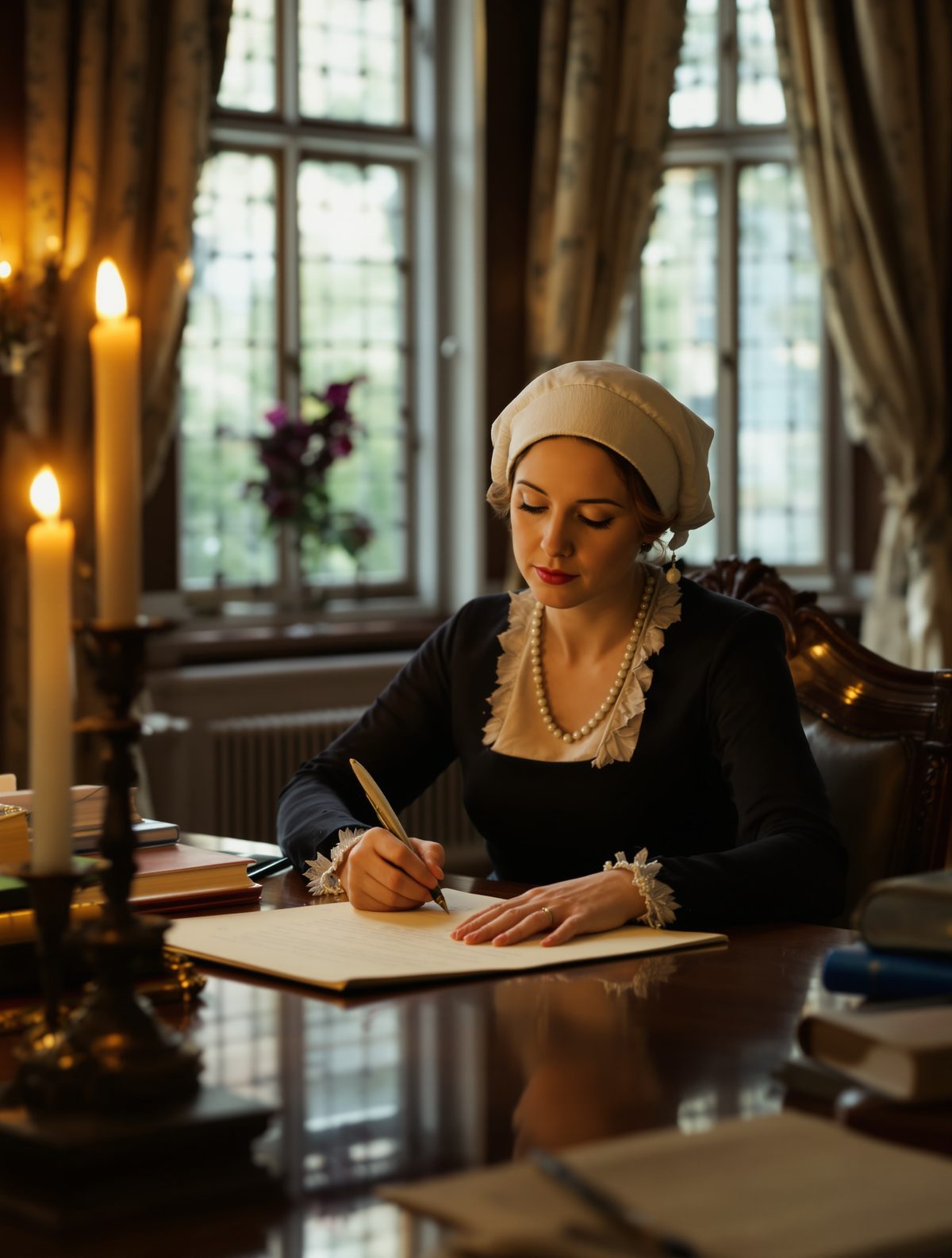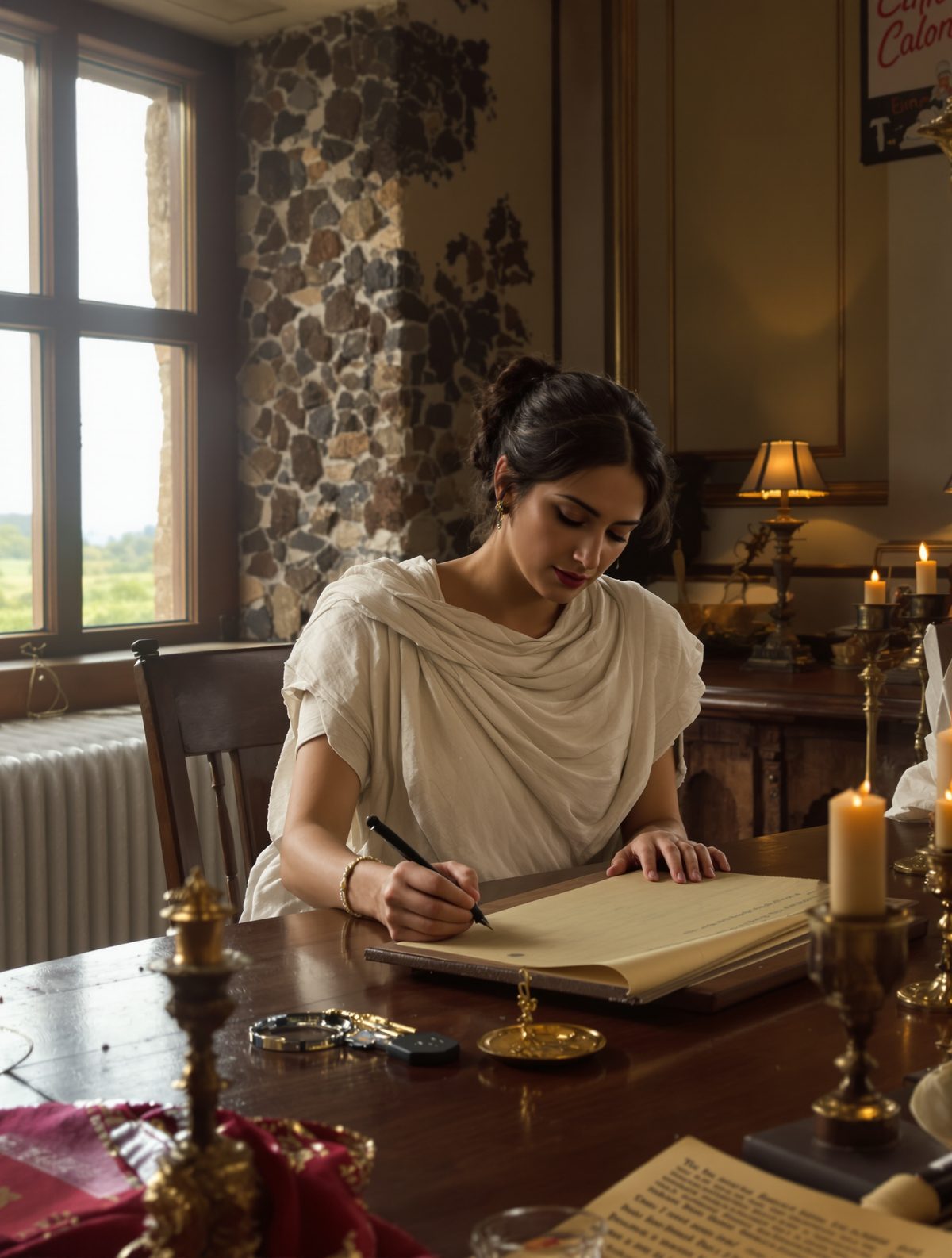
On a bitter morning around 100 AD, in a wooden fortress clinging to the windswept hills of northern England, a Roman woman dipped her reed pen in ink and began to write. The fort of Vindolanda lay frozen in perpetual twilight, its ramparts facing the unconquered tribes beyond. But Claudia Severa wasn't thinking about barbarian raids or military campaigns. She was planning a party.
Her stylus scratched across the thin wooden tablet as she carefully formed each letter: "Claudia Severa to her Lepidina greetings. On 11 September, sister, for the day of the celebration of my birthday, I give you a warm invitation to make sure that you come to us..."
Neither Claudia nor her friend Sulpicia Lepidina could have imagined that these simple words would survive nearly two millennia, buried in British mud, to become one of archaeology's most treasured discoveries—the oldest known handwritten document by a woman in Britain.
Life on the Edge of the World
Vindolanda was hardly the sort of place where you'd expect to find elegant correspondence surviving for centuries. This auxiliary fort, built eight miles south of what would become Hadrian's Wall, represented the very edge of Roman civilization. Beyond its wooden palisades lay the mysterious lands of the Caledonii and other fierce Celtic tribes who had never bent the knee to Rome.
The fort housed around 1,000 soldiers and their families, creating a bustling community in the wilderness. But it wasn't just military muscle that kept Vindolanda running—it was a complex society complete with bath houses, workshops, taverns, and civilian quarters where wives like Claudia Severa lived alongside their soldier husbands.
Archaeological evidence paints a vivid picture of daily life in this remote outpost. The soldiers wore socks inside their sandals (as revealed by another Vindolanda tablet complaining about the cold), drank wine imported from Gaul, and even had their own brewery. Women wore elaborate jewelry, children played with wooden toys, and dinner parties featured exotic delicacies like oysters hauled all the way from the English coast.
It was in this unlikely setting that Claudia Severa, wife of Aelius Brocchus, the fort's commanding officer, sat down to write her famous invitation.
The Birthday Invitation That Defied Time
The tablet itself is remarkably small—roughly the size of a modern postcard—yet it contains multitudes. Written in Latin on a piece of birch wood, it represents something extraordinary: direct communication between two women across the centuries, preserved by a perfect storm of archaeological conditions.
The full text reveals the warmth of their friendship: "I shall expect you, sister. Farewell, sister, my dearest soul, as I hope to prosper, and hail." But here's where it gets fascinating—while most of the letter was written by a professional scribe, the closing words "I shall expect you, sister" and "Farewell" are in a different hand entirely. These precious words were penned by Claudia Severa herself.
This makes the tablet doubly remarkable. Not only is it the earliest known writing by a woman in Britain, but it also reveals that upper-class Roman women on the frontier were literate enough to add personal touches to their correspondence. In an empire where female literacy was far from universal, Claudia Severa represents an educated elite who carried Roman culture to the very edges of the known world.
The invitation was addressed to Sulpicia Lepidina, wife of Flavius Cerialis, commander of the nearby fort at Brocolitia. These weren't just any military families—they were part of the Batavian cohorts, elite auxiliary units from what is now the Netherlands, whose loyalty to Rome had earned them prestigious postings.
A Muddy Miracle of Preservation
The survival of Claudia Severa's birthday invitation borders on the miraculous. When the Romans abandoned Vindolanda around 130 AD to move north to Hadrian's Wall, they left behind what archaeologists now call "the richest treasure trove of military and domestic life anywhere in the Roman Empire."
The secret lay in Vindolanda's unique conditions. The fort was built on boggy ground that became waterlogged and oxygen-free when abandoned. This anaerobic environment perfectly preserved organic materials that would have rotted away anywhere else—leather shoes, textiles, wooden combs, and crucially, ink tablets made from birch and alder wood.
The tablets lay buried and forgotten for over 1,800 years until 1973, when archaeologist Robin Birley began excavating the site his father had been digging for decades. The first tablet emerged from the mud covered in what looked like random scratches. It took years of painstaking work under infrared photography to reveal the faint traces of ink and decipher the Latin text.
What emerged was astonishing: over 1,700 tablets containing everything from military reports and duty rosters to shopping lists and dinner party invitations. But none captured the public imagination quite like Claudia Severa's birthday party invitation, which was discovered in 1973 but not fully deciphered and published until 1994.
The Social World of Roman Military Wives
Claudia Severa's letter opens a window into a world we rarely glimpse in ancient sources—the social lives of military wives on Rome's northern frontier. These women weren't just passive camp followers; they were integral parts of a complex society that recreated Roman civilization in the British wilderness.
The invitation reveals a network of female friendships that transcended the isolation of frontier life. Claudia addresses Lepidina as "sister," indicating either blood relation or deep friendship (the Latin "soror" could mean both). The warm, affectionate tone suggests regular contact between the women, despite living in separate forts.
Other Vindolanda tablets flesh out this picture further. We know that these women hosted elaborate dinner parties, commissioned fine clothing and jewelry, and maintained correspondence with friends and family across the empire. One tablet even mentions a woman named Paterna sending Lepidina fifty oysters, a birthday gift, and two pairs of sandals—evidence of the gift-giving networks that bound these frontier communities together.
The birthday celebration itself would have been a significant social event. Roman birthdays were important occasions marked by feasting, gift-giving, and religious observances. For Claudia Severa, celebrating her birthday in proper Roman style was a way of maintaining cultural identity in a foreign land, surrounded by tribes who worshipped different gods and followed alien customs.
Decoding Ancient Friendships
What makes Claudia Severa's invitation truly special isn't just its historical significance, but its intensely human quality. Strip away the Latin text and archaeological context, and you're left with something utterly recognizable: one woman reaching out to another, hoping her friend will make time for celebration.
The language Claudia uses is surprisingly intimate. The phrase "anima mea carissima" (my dearest soul) was typically reserved for the closest relationships—between spouses, family members, or the deepest friendships. This wasn't formal military correspondence but personal communication between women who clearly cherished each other's company.
We can imagine the birthday celebration itself: perhaps held in the commanding officer's quarters at Vindolanda, with the finest tableware the fort could muster. There would have been wine (Vindolanda tablets mention vintage Falernian from Italy), elaborate food prepared by enslaved cooks, and entertainment that helped these Roman women forget, for a few hours, that they were living at the edge of the known world.
Did Lepidina make the journey from her fort to attend? The tablet doesn't tell us, but we can hope she did. The invitation's survival suggests it was kept and treasured—perhaps filed away among Lepidina's personal possessions before eventually being discarded when the forts were abandoned.
Echoes Across the Centuries
Nearly two thousand years after Claudia Severa picked up her stylus, her birthday invitation continues to captivate us. In 2003, it was voted one of Britain's top archaeological treasures. The original tablet now resides in the British Museum, while a replica remains on display at the Roman Army Museum near Vindolanda.
But why does this small piece of wood move us so deeply? Perhaps because it bridges the vast gulf between ancient and modern in the most personal way possible. Claudia Severa's words remind us that human nature—our desire for friendship, celebration, and connection—remains constant across cultures and centuries.
In an age of instant communication, there's something profound about a birthday invitation that took days to deliver by military courier, written by lamplight in a wooden fort surrounded by wilderness. It speaks to the fundamental human need to reach out, to celebrate together, to maintain the bonds that make us more than mere survivors in a hostile world.
Every time we send a party invitation or text a friend, we participate in the same ancient ritual of human connection that Claudia Severa began with her reed pen on that cold morning at Vindolanda. Her words, preserved by British mud and Roman engineering, remind us that some things never change—and perhaps never should.