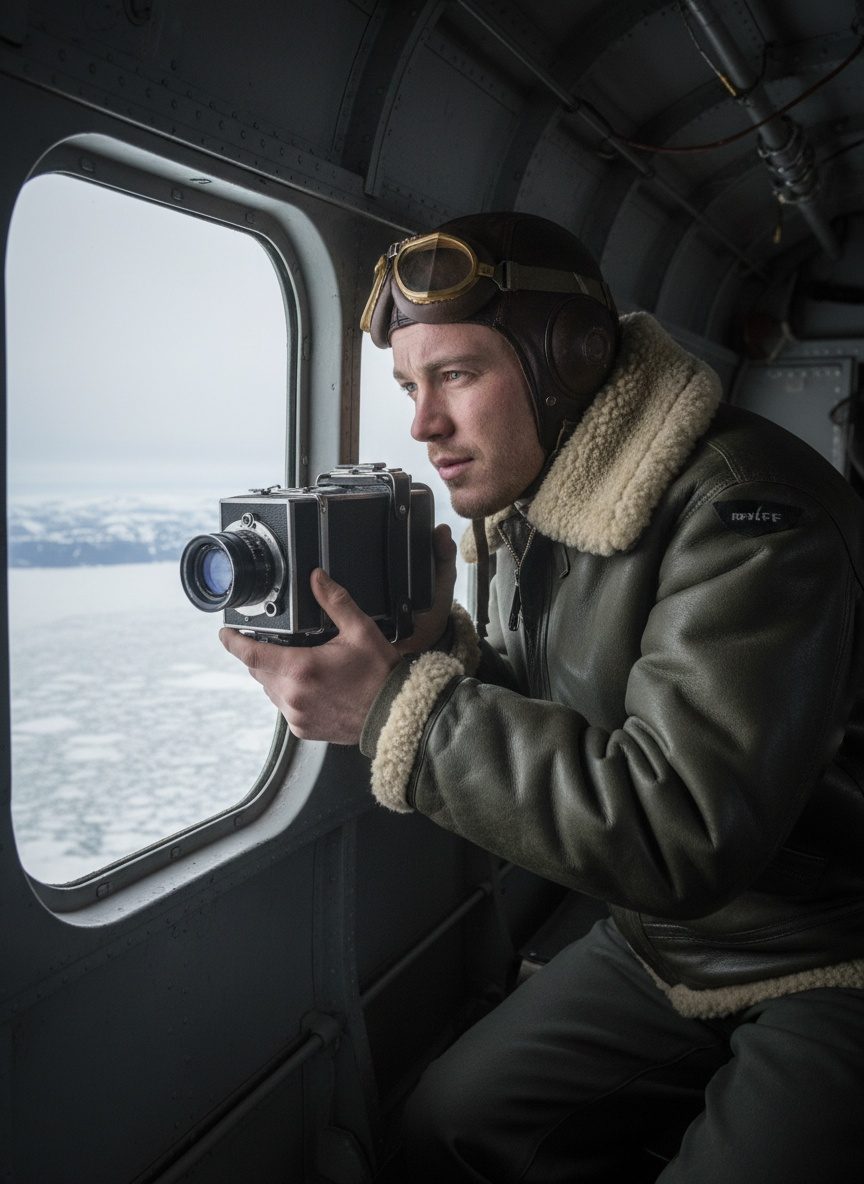
He was not armed with guns or bombs. Instead, he wielded a camera as his weapon of choice, capturing the unseen world from the skies above.
Behind the Lens: An Unseen War Effort
In the bleak expanse of May 1942, amidst World War II's global crescendo, the men of No. 269 Squadron RAF began their silent vigil over Iceland’s frozen seascape. Tasked not with aerial dogfights or bombing runs but with reconnaissance and ice patrol, these aviators undertook a mission that was both humble and paramount. The backdrop was an Arctic lifeline: the sea lanes where the ever-changing ice posed a deadly threat to Allied convoys traversing the North Atlantic.
The tools of the trade were not only the resolute Lockheed Hudson aircraft but also the Type F.24 aerial camera—a technological marvel of its time. Deployed not to document glory or ruin, the camera bore the mission to detail the shifting geometry of the ice below. A crewman, wrapped against the elements, leaned from the aircraft window, his gloved hands steadying the lens as he immortalized the scenes unfolding beneath—a tapestry of fractured, floating ice masses, intertwining and separating in nature’s cold dance.
The Arctic Ballet: Nature’s Challenge
The icy waters of the North Atlantic held sway over the fate of ships and men. Many assumed the sea lanes' hazards were the enemy U-boats lurking beneath, but just as menacing were the drifts of ice that made these waters treacherous. Commanders might understand weather patterns or read a map, but only through the captured aerial images could they truly comprehend the ever-shifting labyrinth below.
Through the camera’s eye, the Arctic seas were alive with variability. Ice fields, seemingly solid, could betray ships to deadly traps. Open water channels provided safe passage—or disappeared overnight. Photographs from the skies enabled navigators to foretell what the undulating white expanses dared to hide. As every image developed on solid ground, a silent testament to survival unfurled, allowing the Allies to adjust their strategies to evade nature’s icy embrace.
The Crewmen's Perspective: Emblems of Resolve
Operating over the cold and inhospitable landscapes required courage and resilience. The scouting missions, mundane yet crucial, tested the physical and mental endurance of their crew. Winds howled as the Hudsons cut through cloud and gale, buffeting the aircraft and its men, pressed to their convictions by the constant reminder of their mission’s stakes.
Despite limited public recognition for their efforts, these men represented a vital cog in the war machine. Recognition came not in medals or speeches but in the quiet satisfaction of knowing the role they played in ensuring the safe passage of vital supplies. Their photographs communicated in black and white the shades of safety and danger. In this unceasing cycle, the photographer’s lens became watchful eyes and guardian angel.
A Fight Without Glory: The Lasting Impact
The work of the 269 Squadron was unsung yet pivotal. Each photograph was a bridge to a less perilous future, a glimpse into clarity amid chaos. As the war unfolded, these images became critical in shaping Allied strategies far beyond the immediate task at hand. They provided a glimpse into natural phenomena, proving invaluable not just to military planners, but to scientists seeking to understand the polar regions.
It’s challenging to distill why these patrols, seemingly so removed from the war’s heat, resonate with such significance. They serve as a powerful reminder of the war's multifaceted nature—one where intelligence isn’t just dates and locations but an art of understanding the subtle and the unseen. The world these photographs revealed was one of delicate balance, forcing humanity to accommodate another of nature's formidable forces while embroiled in self-imposed turmoil.
Though the pilot and the photographer might remain nameless in history’s vast scroll, their service captures the essence of wartime innovation and adaptation. This story matters because it highlights that the struggles in wartime are not limited solely to human conflict but also encompass the perpetual challenge of mastering the natural world. In the quiet hum of those aircraft over Iceland, we find not just a tale of war, but a reminder of fragile symbiosis between man, machine, and nature.