The African sun hung lazily in the sky, casting long shadows over the rolling Zulu lands that bore witness to centuries of tradition and independence. The air was thick with anticipation, yet deceptively calm, broken only by the distant rhythm of drums echoing from the depths of the valleys. This serene landscape of 1879 was a foreground for one of history's poignant confrontations—the steadfast refusal of King Cetshwayo to submit to the demands of the British Empire. As the dust settled over the land, an ultimatum loomed ominously over the Zulu Kingdom: bow to British sovereignty or face the full might of an imperial army.
The Unyielding Mantle of Leadership
In 1879, the Zulu Kingdom was helmed by King Cetshwayo, a leader of formidable presence, marked by his commitment to his people and their way of life. Known for his strategic acumen and diplomatic poise, Cetshwayo was thrust into the heart of a crisis that placed him opposite one of the world’s most formidable military powers. The backdrop to this conflict was a British ultimatum issued in December 1878, which demanded the dissolution of the Zulu army, the surrender of firearms, and the acceptance of a British Resident in the Zulu court—all within thirty days. This heavy-handed approach was designed to fracture the Zulu’s independence, but instead, it solidified their resolve.
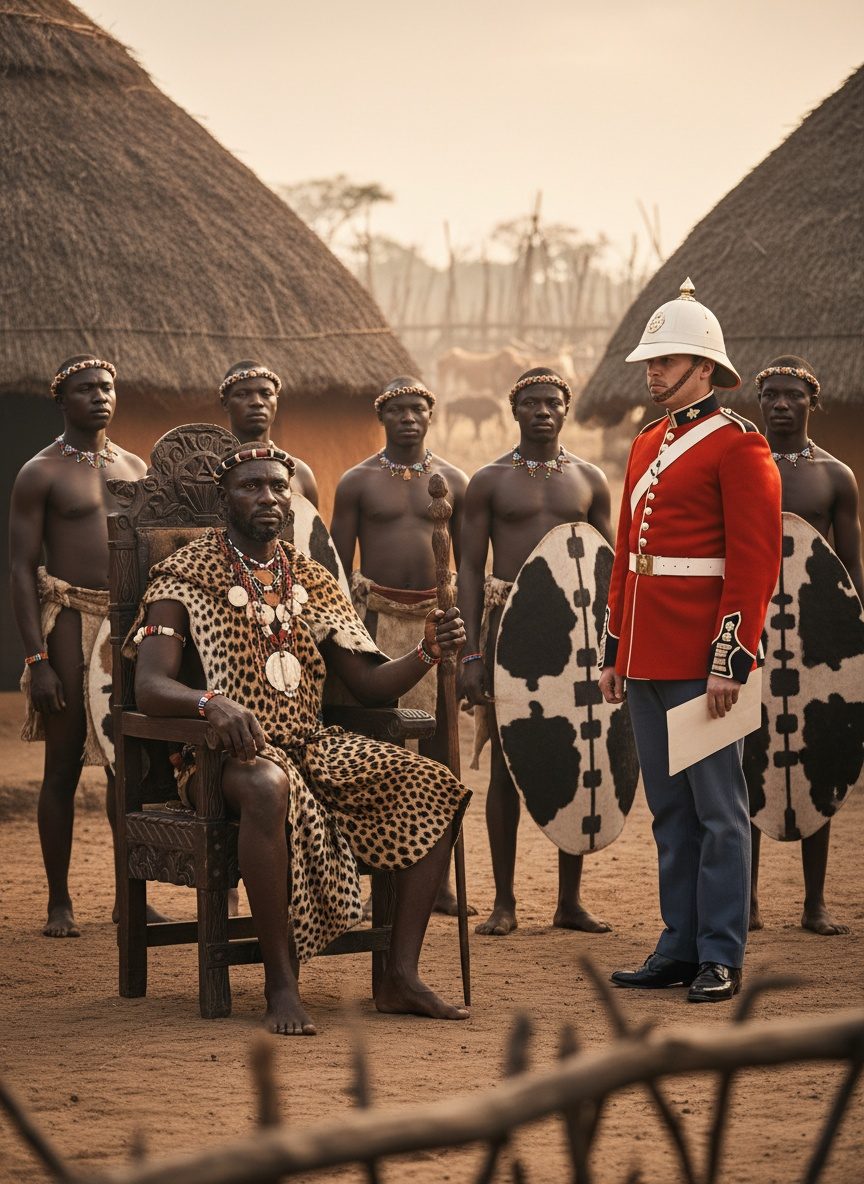
Cetshwayo’s refusal was not a rash decision boiled in anger; rather, it was a measured stance steeped in dignity and a resolute affirmation of sovereignty. Understanding the precarious balance between peaceful negotiation and inevitable conflict, he took a path seldom walked—one of peaceful defiance. In a display of both courage and a desire for peace, Cetshwayo sent unarmed envoys into British lines. Their hands were empty, bearing only messages of peace and requests for negotiation on equal terms. Despite his peace overtures, his words were met with a chorus of clattering weapons and marching feet, as the British mobilized 17,000 soldiers to make good on their threats. The stage was set, not for negotiation, but rather an impending clash unfolding like a slow-moving storm across an unsullied horizon.
A Kingdom’s Resolve
Cetshwayo’s stance was deeply rooted in the cultural and historical fabric of the Zulu people. The very notion of disbanding the impis—the Zulu regiments—was seen as an affront not only to their sovereignty but also to their identity. Each warrior was a vital thread in the tapestry of Zulu society, a proud testament to their strength and unity. The Zulu Kingdom, nestled between rolling hills and sweeping plains, was not just a collective of individuals but a unified body, with traditions and familial ties binding its people under the aegis of their king.
The gravity of the British demands was not lost on Cetshwayo, nor was the tragic potential for what would follow if those demands went unmet. The royal kraal, the epicenter of Zulu administration, was abuzz with deliberations. Elders and advisors gathered under the open sky, their faces etched with the weight of possible outcomes. Despite the inevitability of conflict, there was an intrinsic hope that the crowned nation might yet find a peaceful resolution.
As the days slipped by, this hope grew dim under the shadow of British incursion. The Zulu, renowned for their military prowess and tactical ingenuity, prepared to defend their land. The British viewed the region through the lens of strategic positioning and expansionist ambition. The conflict, thus, transcended the personal or the immediate; it was a clash of civilizations, each led by differing assessments of valor and honor. The Zulu stance was emblematic of an enduring people who drew strength from their storied past and the leader who epitomized their collective resolve—King Cetshwayo.
Confrontation and Consequence
As January 1879 unfolded, the stage for confrontation was inevitable, set amidst the dusty backdrop of Zululand. A piece of destiny was playing out, as Zulu warriors stood against the encroaching British threat, emblematic of a broader narrative of resistance against imperialist expansion. In their hearts and minds, this was more than just a military engagement; it was an act of survival, identity, and defiance against foreign subjugation.
The British forces, under Lord Chelmsford’s command, advanced with disciplined precision. Yet, even with their technological superiority and larger numbers, they faced a profound challenge in the form of the determined and disciplined Zulu fighters. By refusing to fire the first shot, Cetshwayo had made it clear: the Zulu did not seek war, yet they would not shy away from defending what was rightfully theirs. Battles such as Isandlwana soon became infamous testaments to this determination—an imperial force defeated by the indomitable will of those it sought to subjugate.
While the Zulu victory at Isandlwana reverberated around the world, it came at a great cost. The war that followed was as much about maintaining dignity as it was about resistance. Cetshwayo’s refusal to kneel bore its price, the eventual fall of the Zulu Kingdom leading to the king’s capture and exile later in 1879. However, the impact of the resistance lived on, causing ripples across colonies and subject nations, serving as a rallying cry for resilience and self-determination in the face of imperial encroachment.
The narrative of King Cetshwayo and the Zulu refusal to kneel before colonial demands underscores an enduring theme in the vast volumes of history—the irrepressible spirit of autonomy. His story resonates beyond the confines of its time, reminding us that while the physical realm can be conquered, the spirit remains unyielded. For Cetshwayo and the Zulu, the refusal wasn't merely a denial of demands; it was an affirmation of identity and dignity. It is a sobering reflection on power dynamics, cultural heritage, and the timeless quest for self-determination that echoes profoundly into the present and beyond.