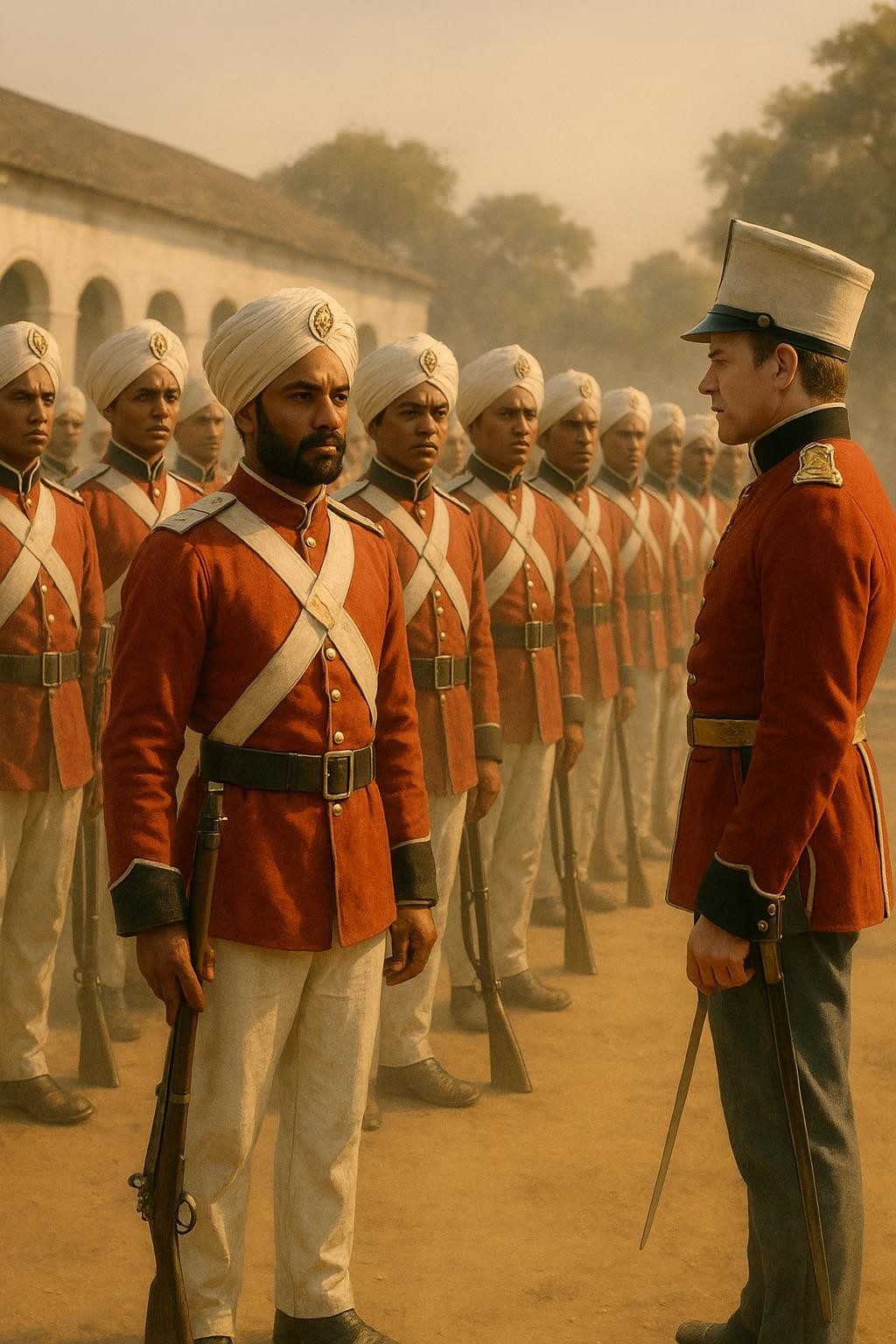
Red dust hung in the air, thick enough to taste. Sweat dripped down the backs of men standing in stoic defiance, their fingers tingling from the tension of holding rifles they refused to load. The sweltering Indian sun bore down as dozens of sepoys of the 34th Bengal Native Infantry (BNI) made their choice on that fateful May day in 1857 — a choice that would reverberate through the annals of history.
Behind Barrackpore's Resolved Defiance
Tucked within the strategic folds of the British-controlled Barrackpore lies the moment sometimes glossed over in textbooks. It wasn't just a decision — it was a collective stand against an empire. The sepoys were told to load their Enfield rifles, an order fraught with implication. These new Enfield cartridges were rumored to be greased with cow and pig fat — substances abhorrent to both Hindu and Muslim faiths. In a world dominated by colonial power, refusing an order was akin to insurrection.
The palpable unease had been building long before the sepoys' refusal. The introduction of these cartridges, without consideration for the beliefs of native soldiers, lit a simmering fuse of discontent. As one sepoy murmured to another about the cartridges defiling their faith, the echoes of cultural neglect and imperial hubris resounded through the lines. While officialdom brushed aside these grievances, missteps piled into a mountain of misunderstanding that soon became impossible to dismantle.
Mangal Pandey: The Firebrand's First Spark
Though Mangal Pandey is often recognized as the face of the revolt, his was not a solitary voice. He served as the ember that found dry tinder in the hearts of Barrackpore's soldiers. A havildar in the 34th BNI, Pandey's actions in March 1857 set the stage, but it was the collective solidarity of his comrades in May that breathed life into the uprising. As Pandey faced his own execution for assaulting British officers, sepoys watched the fate of a man fighting against centuries-old injustices — and they understood.
The decision by the rank and file to lay down their arms struck fear into the colonial heart. It demonstrated the power of unity, flouting the assumed hierarchy that the British imposed. Across languages and regions, a shared disdain for the cartridges spoke of something deeper — a resistance against losing not just religious rituals but their identities under alien rule.
Footsteps Across Hindustan
As news from Barrackpore spread like whispers in a forest, sparks of rebellion ignited across the subcontinent. This refusal on an airless May day did not merely symbolize discontent with rifle cartridges but heralded the seeds of revolution across Hindustan. From Allahabad to Delhi, echoes of Barrackpore's stand became war cries. The military defiance soon spilled beyond parade grounds, finding fertile ground in the villages and cities yearning for reclamation.
The reverberations were felt not only by enlisted men but civilian quarters as well. The sepoys' insubordination highlighted profound discontent with British policies and ignited ambitions that far exceeded military circles. Venturing across Punjab and Bengal, commoners and nobles alike latched onto the cause, forging alliances that transcended divides British rule had enforced. What began as a mutiny of military conscience soon morphed into a wider call for emancipation.
Legacy in Rebellion's Ripple
The actions of Barrackpore's sepoys that day were not just a flashpoint in the Indian Mutiny of 1857; they embodied a burgeoning spirit of resistance capable of shaking the foundations of imperial powers. These soldiers, facing court-martial and unforgiving British reprisals, chose to rise from the ground they held sacred rather than submit. Their stand laid down a gauntlet that made clear — the days of subjugation under distant rulers would be contested by the resilient heart of India.
Amid carnage and chaos, the revolt crystallized into inspiration for generations to come. It whispered of unity against oppression, of diverse voices melding into a singular outcry for justice. The sepoys' refusal lit a flame whose embers lingered, even as colonial powers sought to douse them. It reminded all — then and now — that sometimes, courage is shown by putting down one's weapon, forging strength in standing for belief rather than submission.
As students of history continue to unravel this tapestry of rebellion, they are reminded of the collective courage at Barrackpore, a story ultimately left out of many textbooks. The sepoys' steadfast refusal was more than an act of defiance; it was a potent statement that reverberated through an empire, heralding a future where India would no longer simply lie dormant under colonial feet.