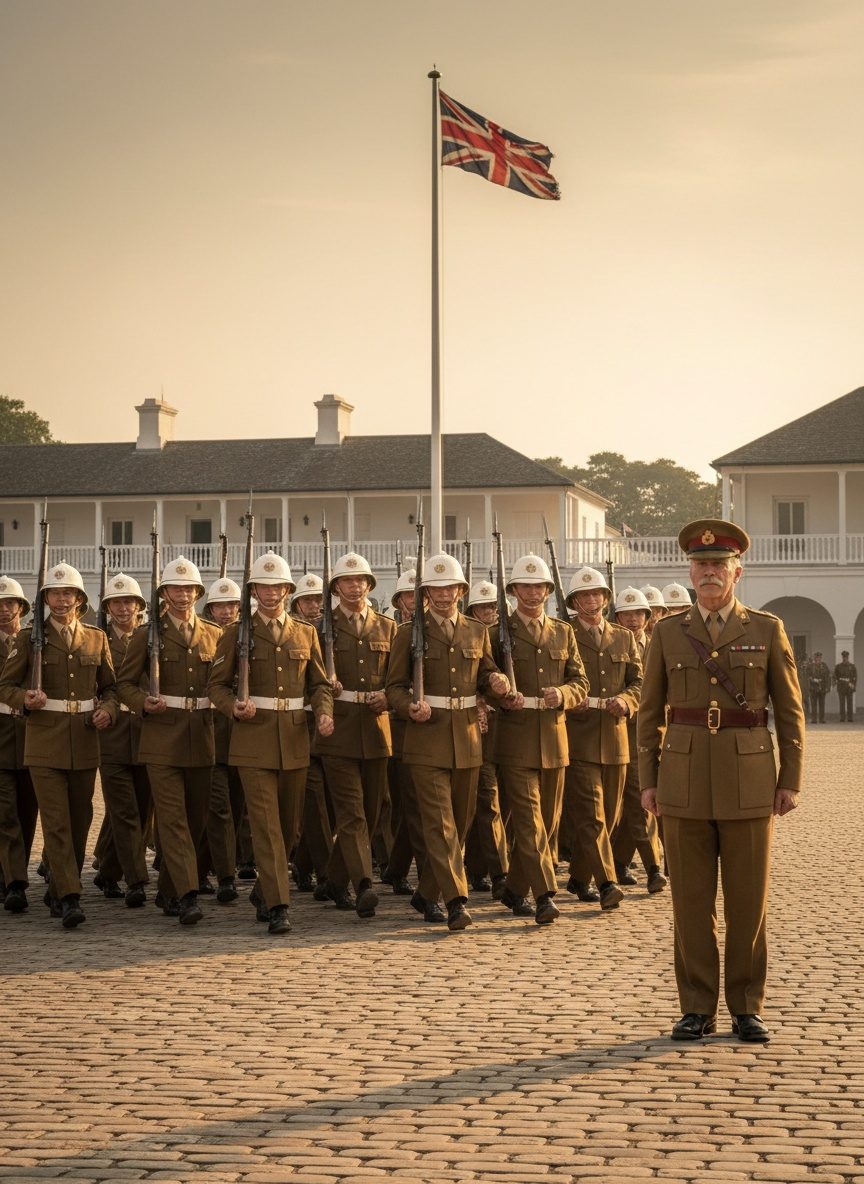
July 1, 1997. The last British flag fluttered in the humid Hong Kong air, watched by eyes that had seen a city transform. On this day, one more chapter of British colonial history reached its epilogue as the Union Jack was lowered over Hong Kong and the vibrant red flag of China ascended in its place. But among the soldiers standing in formation, a sense of continuity lingered. They were the Royal Hong Kong Regiment, the local soldiers who had served faithfully as defenders of the British crown for over a century. This moment was as much their story as it was Hong Kong's.
Back in 1854, the concept of a local military unit in Hong Kong was still nascent. The colony, a critical node in the British Empire's vast colonial network, was yet gaining a feel of permanence amidst the geopolitical complexities of the time. Pirates roamed the South China Sea, and the threat of internal unrest was ever-present. In response, British authorities saw the necessity of forming a local corps—one that would understand the unique dynamics and terrain of Hong Kong better than any foreign battalion could.
From this need, the origin of the Royal Hong Kong Regiment took root, initially as a volunteer force made up of local Europeans and loyalist Chinese. The Regiment became a permanent fixture in the colony's defense, a composite reflection of its ever-evolving cultural landscape. Primarily tasked with guarding the colony's boundaries and maintaining internal security, these soldiers also fulfilled ceremonial roles, their striking presence earning them a coveted place in all major public events. As decades rolled on, their duties expanded well beyond fighting pirates and suppressing local insurrections.
The destiny of the Regiment, however, would take a stark turn in 1941, an eventful year that etched deep scars into the Hong Kong narrative. The Second World War spilled into the Pacific, drawing the Empire's farthest reaches into its unforgiving embrace. In December of that year, the looming silhouette of the Japanese Imperial Army darkened Hong Kong's horizon. As the onslaught bore down, the Royal Hong Kong Regiment found itself at the frontline of an impossible defense. Outnumbered and outmatched, they fought valiantly alongside other Commonwealth forces. The invasion was brutal, the territory was besieged. Yet, amidst the chaos, tales of their resistance and sacrifice curled into legend, echoing a timeless testament to their grit.
Although the Japanese occupation marked a period of unpleasant suffering, it also forged a collective resilience among Hong Kong's soldiers. When the war concluded in 1945 and British rule resumed, the veterans of the Royal Hong Kong Regiment carried forward lessons entrenched both in trauma and valor. Following the war, though Hong Kong embarked on its miraculous economic rise, the shadows of global Cold War tensions kept the regiment ever vigilant. They adapted to a new world order, their ranks boasting increasingly diverse intakes mirroring the city’s own multicultural evolution.
In the years of the Cold War, while espionage and diplomatic tensions danced on the international stage, the Regiment quietly maintained peace on local shores. Training programs and collaboration with British forces became routine, fashioning the soldier-citizens into a reliable pillar of colony security. It was during these years that the Regiments’ contribution far transcended simple soldiering. The servicemen often engaged in civil defense, disaster response, and community initiatives, further weaving themselves into the city’s social fabric.
Beyond mere military engagements, the soldiers of the Royal Hong Kong Regiment were full participants in the colony's narrative—a narrative that was reaching its endpoint. As negotiations between Britain and China led to the handover agreement of the 1990s, the Regiment faced a bittersweet transition. In preparation for the new governance, the decision was made for the Regiment to be disbanded. Yet, their final act was to be one of dignity and grace. On that fateful day of July 1997, they marched for the last time along the streets that had been their home, embodying not just military precision but a lifetime of loyal service.
As the city moved under a new flag, their departure marked the end of an era. The Royal Hong Kong Regiment had outlasted shifting tides, its members standing watch over a city in perpetual transformation. Their legacy, embedded in Hong Kong’s landscapes and chronicles, is not just one of martial readiness. It speaks of a shared history, coexistence, and a nuanced commitment beyond allegiance to the crown. In them, the nuanced symphony of colonial remnants and local pride found resonance. And it is here, within the echoes of their steady marching footsteps, that one understands how history weaves the unexpected from its last remaining soldiers. This tale, left out of textbooks, captures more than the solemnity of a handover; it illuminates the resolve and resilience of a city and its defenders who stood watchfully at the dawn and dusk of empires.