The rain had ceased, but the sky remained an ominous tapestry of heavy clouds, their shadows pooling on the churned earth of the Western Front. Beyond a small copse, lined with the skeletal remains of trees, the ground opened into a chaos of waterlogged ditches and tangled barbed wire. The faint smolder from the recent artillery bombardment still hung in the air, an acrid reminder of the night's violence. It was May 1918, and amidst the muted greys and browns of the battlefield landscape, the lush green of spring seemed an incongruous luxury. Yet here, in a ditch near Guyencourt, a drama quietly unfolded, emblematic of the harrowing human—and animal—experience of World War One.
The Storm of Steel at Guyencourt
The Third Battle of the Aisne was the spearhead of the German Spring Offensive, aiming to finally break through the Allied lines with emphatic force. The offensive, driven by the desperation to exploit the momentary numerical advantage over the Allies, threatened to reshape the stalemated warfare that had devastated Europe for years. It was a devastating sweep, as regiments were overwhelmed, forced back, and pockets of resistance were left isolated on the battlefield.
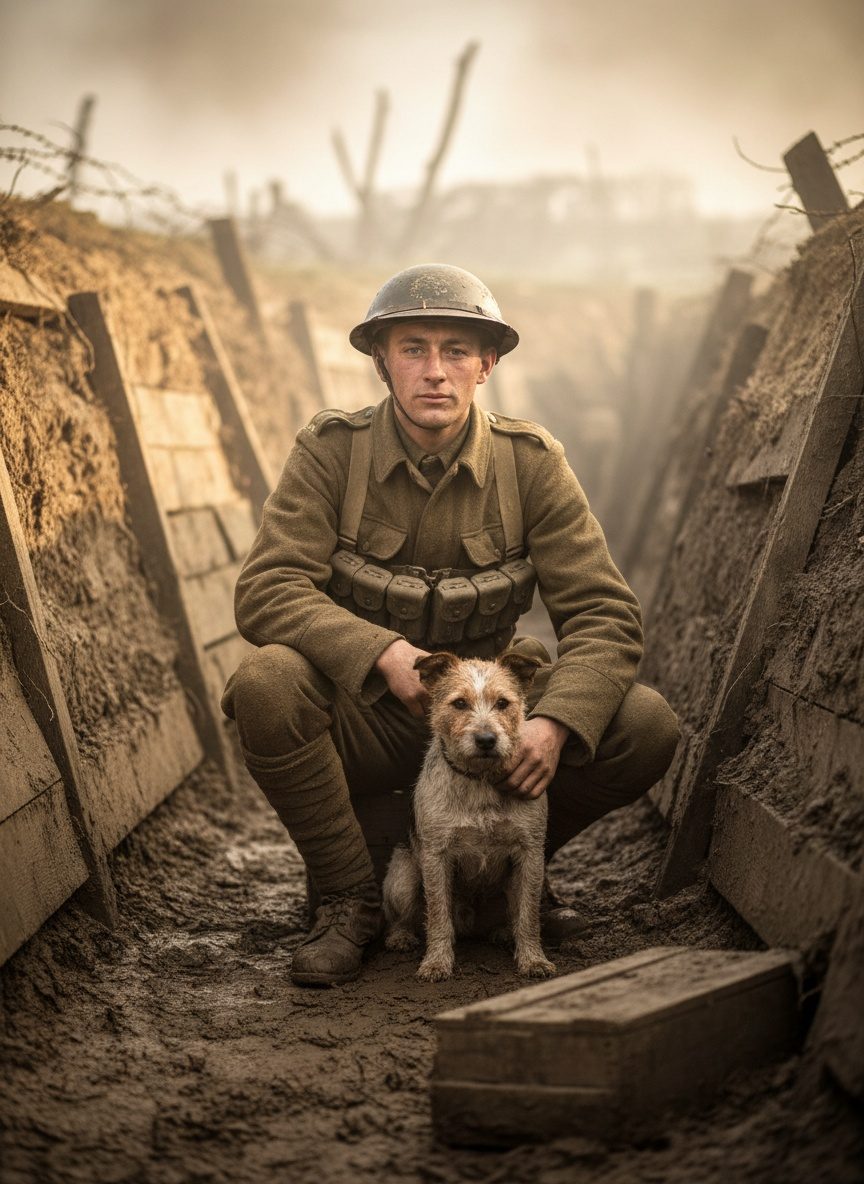
Guyencourt—a small dot on the Aisne battlefield—became a stage for both chaos and courage. German stormtroopers, fresh from their victorious advances, pressed hard against the shattered remnants of British divisions. Here, in a ditch, an unassuming yet poignant tableau unfolded. A Tommy, a British infantryman, huddled low, the cold water seeping through his weary clothes as he clutched his rifle close. The ground he held was nondescript, just another trench line among countless others. But to him, it was everything—home, sanctuary, and in the microcosm of war's insanity, a last stand. Beside him, barely noticed amid the human toll of war—that other constant companion of soldiers—the loyal terrier.
A Companion Beyond Orders
The image of soldiers adopting animals during warfare isn't uncommon. These creatures brought a shred of normalcy, a token of civility amidst the uncivil. The small terrier that accompanied this Tommy seemed out of place in the theater of war, yet for the soldier, it was a living reminder of the world outside the trenches. Though rules of military engagement were silent on such companions, here was a relationship fashioned by the intensity of shared survival.
As machines of war clattered overhead, the terrier remained steadfast, resolute in its vigil alongside its human counterpart. Through shell bursts and rattling gunfire, it chose not to scamper away, but to huddle tighter against its master, providing warmth and unyielding loyalty. Time after time, when chaos escalated, and onwards when ominous silence reigned, the dog's brown eyes would watch the horizon, a private sentinel in a muddied grave.
Chronicles Left Untold
While dispatches documented division movements and casualty statistics, the smaller, often poignant narratives remained cloaked in unofficial histories. Here, in this ditch, lay a vignette of the war's overlooked heroes. The Tommy and his terrier were to remain absent from the war's grand narratives, but their tale encapsulated the resilience and profound bond formed under fire.
Not all heroes are tied to regimented ranks, not all valor can be conferred with medals. Sometimes, the courage is simply in staying where one is—when every nerve clamors to flee. Historians who later pieced together the stories of the war would know that often, it was these silent witnesses who bore stories of great humanity. While Siege of Guyencourt would become another page in a history textbook, the steadfast loyalty of a small dog provided a stark, humane contrast to the bureaucratic records of war.
The Footprints of Unlikely Heroes
War has a tendency to overlook its quiet tales. In the face of grand strategy, the fragility of life is only sometimes recorded in shouts and whistles, like those shared in whispers between friends in the remnants of bombed-out shelters. The Third Battle of the Aisne was a microcosm of global struggle, yet within its confines, it housed anecdotes of remarkable resilience, often missed by the eyes scanning for bigger narratives.
Mans’ best friend, illustrated here as more than mere companions, became integral to survival and comfort, offering moments of peace in the multitudinous horrors of warfare. The Tommy and his terrier remind us—over a century later—that history's most enduring lessons are often those found in overlooked footnotes. It was in the unsanctified trenches of Europe's battlefields where this simple, profound partnership emerged as a reminder that even in the direst moments, loyalty and companionship remain unyielding rungs in the ladder of human spirit.