The rolling hills of Matabeleland were cloaked in the thick mists of early morning. As dawn broke, the soft golden light glinted off dew-laden grasses, creating an otherworldly tapestry that belied the chaos hidden within. In 1896, this tranquil scene was a backdrop to a violent struggle, as the Ndebele warriors rose in defiance against the British Empire. Outnumbered and misinformed, the British forces faced an existential threat. Their only recourse was to gather intelligence, a suicidal mission many deemed impossible. Frederick Burnham, an American-born scout, volunteered to ride alone into the heart of enemy territory. What he discovered there would alter the outcome of the campaign.
The Land Breathes War
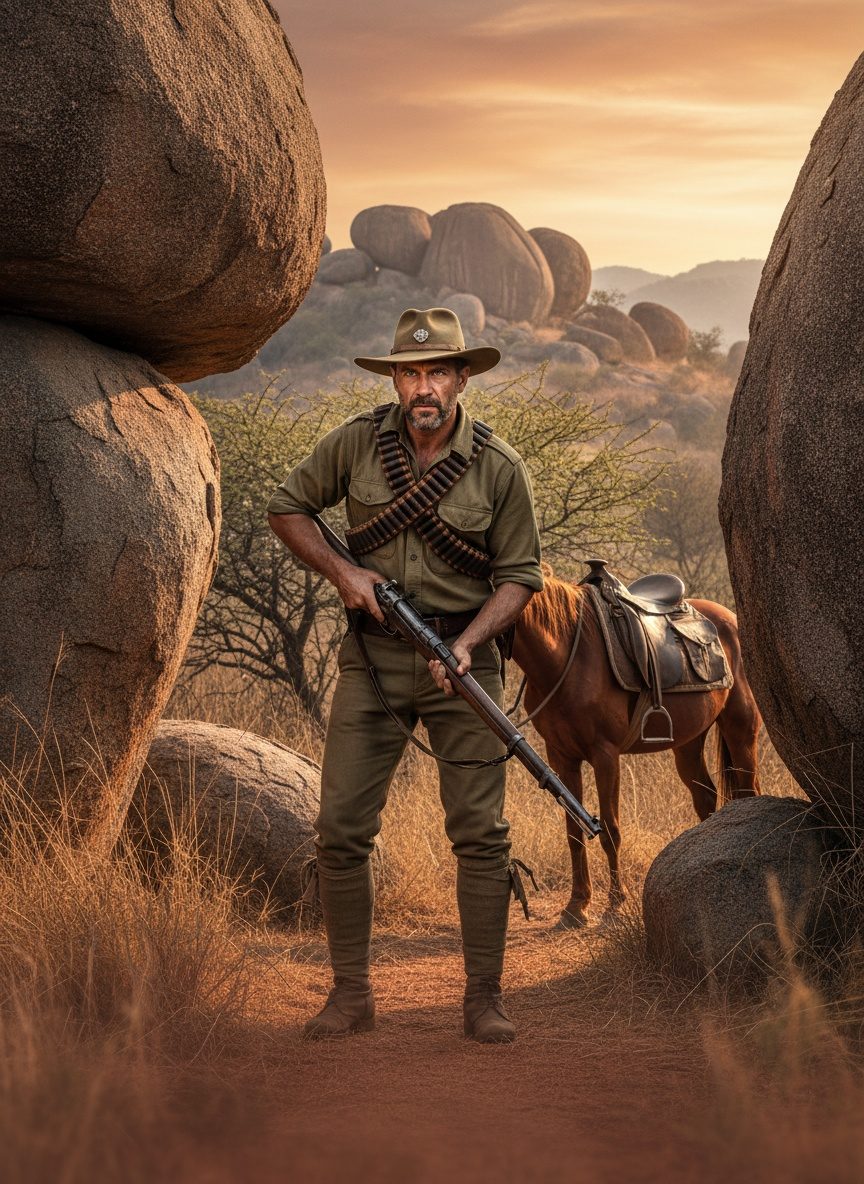
Matabeleland, a vast region of undulating savannah and rugged kopjes, was as unforgiving as it was beautiful. The air was scented with acrid smoke from recent skirmishes, mingling with the earthy aroma of the African highlands. The land was colored a rich ochre from the late-summer dust, and the rustle of the tall grass in the wind was punctuated by the distant, unsettling cries of native wildlife. Amidst this setting, the Ndebele, skilled warriors entrenched in their knowledge of the terrain, waged a relentless war against the British colonial incursion.
Frederick Burnham stood out among the scouts with his keen instincts and determination. Trained in the wilds of the American West, he had an uncanny ability to read the land and its signals like an open book. The Ndebele rebellion had virtually blinded the British troops, compromising their ability to strategize effectively. Without Burnham's courageous reconnaissance, they stood little chance of quelling the uprising.
An Intrepid Decision
In the immortal quiet of those Matabeleland mornings, Burnham prepared himself for a journey few dared to attempt. The decision to ride out alone was born of both desperation and audacity. The British forces, led by Colonel Plumer, were losing ground. Scouts dispatched ahead were vanishing without a trace, swallowed by the veil of the African wilderness. It was under these harrowing circumstances that Burnham's offer wasn’t just accepted; it was seized upon like a lifeline.
As Burnham mounted his horse, the sun broke through the clouds, casting an ominous shadow over the camp. One last scan of the horizon — a culmination of experience distilled into a single, solemn moment. He knew the stakes: if he failed to locate the Ndebele stronghold, it would spell disaster for the British forces and, conceivably, the entire colonial venture in this part of Africa.
Into the Heart of the Rebellion
The path ahead was treacherous, a blend of concealed hostility and natural beauty. Burnham pressed on, each step becoming a calculated risk, his senses heightened to the cacophony of the bush. The distant chatter of monkeys hinted at the unseen threats lurking in the thick vegetation. Every shadow concealed potential ambushes set by Ndebele warriors fiercely defending their land.
A relentless rider, Burnham's expertise as a tracker and survivalist came to the fore. He surveyed animal tracks, listened for the subtle drumming of distant warning signals, and pieced together a mental map that would guide him to the Ndebele encampment. Here, in the dense heart of enemy territory, Burnham succeeded where many had not. He discovered the hidden stronghold and returned unscathed, carrying with him the intelligence that would crucially alter the strategic calculus of the British forces.
The Impact of Intelligence
It was Burnham's report that provided Colonel Plumer with the strategic edge necessary for a counter-offensive. Knowledge of the Ndebele's movements and positions allowed the British to plan a coordinated strike to outmaneuver the rebels who had until then enjoyed home-field advantage. The once-blind columns of British troops could now march with renewed purpose, their steps guided by insights borne from Burnham’s daring endeavor.
This act of bravery became legendary, not just for its audacity, but for the consequences it wrought. Burnham's successful reconnaissance had turned the tide of the campaign, allowing the British to quench the flames of rebellion that had threatened to engulf Matabeleland. The rugged landscape had been Burnham's ally as much as it had been the enemy's, illustrating the interchangeable roles land can play in the theater of war.
Echoes Through History
The tale of Frederick Burnham in Matabeleland is an extraordinary vignette, emblematic of a broader narrative during the Scramble for Africa. His solitary ride is a potent reminder of the individual courage and audacity amid the vast machinations of imperial power struggles. It speaks to the vital importance of intelligence and the perennial human spirit that dares to push the boundaries of the known and the possible, even in the face of seemingly insurmountable odds.
In today's world, as borders shift and cultural conflicts rage, Burnham's story resonates with timeless lessons: in the vast, unpredictable landscape of human affairs, the value of knowledge, bravery, and the decisive actions of one individual can steer the course of history. These elements knit together the fabric of our past and continue to influence the dynamics of our present.