He had only one eye. That didn’t stop him from seeing the opportunity clearly. On the morning of February 14, 1797, Admiral Sir John Jervis faced a daunting decision in the choppy waters off Cape St Vincent. Commanding a fleet of fifteen battered ships against an imposing Spanish armada of twenty-seven, it was a situation where caution would seemingly be the prudent path. Jervis, however, was no ordinary admiral, and the pages of history remember him for his audacious and unexpected choice: to attack.
Beneath the Union Jack: Jervis's Calculated Gamble
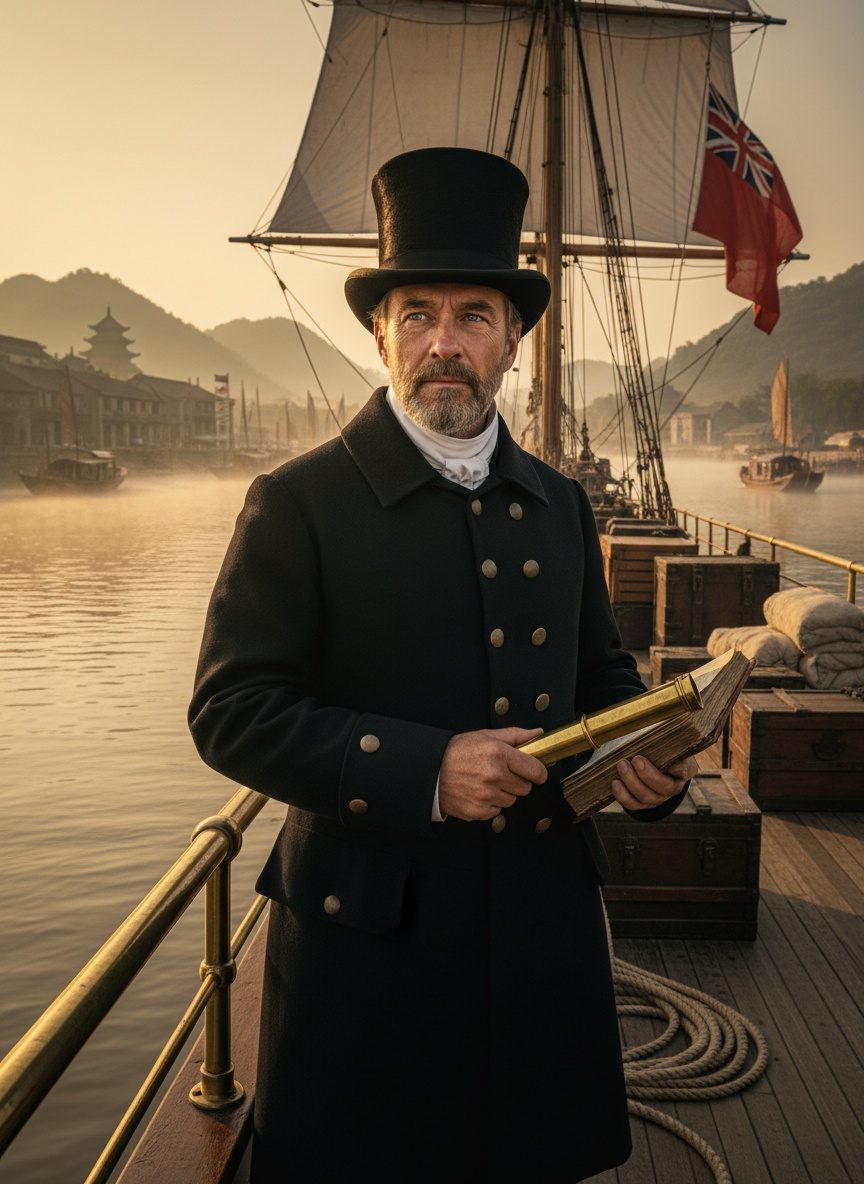
The British Royal Navy was the stern protector of an empire stretching its command across the seas. Yet, in the Atlantic waters near Portugal, the mighty Spanish fleet loomed like a storm waiting to unleash its fury. The early hours found Admiral Jervis on the quarterdeck of HMS Victory, staring intently at a horizon bristling with enemy sails. His mind was a battleground of strategies and possibilities. With a force of only fifteen ships of the line, defeat seemed the likely outcome in the face of numerical superiority. Yet, Jervis's naval insight and experience, honed over years of maritime campaigns, found its narrative not in retreat but audacious confrontation.
The Spanish ships, despite their numbers, were reported to suffer from disorganization and poor communication—a crack in an otherwise formidable wall. Jervis's knowledge of these weaknesses became the stones in his sling as he prepared to face Spain's maritime Goliath. Mustering his fleet into a tight, disciplined line, he prepared to bisect and cripple the unwieldy Spanish formation. The battle order was given, and like the unbeatable phalanx of old, Jervis's line advanced, defying logic and perhaps even fate itself.
In the smoke and chaos of the ensuing engagement, Jervis's plan unraveled perfectly. His ships found the gaps, slipping through Spain's cumbersome armada, showering it with shot and shell. The roar of cannon fire overtook the screams of the gale, as British valor underwhelmed Spanish grandeur. Yet, in this crucible, another story foresaw the shaping of history and heroism in the most unlikely forms.
Nelson's Daring Dance: The Art of Defying Orders
While Admiral Jervis wielded his fleet with strategic brilliance, Commodore Horatio Nelson danced to the tune of instinct and audacity. Onboard the HMS Captain, a 74-gun ship not dissimilar in valor to its commander, Nelson faced his own revelation behind the smoke and acclaim of Jervis's initial success. It was the Commodore's moment, and he seized it with the fervor of a man determined to imprint himself upon legend.
Nelson's resolve broke from the confines of strict naval convention. In witnessing the confusion rippling through the Spanish ranks, he ventured outside the safety of formation, setting a direct course towards the enemy, acting without orders—but certainly not without purpose. HMS Captain plowed boldly into the void within the Spanish line, and through the fog of war, brilliance emerged. Commanding the helm with nerve and nothing short of genius, Nelson struck iron into the Spanish heart.
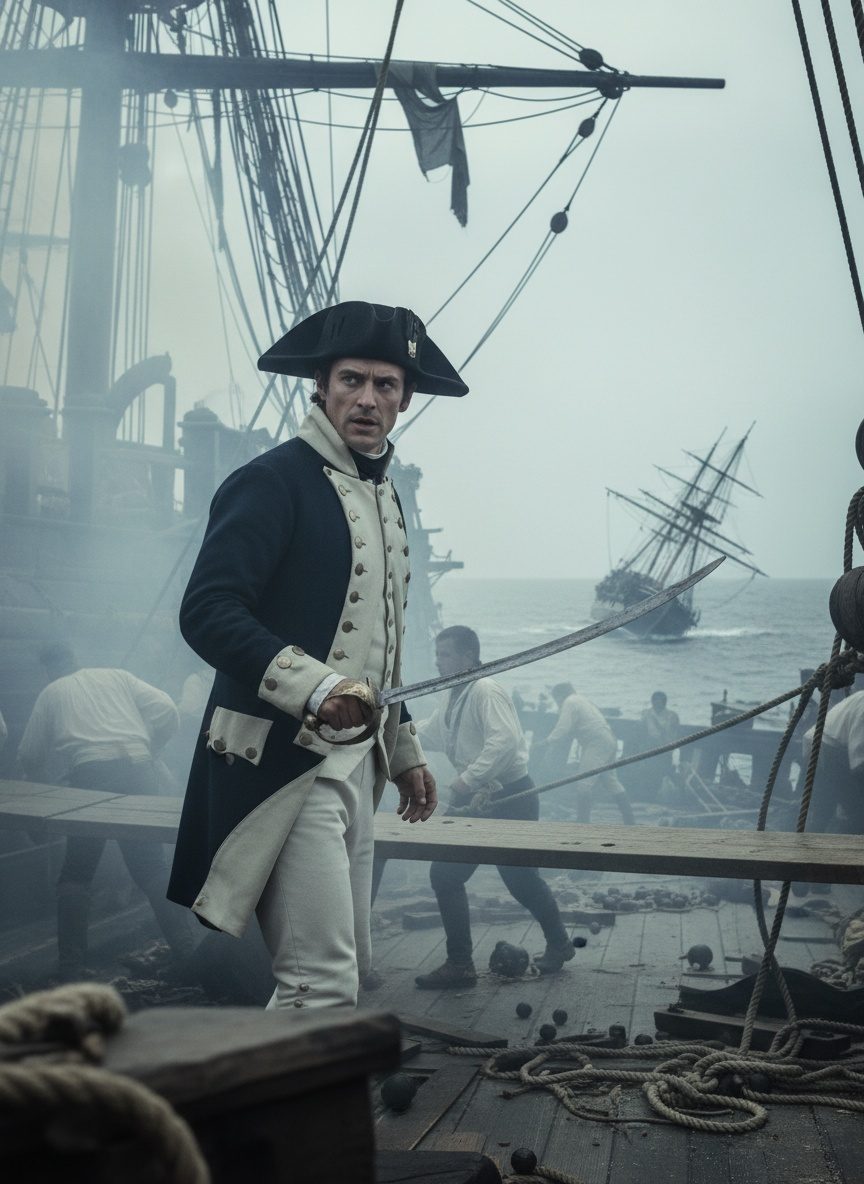
Quickly, the commodore closed on the Spanish flagship, the San Nicolás, initiating one of the most brazen maneuvers in naval warfare history. Boarding the enemy ship, cutlass in hand, Nelson became a force of nature. This was war as it was seen in the age before guns—face to face, determined by grit, steel, and courage unflinching. Amidst the smoke and chaos, the Boarding of San Nicolás unfolded like an act from a sea-bound Shakespearean drama.
The legend continued as Nelson's men, driven by their leader's rapture and resolve, overtook and subdued not one, but two enemy ships—a feat that cemented his legacy and earned him a hero’s accolades back home. The Spanish, beleaguered by the fury of Nelson's attack, witnessed the unraveling of their defeat on the decks now teeming with British hands and triumph. It was a play executed with poise and promise by a pupil willing to test the bounds of naval tradition for victory.
Britannia Unchanged: Writing History in Atlantic Waves
The echoes of cannon fire over the Cape of St Vincent dwindled, leaving behind a sea littered with reminders of a moment when the tides of naval conflict swayed beneath British feet. As night fell, the victor was clear in the undoubted rule of Britannia, its maritime testament having drawn a story of boldness—a story that history could not ignore. For Admiral Jervis, the journey from calculation to execution showcased courage that defied numerical superiority. What emerged was a testament to the art of leadership against overwhelming odds.
The Battle of Cape St Vincent reverberates through time, not only for its victor’s daring but for the lasting legacy it marked in the annals of naval warfare. The Royal Navy’s reaffirmed mastery of the sea was more than a strategic check against Spain's fervor—it was a decisive chapter in the broader theatre of the Napoleonic Wars, shaping the geopolitical tide that continued through the next centuries. As Britannia illuminated the waters with its maritime splendor, the narrative that ensued burned into the heart of every ship and sailor that ventured forth in its wake.
In reflecting on those Atlantic waters turned battlefields, it is not solely the might of wood, sail, and cannon that fuels the legends, but the spirit of audacious individuals like Jervis and Nelson who comprehended not only the weight of responsibility on their shoulders but the spectrum of success beyond its bonds. Theirs is an enduring tale of ingenuity etched in both valor and victory, captivating minds in perpetuity, a lesson in the potency of strategic intuition and undeterred commitment to triumph in the face of the impossible.