He had just finished riveting the chassis of a motor car. Hours later, he was being fitted for a military uniform. This transformation was the stark reality for many British men in 1916 as the country moved from voluntary enlistment to conscription in the throes of World War I.
The Day Tradition Changed
For over three hundred years, the British Empire had relied on the fierceness of volunteer soldiers to wage its wars, drawing upon a legacy seasoned by adventurers, explorers, and fierce guardians of the crown. This martial tradition was shattered on a cold day in January 1916 when the Military Service Act was enacted. No more would the imperial might rest solely on voluntary shoulders; now, it called upon every eligible man to do his duty, whether he chose to or not.
The repercussions of such a monumental shift were immediate and profound. Two million men, previously ensconced in civilian life, found themselves stripped from the familiar routines of factory work, the camaraderie of football fields, and the pastoral quietude of countryside farms. In a matter of weeks, these individuals became soldiers—unlikely recruits into an army that would see horrors unimaginable to the seasoned soldiers of the previous century.
Britain faced a dire need for manpower as the Great War stretched on with no end in sight. The initial rush of volunteers in 1914, spirited by a wave of patriotic fervor, had exhausted itself through the meat grinder of trench warfare. As casualties continued to mount, the sobering realization hit home: the traditional methods of recruitment were insufficient for the demands of modern, total war. Hence came the Military Service Act—a desperate measure for desperate times.
From Factories to the Frontlines
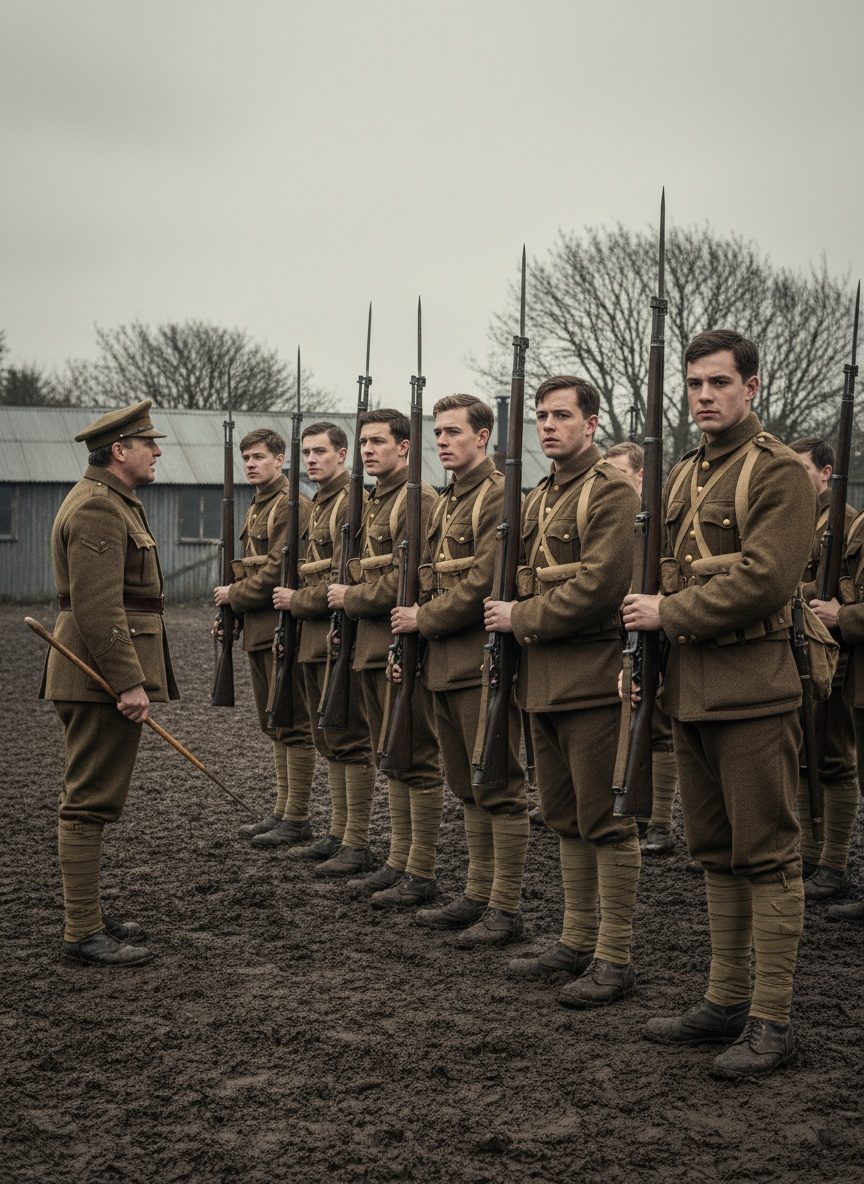
The transition from civilian life to soldiering was abrupt and disorienting. In towns and villages across the nation, men were pulled from workshops and offices, still smelling of ink and oil, and thrust into the unfamiliar routines of military drills and training. The initial shock was compounded by the physical and psychological demands of preparing for war.
These new conscripts faced an onslaught of new experiences. They learned how to march in cadence, how to disassemble and clean a rifle, and how to react under simulated artillery fire—harrowing precursors to the realities they would soon face on the Western Front. There was no romance, no glory; only the discipline of routine and the camaraderie of men united by their conscripted fate.
Many of these men, plucked from urban districts or rural farms, had never before worn a uniform, never worked in unison for a militaristic purpose. Yet, bars and clubs in towns near training camps became breeding grounds for unlikely bonds and friendships. Laughter permeated the air on evenings after grueling drills, as shared hardship forged connections that would prove essential in the trenches.
A significant challenge was the tension that arose from this enforced enlistment. Some men accepted the call with a resolute sense of duty, but for others, the compulsion drew deep resentment. Citizens who had once been free to choose their path were now bound by duty to a government decree. Still, whether with resignation or resolve, the machinery of war ground forward, and with it, an unprecedented conscript army took shape under the Union Jack.
Into the Trenches
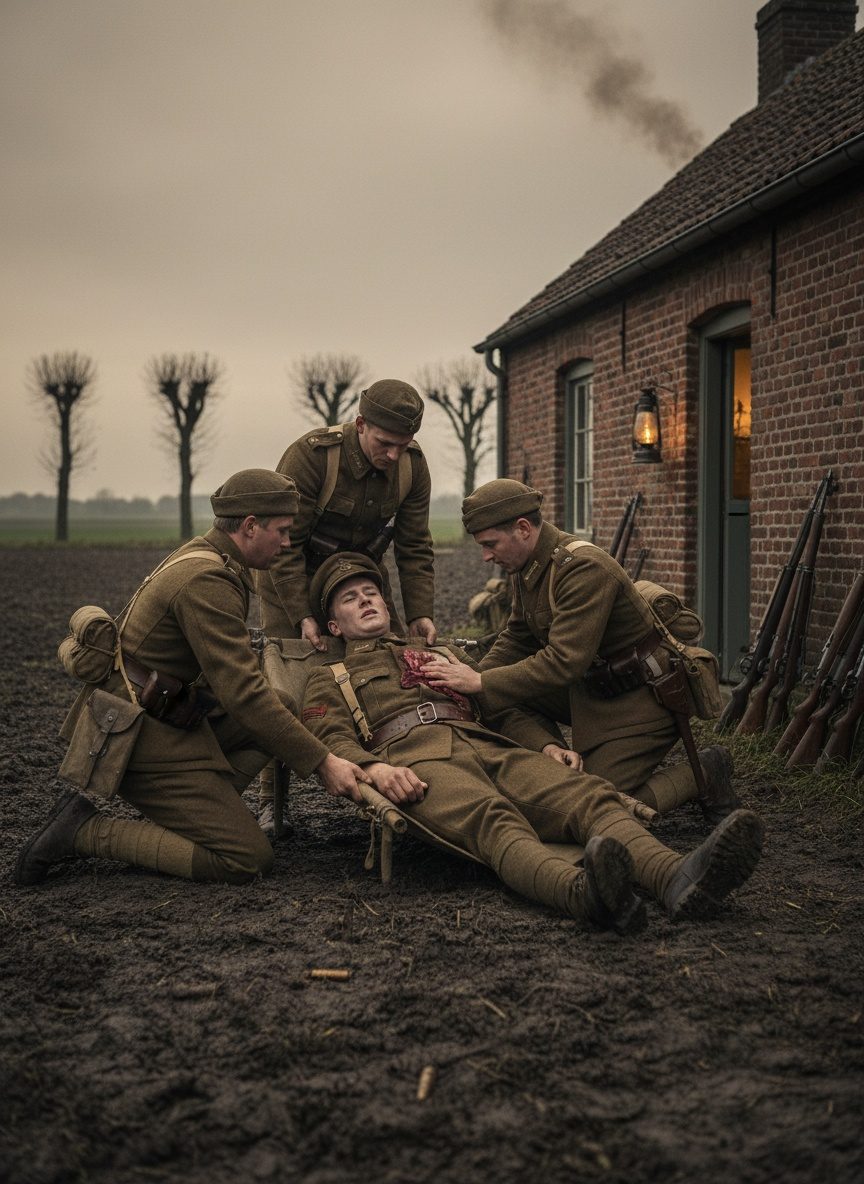
Once trained, these conscripts were dispatched to the frontlines of some of the bloodiest battles in history. The Great War’s trenches stretched from the Swiss frontier to the North Sea, a daunting expanse of fortified ditches, barbed wire, and beleaguered soldiers. For the new recruits, it was a brutal awakening—a world of mud, rats, and the constant thrum of enemy fire.
Despite initial trepidation, many conscripts exhibited astounding resilience and valor. They were thrown into iconic battles, some surviving to tell of their experiences in campaigns like the Battle of the Somme, a grueling ordeal that became synonymous with the horrors and futility of World War I. These men, many of whom had never left the shores of Britain, now crossed the churning waters of the Channel to find themselves amidst a maelstrom of war.
The introduction of conscription fundamentally altered Britain’s military landscape. It not only swelled the ranks of the army but added layers of complexity to the social fabric of the nation. Families coped with absences and losses; mothers and wives awaited letters that bore the heavy news of faraway battles. The entire country shared in the sacrifice, united by the common cause of survival and victory.
As the war progressed and the ultimate Allied victory was secured, it became clear that the Military Service Act of 1916 set a precedent never reversed. Britain’s use of conscription marked a transformation from an empire once reliant on the gallant few, to one demanding service from the unwilling many. This marked a poignant shift in how wars would be fought in the modern era—not only with weaponry, but with the very fabric of a nation’s people.
In retrospect, this first conscription forged a new definition of citizenship, one that asked the utmost of its men—a precursor to 20th-century wars that would further blur the lines between civilian and soldier. Today, looking back at the paths trodden by those first conscripts, we find stories not only of the might of the British Empire, but of ordinary lives indelibly changed—not just by duty and sacrifice, but by the camaraderie gleaned from shared conquest over fear. The history books may not record every name, yet their legacy of transformation endures.