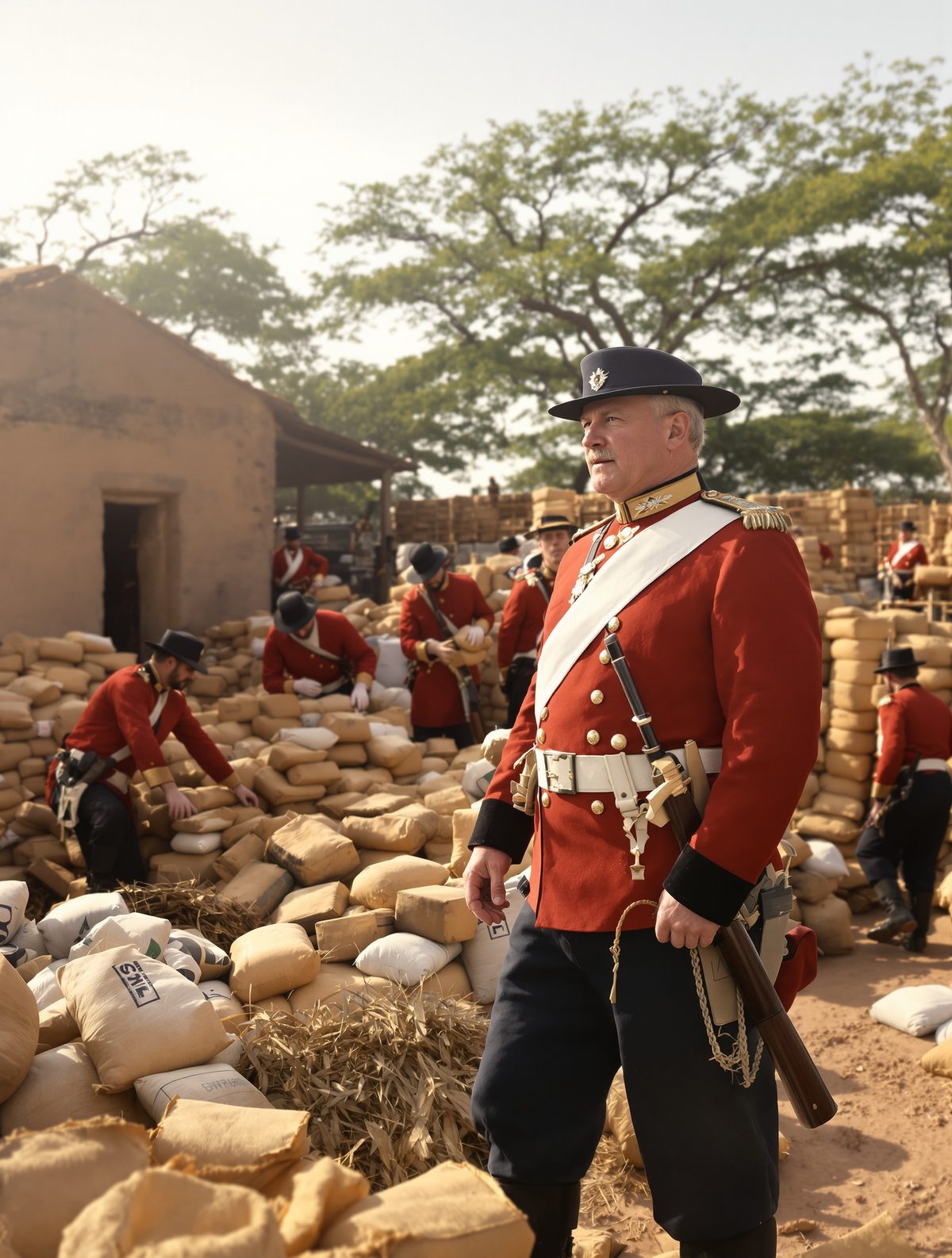
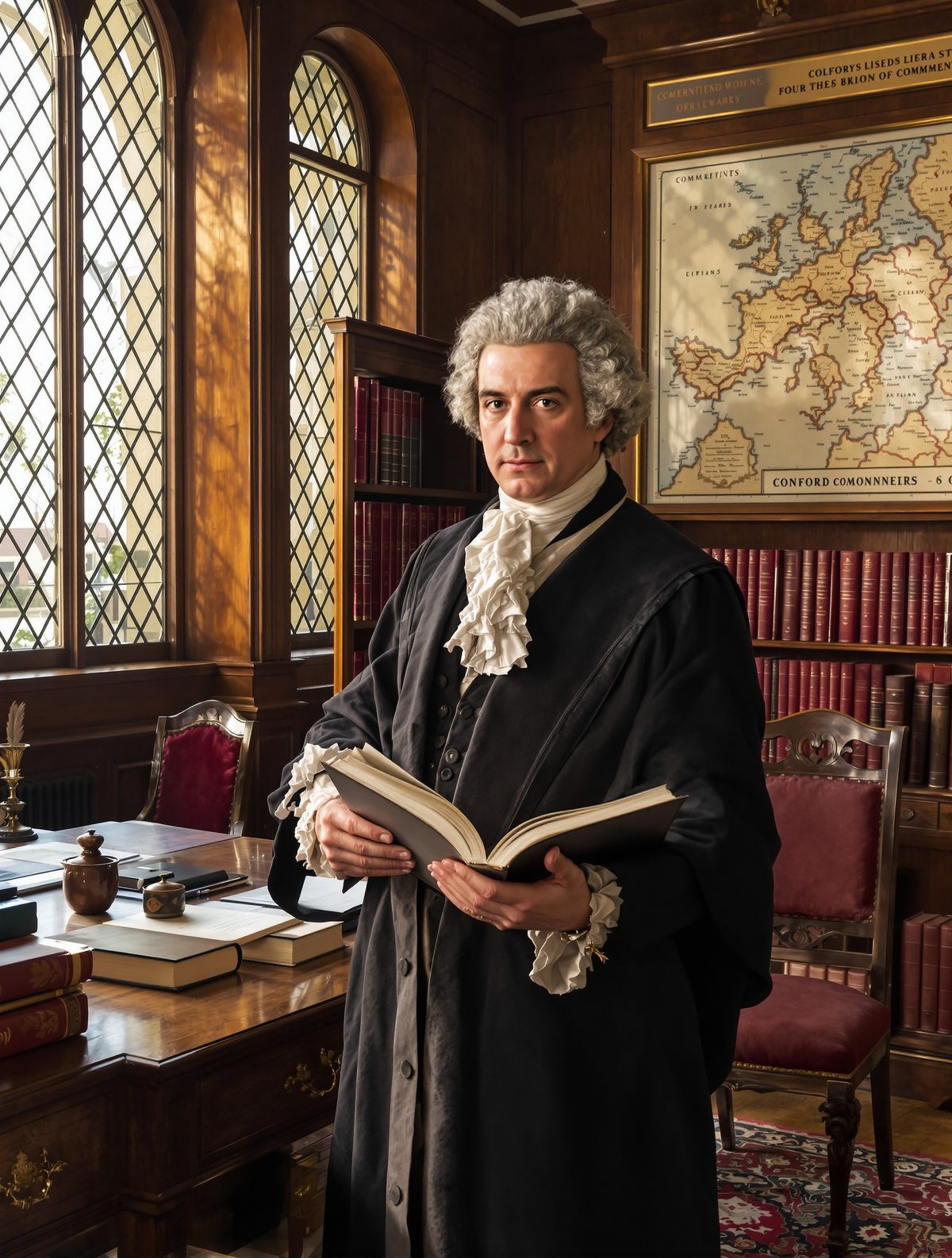
Picture this: a cramped medieval hall where barons once brandished actual swords at each other across wooden benches. Fast-forward seven centuries, and those same confrontational seating arrangements now govern 2.7 billion people across six continents. The distance between government and opposition benches? Still exactly two sword-lengths apart—a reminder of democracy's surprisingly violent birth.
What began as King Edward I's desperate attempt to raise money for his wars in 1295 has become the world's most successful political export. More successful than McDonald's, more pervasive than Hollywood, and spread entirely without a single invasion. This is the untold story of how Britain's ramshackle parliamentary system quietly conquered the world.
The Accidental Democracy Factory
Westminster Palace wasn't designed to be democracy's headquarters. When fire consumed the original buildings in 1834, architect Charles Barry faced a peculiar challenge: how do you rebuild a thousand-year-old institution that had never been properly planned in the first place?
Barry's solution was brilliantly simple. He kept the medieval layout that had evolved by accident—government and opposition facing each other like medieval combatants, with the Speaker elevated between them like a referee. The famous green benches? They were chosen simply because green was associated with the countryside, fitting for the "common" people's house. Red was reserved for the Lords, echoing royal crimson.
But here's what the textbooks miss: this adversarial design wasn't democratic theory—it was crowd control. Medieval parliaments were violent affairs where members literally carried weapons. The two-sword-length rule wasn't symbolic; it was survival. Even today, the Sergeant-at-Arms ceremonially carries a sword into every parliamentary session, and MPs must bow to the Speaker's chair before taking their seats—remnants of an age when respect was enforced at sword-point.
The genius lay in what this chaotic system accidentally created: a framework flexible enough to evolve, confrontational enough to ensure debate, and ritualized enough to prevent actual bloodshed. By 1707, when England and Scotland unified their parliaments, they had inadvertently built democracy's most durable operating system.
The Great Export Begins
Canada became the first customer in 1867, but not by choice. British negotiators literally copied Westminster's rulebook, complete with a Governor-General to stand in for the Queen. What's remarkable is how quickly Canadians made it their own—within decades, they were innovating features that Westminster itself would later adopt.
Australia's 1901 federation took Westminster and supercharged it, creating the world's first compulsory voting system within a British parliamentary framework. New Zealand went further, becoming the first self-governing Westminster democracy to grant women the vote in 1893—26 years before Britain itself.
But the real test came with India. When independence arrived in 1947, many expected Nehru to abandon the colonial political system entirely. Instead, he embraced it. "We have to build the noble mansion of free India where all her children may dwell," he declared, and chose Westminster's blueprint to do it. The world's largest democracy was born speaking parliamentary English.
Here's the shocking statistic: by 1960, more people lived under Westminster-style governments than under any other political system in human history—including those still under direct British rule. The empire's political DNA had spread further than its actual borders ever reached.
The Caribbean Laboratory
The most fascinating chapter unfolded in the Caribbean, where tiny island nations became laboratories for Westminster innovation. When Jamaica gained independence in 1962, its parliament building in Kingston featured the familiar green benches and Speaker's mace—but with louvered windows for tropical airflow and a gallery designed for steel drum bands during ceremonies.
Barbados took Westminster minimalism to its logical extreme. With just 30 MPs serving 280,000 people, it created the world's most intimate democracy. Every citizen personally knows their representative, turning Westminster's formal procedures into something resembling an extended family meeting—albeit one conducted with ceremonial wigs and British parliamentary procedure.
Trinidad and Tobago added calypso to question time. Seriously. Their parliamentary sessions became famous for musical interruptions and creative heckling that would make even British MPs blush. Yet beneath the carnival atmosphere, Westminster's essential machinery hummed along perfectly.
These weren't slavish copies—they were jazz variations on Westminster's theme. Each nation kept the constitutional skeleton while adding cultural flesh that made the system truly theirs.
The Mace Goes Global
Nothing symbolizes Westminster's global reach like the Speaker's mace—that golden club that must be present for parliament to legally meet. Today, 54 national parliaments feature ceremonial maces, each telling its own story of democratic evolution.
Canada's mace bears a crown and maple leaves. Australia's features a boomerang. Ghana's incorporates traditional Ashanti symbols. But perhaps the most poignant is South Africa's, adopted in 1994. Carved from indigenous wood and decorated with protea flowers, it represented Westminster's strangest victory: helping to dismantle the apartheid system that had twisted parliamentary democracy into oppression.
The numbers are staggering. Westminster-style systems now govern 54 countries—more than any other political model. That's 2.7 billion people living under variants of a system designed by medieval English barons who just wanted to limit their king's ability to tax them into poverty.
Even more remarkably, these systems have shown extraordinary durability. While presidential systems have fallen to coups across Latin America and Africa, Westminster parliaments have proven surprisingly coup-resistant. Why? Because Westminster systems make it easier to change governments without changing the entire constitution.
The Gentle Revolution
This brings us to Westminster's most overlooked achievement: it spread without violence. Unlike communism (spread by revolution) or fascism (spread by conquest), parliamentary democracy propagated through what we might call "constitutional contagion."
Consider New Zealand's electoral revolution of 1996. Frustrated with two-party dominance, Kiwis voted to abandon Westminster's first-past-the-post system for proportional representation—while keeping everything else. No civil war, no constitutional crisis, just a referendum and rule change. Westminster's flexibility allowed fundamental reform without systemic collapse.
Scotland's independence movement illustrates the same principle. Whether Scotland leaves the UK or not, both sides assume it would remain a Westminster-style democracy. The system has become bigger than Britain itself.
Even nations that never experienced British rule have borrowed Westminster features. Israel's Knesset uses Westminster procedures. Germany's Bundestag adopted question time. Japan's post-war constitution blended Westminster parliamentary government with American federalism. The model's influence extends far beyond formal membership in the Commonwealth.
The Unfinished Conquest
Today, as democracy faces challenges from authoritarian populism to digital manipulation, Westminster's greatest test isn't expansion—it's survival. Can a system designed for a medieval agricultural society handle social media, global capitalism, and climate change?
The early signs are mixed but hopeful. Westminster systems have shown remarkable adaptability, from New Zealand's Maori parliamentary seats to Canada's coalition governments. The confrontational design that once channeled aristocratic sword fights now provides a framework for channeling modern political tensions without violence.
Perhaps most importantly, Westminster's global spread created a family of democracies that share common procedures, if not always common values. When democratic norms come under pressure in one Westminster system, others can offer both example and assistance. Britain's democracy may have invented the system, but it no longer owns it—and that may be its greatest achievement.
The next time you see parliamentarians shouting across green benches, remember: you're watching democracy's most successful export in action. Those medieval sword-fighting rules have somehow created a system governing more people than any emperor ever dreamed of ruling—and they did it not through conquest, but through the simple power of a good idea, refined over centuries and shared freely with the world.