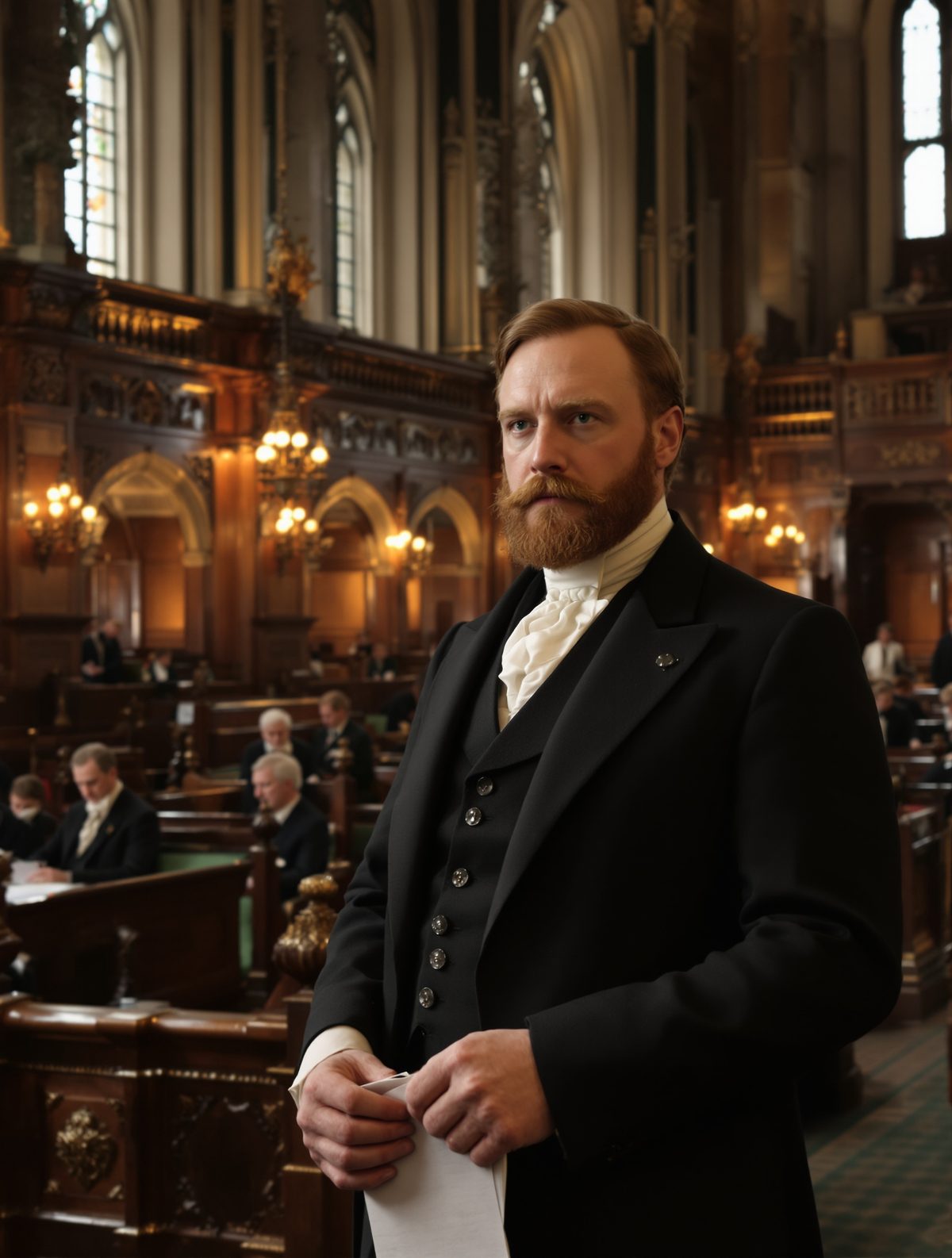
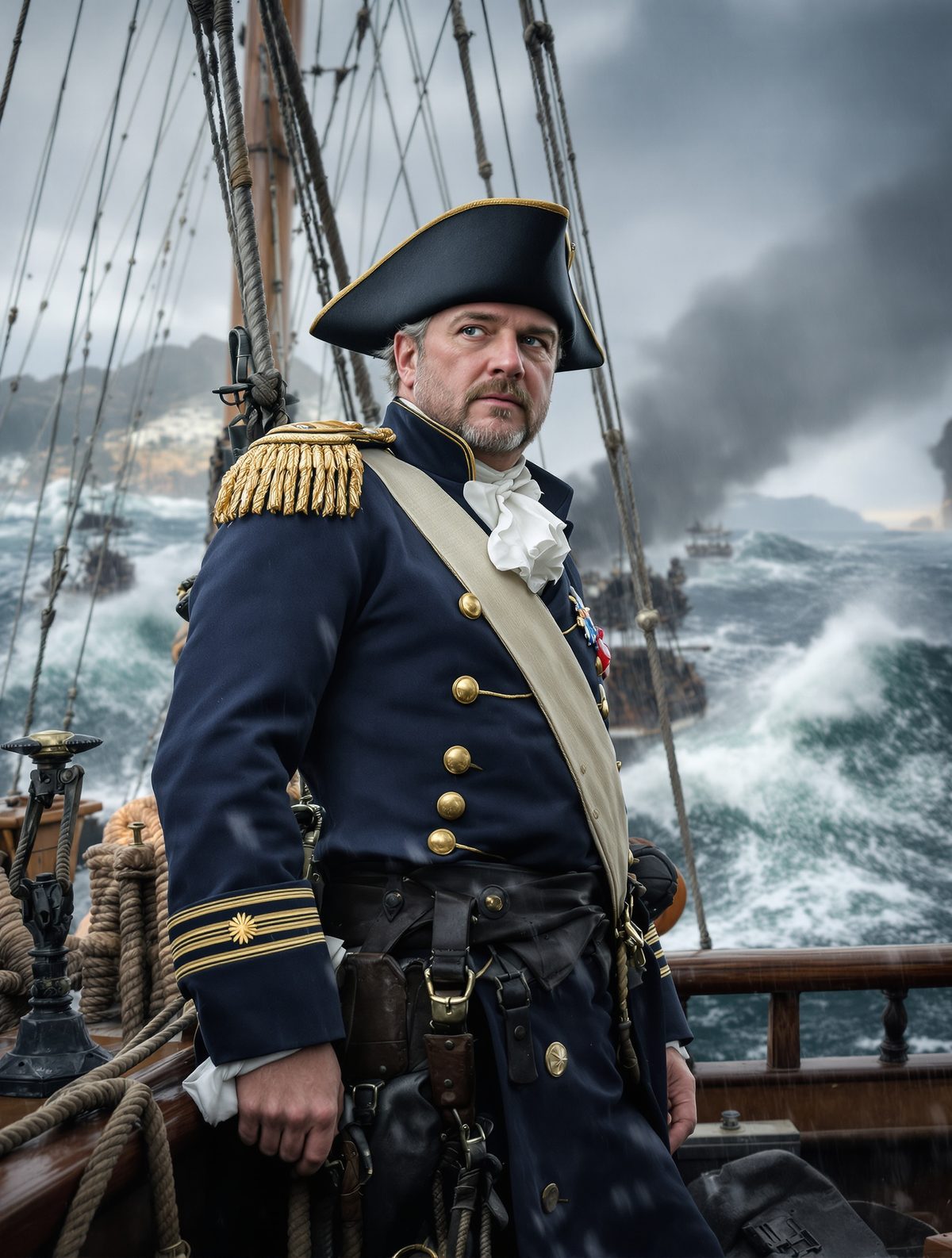
The North Sea churned with deadly promise on the morning of March 2, 1915. Captain Charles Fryatt stood on the bridge of the SS Wrexham, his weathered hands gripping the wheel as a German U-boat surfaced just 300 yards off his starboard bow. The submarine's deck gun swiveled toward his unarmed passenger steamer, loaded with 100 innocent souls. In that crystalline moment, Fryatt faced a choice that would echo through the corridors of maritime law for generations: surrender his ship and passengers to an enemy submarine, or do something no merchant captain had ever attempted before.
What happened next would transform Fryatt from an obscure ferry captain into a martyr whose death would fundamentally reshape the laws of war at sea.
The Merchant Marine's Unsung Hero
Charles Algernon Fryatt was never meant to be a war hero. Born in Southampton in 1872, he'd spent his entire adult life ferrying passengers and cargo across the placid shipping lanes between Britain and the Netherlands. As captain of the Great Eastern Railway's steamship service, his greatest concerns had been punctual departures and comfortable crossings for businessmen and tourists.
But when Kaiser Wilhelm's Germany unleashed its U-boat campaign in 1915, Fryatt's routine ferry runs became deadly games of cat and mouse. The North Sea, once a peaceful highway of commerce, transformed overnight into a submarine hunting ground where unarmed merchant vessels became prime targets for Germany's new strategy of unrestricted submarine warfare.
Unlike military vessels, merchant ships had no guns, no armor, no means of defense except speed and cunning. The accepted protocol when confronted by a U-boat was simple: stop, allow the Germans to board and inspect cargo, then pray they'd be allowed to continue. Many ships weren't so fortunate—by 1915, German submarines had already sent dozens of merchant vessels to the bottom of the North Sea.
Fryatt refused to accept this deadly lottery. Over eighteen months, he developed an arsenal of evasive tactics that would make him a legend among merchant sailors. He'd order sudden course changes, use smoke screens from his funnels, and push his steamers to maximum speed when submarines appeared on the horizon. His ship, the SS Brussels, became known as the "Lucky Ship" for its seemingly magical ability to evade German torpedoes.
The Ram That Shook the Maritime World
On that fateful March morning in 1915, Fryatt's luck transformed into something far more significant. As the German U-boat U-33 prepared to board the SS Wrexham, Fryatt made a calculation that defied every rule of merchant seamanship. Instead of stopping, he spun his ship's wheel hard to starboard and ordered, "Full speed ahead!"
The Wrexham, all 1,350 tons of her, bore down on the surfaced submarine like a steel battering ram. The German crew, caught completely off guard, scrambled to dive, but physics worked against them. A submarine needed precious minutes to submerge safely, and Fryatt had given them only seconds.
The merchant steamer's reinforced bow struck U-33 with devastating force, crushing her conning tower and flooding her forward compartments. The submarine managed a desperate crash dive, but she was mortally wounded. Within hours, U-33 limped back to port, never to hunt merchant ships again.
News of Fryatt's audacious ramming spread through the merchant marine like wildfire. For the first time since the U-boat campaign began, an unarmed civilian vessel had fought back—and won. The British Admiralty, initially shocked by Fryatt's unauthorized aggression, quickly realized the tactical brilliance of his actions. They awarded him a gold watch inscribed with the words "Presented by the Lords Commissioners of the Admiralty for the skilful manner in which he fought his ship against a hostile submarine."
The Hunter Becomes the Hunted
But German naval command saw Fryatt's victory through a very different lens. To them, he had crossed an invisible line that separated legitimate merchant activity from acts of war. Under the prevailing laws of the sea, merchant captains were considered non-combatants—provided they remained non-combatants. By ramming a German submarine, Fryatt had, in their view, become something far more dangerous: a civilian engaging in warfare.
The German Admiralty issued a secret directive classifying Captain Fryatt as a franc-tireur—an illegal combatant operating outside the protection of military law. His name went on a list, and German U-boat commanders received orders to capture him alive if possible.
For over a year, Fryatt continued his dangerous runs across the North Sea, unaware that he had become one of Germany's most wanted men. His ship, the SS Brussels, maintained its remarkable record of successful crossings, dodging submarines and delivering passengers safely to neutral Dutch ports. Fryatt had become something of a folk hero among merchant sailors, proof that civilian ships didn't have to be sitting ducks for German torpedoes.
The trap closed on June 23, 1916. Five German destroyers cornered the Brussels in international waters, far from any hope of rescue. This time, there would be no ramming, no escape. Fryatt's remarkable streak had finally ended.
Trial by Kangaroo Court
The Germans transported Fryatt to Bruges, where they convened what can only be described as a show trial. The proceedings, conducted entirely in German without proper legal representation for the defendant, were predetermined from the moment Fryatt entered the courtroom. The charges were as unprecedented as they were ominous: engaging in combat as a civilian, making him subject to execution under German military law.
The evidence against Fryatt was damning in its simplicity—the gold watch from the British Admiralty and witness testimony about the ramming of U-33. Under intense interrogation, Fryatt never denied his actions. With characteristic British understatement, he simply stated he had done his duty as a ship's captain to protect his passengers and crew.
The German prosecutors painted Fryatt as a dangerous precedent—a civilian who had crossed into military action without the protection of military status. If merchant captains could attack U-boats with impunity, they argued, the entire submarine warfare strategy would collapse. The court found him guilty within hours.
On July 27, 1916, Captain Charles Fryatt faced a German firing squad in the courtyard of Bruges prison. His final words, according to a German witness, were a simple statement of identity: "Charles Fryatt, Captain, Great Eastern Railway." He was 44 years old.
The Death That Changed Everything
News of Fryatt's execution exploded across the international community like a diplomatic depth charge. The German decision to execute a civilian merchant captain sent shockwaves through neutral nations and outraged public opinion worldwide. Even Germany's allies expressed private dismay at what many saw as a barbaric overreach of military authority.
The British government, recognizing the propaganda value of Fryatt's martyrdom, launched an unprecedented campaign to honor his memory. They repatriated his body after the war with full military honors, despite his civilian status. His funeral in London drew thousands of mourners and became a symbol of civilian courage in the face of German militarism.
But Fryatt's real legacy lay in the legal precedents his death established. The international outcry over his execution forced a fundamental reexamination of maritime law regarding civilian vessels in wartime. The post-war naval conferences explicitly protected merchant captains who took defensive action against submarines, enshrining in international law the right of civilian ships to defend themselves.
Perhaps most significantly, Fryatt's execution became a crucial piece of evidence in war crimes tribunals, establishing the principle that military necessity could not justify the execution of civilians for legitimate acts of self-defense. His death helped define the boundaries between military and civilian conduct that would influence international humanitarian law for decades to come.
The Captain's Final Victory
Today, Captain Charles Fryatt rests in a Liverpool cemetery beneath a monument that reads simply: "Though dead, he yet speaketh." Those words proved prophetic in ways the Victorian mourners could never have imagined. In our current era of asymmetric warfare and blurred lines between civilian and military targets, Fryatt's story resonates with uncomfortable familiarity.
His split-second decision on that March morning in 1915 raised questions that still challenge international law today: When does self-defense become aggression? What protections do civilians deserve when caught in military conflicts? How do we balance the necessities of war with the preservation of humanitarian principles?
Fryatt's sacrifice helped establish that civilians have not just the right but sometimes the duty to resist those who would make them victims. His ramming of U-33 proved that ordinary people, when faced with extraordinary circumstances, can change the course of history through simple acts of moral courage. In a world where merchant vessels still face pirates and military threats, where civilian aircraft and ships navigate hostile territories, Captain Fryatt's final salute continues to protect those who refuse to surrender without a fight.
The legends they left out of the textbooks often tell us more about human courage than all the famous battles combined. Charles Fryatt never commanded a battleship or led armies into combat, but his willingness to ram a German submarine with an unarmed ferry saved not just his passengers, but the principle that civilians have the right to defend innocent life—even at the cost of their own.