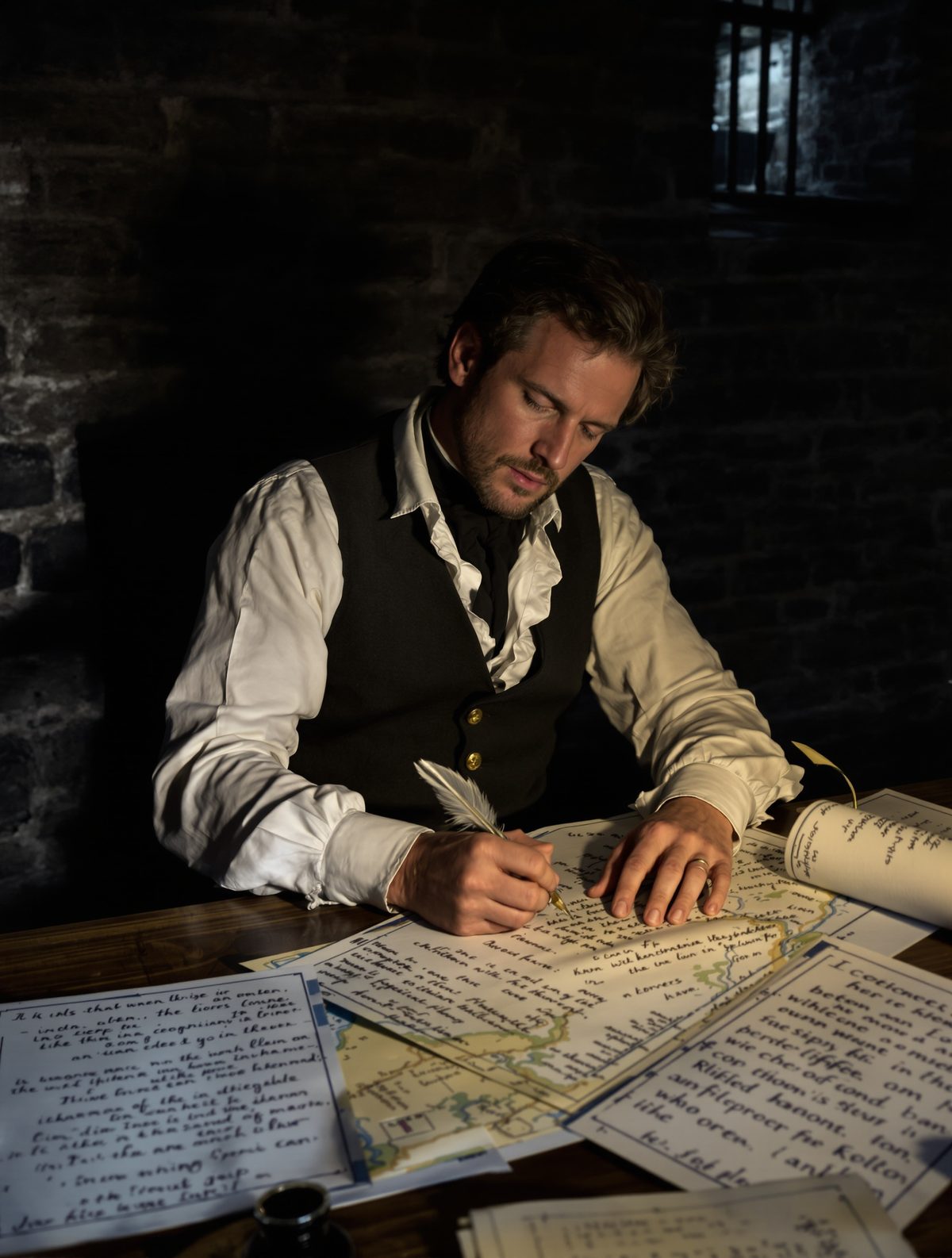
On the morning of August 28, 1830, the magistrates of Canterbury received a letter that would haunt England's ruling class for months to come. Written in crude handwriting on cheap paper, it bore a chilling signature: "Captain Swing." The mysterious author demanded higher wages for farm workers and threatened dire consequences if the local farmers continued using their newfangled threshing machines. Within days, similar letters appeared across Kent, Sussex, and Hampshire. But here's the thing—Captain Swing didn't exist. He was a phantom, a collective creation of desperate farm workers who were about to unleash the largest rural uprising in English history.
What followed was six weeks of coordinated mayhem that terrified the British establishment more than any foreign invasion. An invisible army of agricultural laborers, united under the banner of their fictional captain, would destroy over 400 threshing machines, burn countless haystacks and barns, and force the government to deploy more troops than they'd used at Waterloo.
The Spark That Lit Rural England
The summer of 1830 was a tinderbox waiting for a match. Agricultural workers across southern England were starving—literally. Wages had plummeted to seven shillings a week (roughly $35 in today's money), while bread prices soared. The introduction of mechanical threshing machines had eliminated the winter work that families depended on to survive the harsh months ahead. For generations, farm workers had spent winter days threshing grain by hand with flails, earning precious coins when other work dried up. Now, machines could do in hours what took men weeks.
The breaking point came in the village of Lower Hardres in Kent. On August 28, a threshing machine owned by farmer Edward Capel burst into flames in the dead of night. No one saw who lit the fire, but everyone knew why. The next day, threatening letters signed by the mythical Captain Swing began appearing on barn doors and church walls across the county. "Sir," read one typical missive, "Your name is down amongst the Black hearts in the Black Book and this is to advise you and the like of you, who are Parson Justasses, to make your wills."
The genius of Captain Swing lay in his impossibility. Magistrates couldn't arrest him, spies couldn't infiltrate his organization, and informants couldn't betray his plans—because he existed only in the collective imagination of England's downtrodden agricultural workers. Every farm laborer was Captain Swing, and Captain Swing was everywhere.
The Phantom Captain's Growing Army
By October 1830, the uprising had spread like wildfire across nine counties. What made this rebellion extraordinary wasn't just its scale, but its sophisticated organization. Despite having no central leadership, the various groups of "Swing rioters" displayed remarkable coordination. They moved from village to village in disciplined bands of 50 to 100 men, often joined by local sympathizers who swelled their ranks to several hundred.
The rebels had a clear hierarchy and tactical approach. They typically began by assembling at dawn, armed with hammers, crowbars, and farm tools. Their first target was always the hated threshing machines. Witnesses described scenes of methodical destruction as workers systematically dismantled the mechanical beasts, reducing iron and wood to twisted scrap. At Penden Heath in Kent, over 1,000 protesters gathered to watch the ceremonial destruction of multiple machines, cheering as each contraption was reduced to splinters.
But Captain Swing's army wasn't just about machine-breaking. They understood that lasting change required political pressure. After destroying the machines, they would march to the local magistrate's house or the village workhouse, demanding higher wages, lower rents, and the abolition of the hated "Poor Law" that condemned the destitute to virtual imprisonment in workhouses. These weren't mindless rampages—they were sophisticated labor negotiations backed by the implicit threat of further destruction.
Terror in the Countryside
The autumn sky across southern England glowed orange with the fires of rebellion. On November 1st alone, witnesses reported seeing the flames of burning haystacks and barns from seven different locations across Hampshire. The psychological warfare was devastatingly effective. Farmers woke each morning wondering if their property would be next, while magistrates huddled in their manor houses, penning desperate letters to London begging for military protection.
One of the most audacious attacks occurred at Tithe Barn in Wiltshire, where 300 rebels surrounded the residence of a particularly despised magistrate. They methodically destroyed his threshing machines, burned his haystacks, and forced him to sign a written agreement promising higher wages for all local workers. The crowd then made him read the agreement aloud from his own front steps, a humiliation that sent shockwaves through the local gentry.
The rebellion's crescendo came in late November when bands of Swing rioters converged on Winchester, Hampshire's county town. Over 400 workers armed with sticks and farm tools marched through the streets, smashing windows and demanding the release of imprisoned comrades. The local militia, vastly outnumbered, could only watch helplessly as the protesters took effective control of the town for several hours.
The Government Strikes Back
By December 1830, the British government was in full panic mode. Home Secretary Lord Melbourne deployed 5,000 troops across the affected counties—more soldiers than had garrisoned Ireland during previous uprisings. The irony wasn't lost on observers: the world's most powerful empire was being held hostage by an army of farm workers led by a man who didn't exist.
The crackdown, when it came, was swift and brutal. Special commissions were established to try the hundreds of arrested rebels. The verdicts were savage: 19 men were sentenced to death, 481 were transported to the penal colonies of Australia, and over 600 were imprisoned. The trials revealed the rebellion's true scope—defendants ranged from teenage farm hands to village blacksmiths, showing how Captain Swing's message had resonated across rural society.
One of the most poignant cases involved 19-year-old Joseph Mason from Hampshire, sentenced to death for machine-breaking. His final letter home revealed the desperation that had driven the uprising: "I would rather suffer death than see my family want for bread." Public outcry eventually commuted most death sentences to transportation, but the message was clear—the establishment would tolerate no challenge to the new industrial order.
The Captain's Legacy
The Captain Swing riots officially ended in December 1830, but their impact echoed through British history. In the immediate aftermath, many farmers quietly abandoned their threshing machines, recognizing that the cost of protection exceeded any labor savings. Parliament, terrified by the uprising's scale, began the first serious discussions about agricultural reform that would eventually lead to improved conditions for rural workers.
More significantly, Captain Swing had demonstrated the power of collective action organized around a shared identity rather than formal leadership. This model would inspire future labor movements, from the Chartists of the 1840s to the early trade unions. The phantom captain had shown that ordinary people, acting together under a common banner, could challenge even the most entrenched power structures.
Perhaps most remarkably, Captain Swing achieved something that no real leader could have: he became immortal. Long after the last threshing machine was destroyed and the final rioter transported to Australia, threatening letters continued to appear signed with his name. Any agricultural unrest, any mysterious fire, any act of rural defiance was attributed to the captain's invisible hand.
Today, as we grapple with technological disruption and economic inequality that echoes 1830's upheavals, Captain Swing's story feels startlingly contemporary. His phantom army understood something we're still learning: that in an age of rapid change, sometimes the most powerful response isn't to elect a leader or join an organization, but to become part of something larger than ourselves. In a world where algorithms replace workers and corporations seem untouchable, perhaps we could all use a little of Captain Swing's spirit—the understanding that ordinary people, united by shared purpose and righteous anger, can still make the powerful tremble.