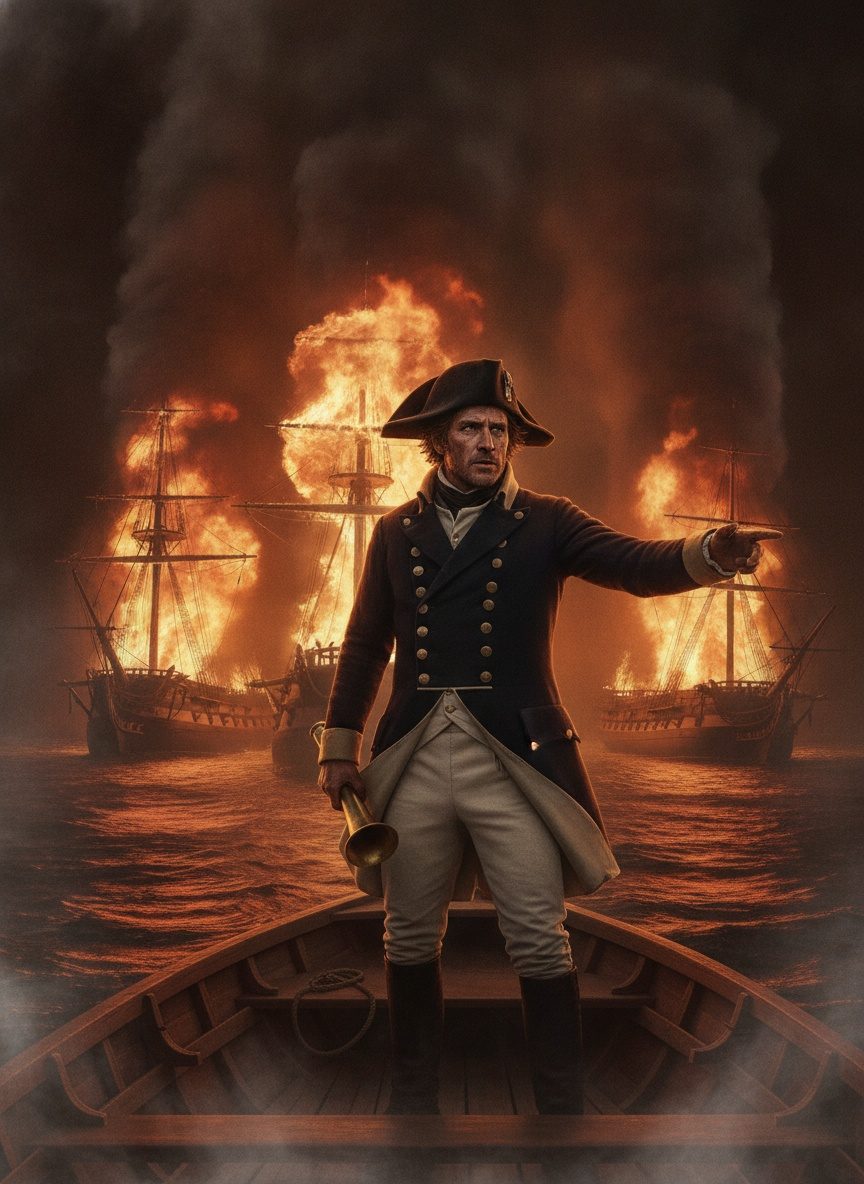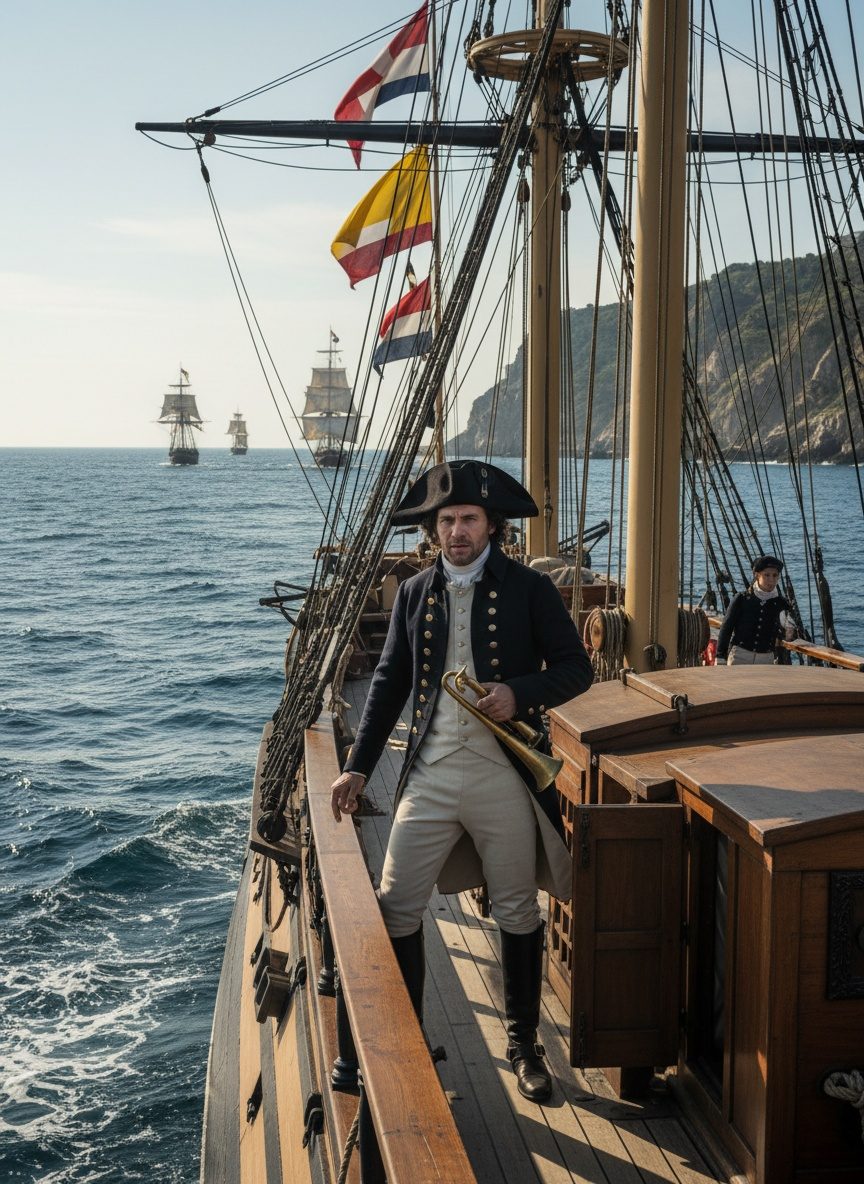
The salt spray stung his eyes as the deck pitched sideways, yet Lord Cochrane maintained his stance, eyes fixed on the distant silhouette of the French fleet. In the blue haze of early dawn, three British ships faced fifteen French, the odds stacked enormously against them. But Cochrane, a man famed for his audacity and brilliance, had no intention of retreat. Instead, he pulled a spyglass from his pocket and surveyed the blockade threatening Catalonia's coast, the morning sun glinting off the armada's uniform portholes. Cochrane knew that victory lay not in cannon fire, but in deception; he had turned battles with less. As he signaled orders to his vessels, his mind danced with strategy. This was not just a matter of outnumbered courage—it was a masterclass in bluff.
The Fog of War
Cochrane's situation seemed dire. With only three ships—an undersized squadron compared to any naval officer's dream—he was outgunned and outnumbered against the blockading French. Yet, the British captain had a knack for turning the impossible into reality. The air was thick with tension, the anticipation of conflict electrifying every sailor aboard as they awaited orders. They trusted Cochrane's reputation, though; it was whispered among the ranks that no one understood the subtleties of warfare better than this maverick lord.
The French, boasting fifteen well-supplied vessels, appeared formidable. Positioned to hold Catalonia's coast, they blocked supply lines and threatened British policies concerning Spain's turbulent political climate. Yet complacency was a silent sailor in their ranks, for Cochrane's audacity was unmatched. As morning mist shrouded the sea, Cochrane began to signal, throwing a complicated series of flags up the British mast—a seemingly innocent flurry of colors and movements. To the untrained eye, this was ordinary. But to the French, peering through spyglasses, it appeared something else entirely. Behind their squinting glances loomed shadowy fears of a greater British force just beyond the horizon, concealed by Cochrane's boldly cryptic signals.
Straining in their attempts to decode the British signals, the French commanders saw ghosts—a phantom fleet they imagined was imminent, ready to swarm them as soon as tensions waned. In Cochrane’s daring mind, he anticipated their panic. His real triumph lay not in his ships, but in the French's imagination—an enemy fleet looming like a specter in the fog. All he needed was the right measure of doubt, and like a carefully constructed card house, their resolve would crumble.
The Masterstroke Unleashed
The plan unfurled with precision. Cochrane's band of vessels casually held their line, as if anticipating an armada poised to engage at any moment. Behind this façade, he orchestrated another sly move. Firing from old cannon barrels aboard, he created plumes of smoke that wafted across the water, masking any tactical maneuvers. To observers, these sights and sounds feigned a theatrical readiness more potent than actual battle. This deception was not so much about force as it was about psychological warfare—more a play than a skirmish.
Underneath the strategy lay Cochrane’s profound understanding of his enemy. He grasped human frailty, the common fears of overestimation and pressure commanding captains to act hastily. Watching through his telescope, Cochrane felt that sweet flicker of triumph as the French squadron shifted uneasily in the water, sails poised for retreat, their commanders swayed by the phantom threat of British power.
With each hour, the reality of battle evaporated alongside the morning mist, fear dissolving any semblance of confidence among the French. Soon, their hurried actions unraveled their formation. As if pulled by an invisible cord, second after second, the French fleet broke away. One ship pivoted, then another, until it became a slow-motion exodus. Unable to outmatch an imaginary armada lurking in the depths, the once formidably armed fifteen vessels sailed away from Catalonia's coast, chased by nothing more substantial than clever ploys.
The Silent Roar of Victory
As the French fleet vanished beyond the horizon, Cochrane stood as a solitary sentinel among the swaying masts. No cannon roared, no flags waved in celebration, yet within the silence lay the thunderous sound of triumph. Cochrane's men, their hands salty from the sea air and their eyes wide with amazement, filled the decks, absorbing the magnitude of what they had witnessed. A masterstroke had scattered a whole squadron without a single shot fired.
The brilliance of Cochrane's maneuver lay in its simplicity—a vivid reminder of how strategy often trumps strength. With this victory, he didn't just secure the coastlines temporarily; he shifted the psychological landscape of naval warfare, proving adept intelligence and audacity could unseat even the mightiest of fleets. His actions echoed in naval halls and dusty logbooks, immortalizing a compelling lesson in bold leadership and tactical creativity.
This story resonates far beyond the canvas of military lore, as a testament to the importance of adaptability and ingenuity—a legend woven not only of the seas but of human courage. Cochrane's escapade serves as a reminder that in times of overwhelming odds and stifling uncertainty, imagination and sheer nerve can transcend the ordinary, delivering victories that resonate through history, long after the waves reclaim the era’s sails.