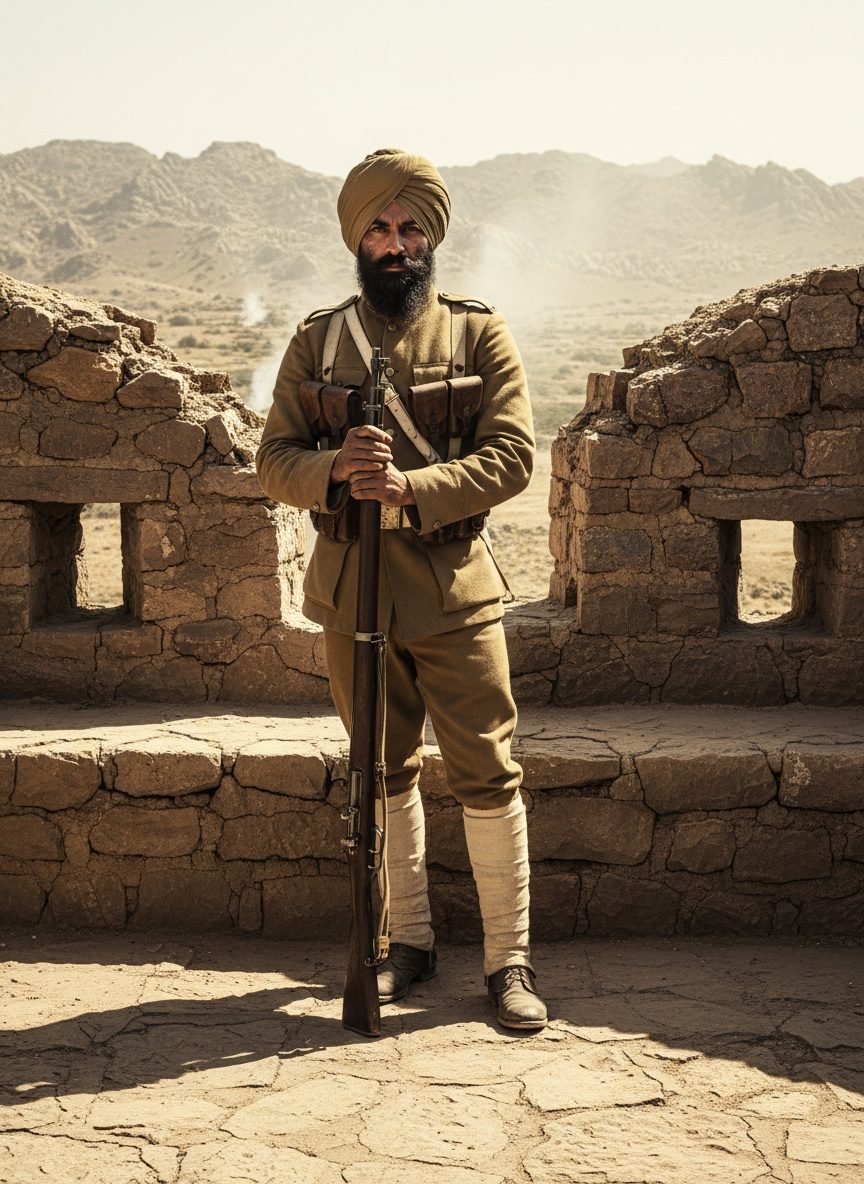
The air over Lucknow in July 1857 was heavy with a heat that seared the ground like fire. Dust devils swirled in the sun, the sky a sweltering expanse of unyielding blue, as the sounds of battle reverberated across the landscape. All that stood between life and death for those trapped within the British Residency were the determined soldiers marching toward them, led by an aged general whose resolve was as hard as any steel he carried. In the heart of the Indian Mutiny, where chaos and fortitude clashed, General Henry Havelock carved his place in history. He embarked on an arduous march fraught with battles and hardship, determined to relieve the besieged heart of a British India in turmoil.
The Siege of Lucknow
Lucknow, a city teeming with shades of colonial past and architectural grandeur, had become the epicenter of a rebellion that sent shockwaves through the British Empire. The Residency, a palatial stronghold nestled in its midst, had turned into a crucible of despair, with over a thousand British women, children, and soldiers imprisoned by both the lack of supplies and the increased desperation of their situation. Bombarded by insurgents at every hour, the garrison's pleas turned into whispers, barely audible over the deafening clangor of rebellion.
Inside the expansive gardens now pocked with shells, soldiers cobbled together makeshift defenses while the sun baked the earth into a brown crust under their boots. Rainstorms would turn the dust into mud, but even the cool relief of water brought only short respite. Infection and disease loomed larger than life for those trying to maintain their sanity under constant threat. Yet amidst it all, there remained an unyielding hope that relief was not far off, embodied in the rumors of a determined advance led by none other than General Henry Havelock.
Havelock's Relentless March
Amidst the uncertainty of rebellion, General Havelock stood resolute. The long miles and heat were a trial, but the march was the crucible in which his determination was forged. With a force assembled hastily amidst the chaos, Havelock set forth from Allahabad, a city on the Ganges awaiting either victory or defeat. The task before him was weighed not only by distance but by battles that would mark the journey, each a new test to his strategic depth and the mettle of his men.
The campaign was a grueling one; the 126 miles to Lucknow became a testament to the fortitude of the human spirit. With temperatures rising and hearts weighed by fatigue, the soldiers faced off against rebels in battle after pitched battle—a visceral ballet of gunfire and bayonet charges where the price of defeat was unthinkable. Havelock became a figure both commanding and compassionate, inspiring not only his men but also reinforcements drawn from nearby garrisons. Throughout eight days, four fierce contests played out like acts in a drama, pivotal skirmishes that were fought in atrocious conditions, where victory was pulled from the jaws of potential defeat.
The Assault on Cawnpore
One of the defining moments of the march was the assault on Cawnpore, a grinding, heart-stopping conflict that showcased both the horror of war and the bravery it demanded. As Havelock's men approached the city, it was not simply a military conquest, but arguably a moral obligation. Cawnpore was known for the butcheries that had unfolded there—atrocities that stained the silt of the Ganges itself with blood.
The engagement was brutally fought, a chaotic melee through ruins and rifle fire, carried out with relentless courage. Newspapers across the world highlighted the slaughter that awaited there, tempering it with stories of survival and defiance. Havelock's victory at Cawnpore became a beacon, a proof that the resilience of his force was matched only by their tenacity. Each skirmish cleared away fortified resistance, paving the path to Lucknow and breathing new determination into weary spirits.
Breaching the Besieged Fortress
The climb to the heart of Lucknow, through the labyrinthine streets and into the very gates of the Residency, was the reward for their endless march. Each stone of the building bore witness to the siege's brutality, yet as the relief troops made their entrance, cheers of amazement mingled with the crack of gunfire. With an iron resolve more potent than any weapon, Havelock's intervention spliced a line of hope through despair, despite the siege held on in a bitter stalemate for months more.
Havelock became not just a figure of military might but of resilience — an embodiment of the forces that shaped a tumultuous Victorian era. Though the relief was ultimately incomplete, as siege conditions endured until yet another intervention, it was a moment that reassured every heart that beat within those walls. His march through the fires of the Indian summer was more than tactical brilliance or military necessity—it was an act of human desperation and salvation that would reverberate through time.
More than just a chronicled campaign, Henry Havelock's relentless march across the arid stretches of India's mutinous heartland signifies the entangled destinies of empires and their subjects. In his march, we find not only a story of war but also of duty, courage, and an unyielding spirit. It reminds us how in the echoes of gunfire and suffocating heat, the very essence of heroism transcends centuries, bringing into sharp relief the complex legacies that fostered modern India and changed the fate of British imperial strategy forever.