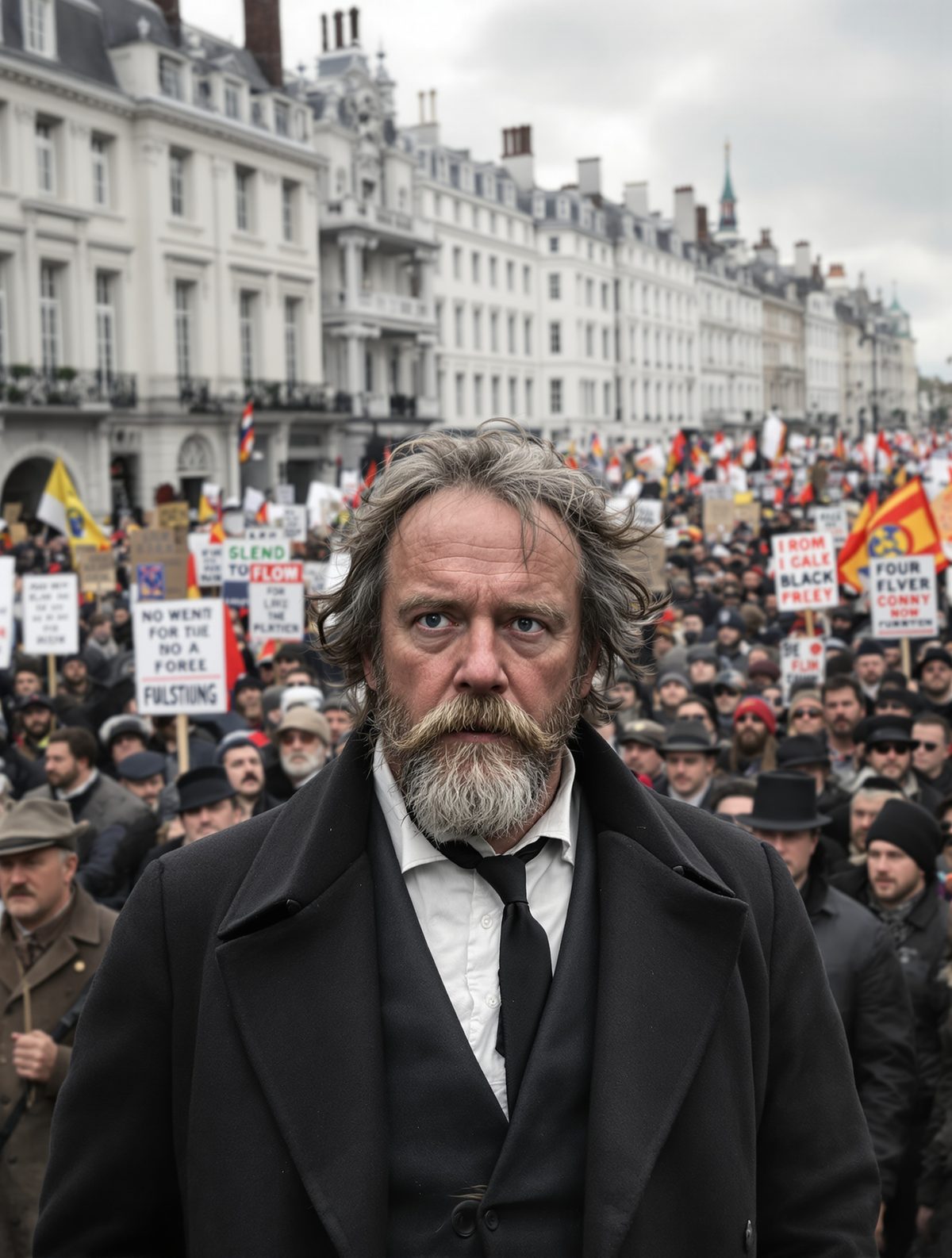
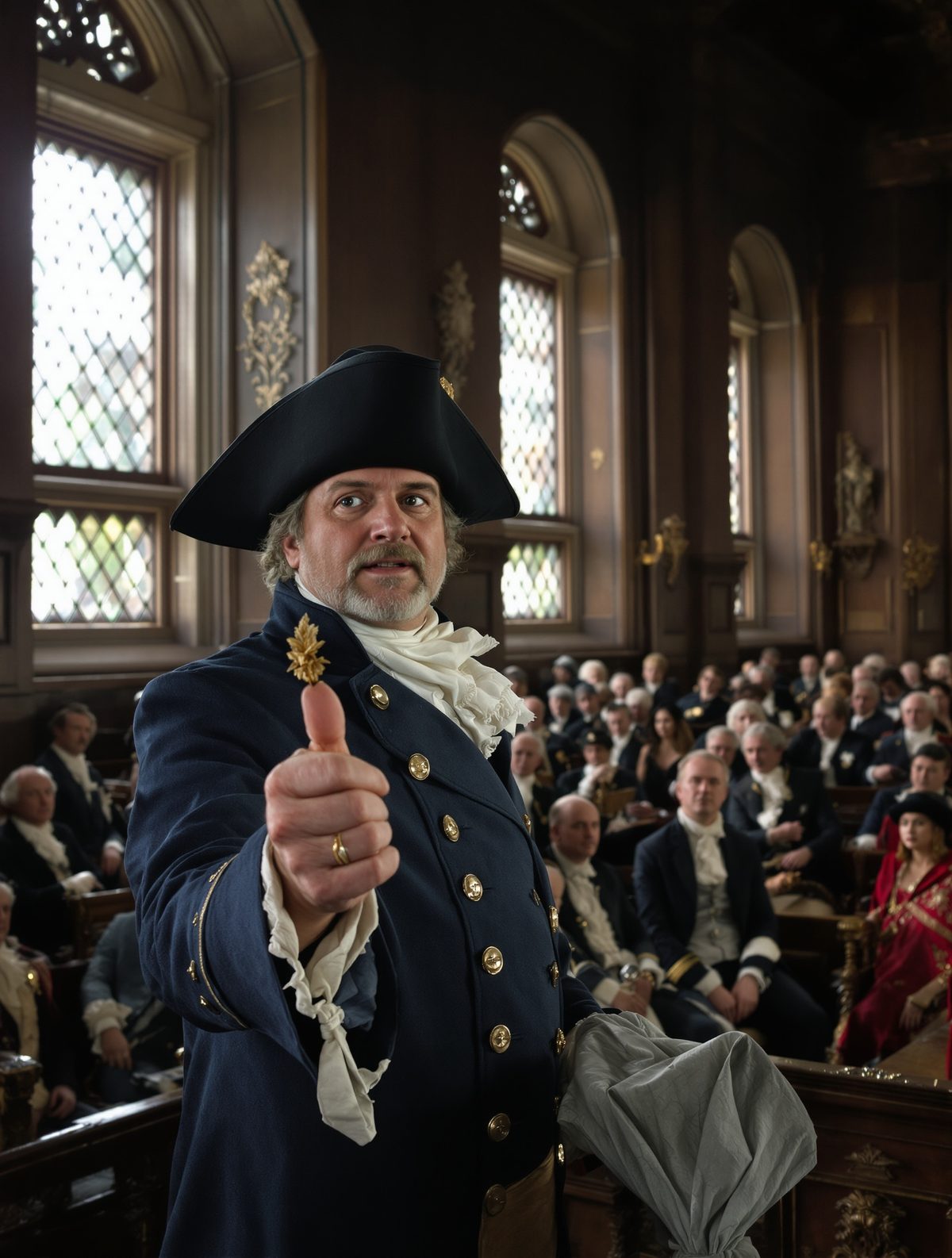
The morning mist clung to the ancient oaks like grave shrouds as Colonel John Blackader knelt in prayer beside his horse. Around him, 400 men of the 1st Battalion Cameronian Regiment checked their flintlocks one final time, their breath visible in the September chill. Across the blood-soaked clearing of Malplaquet, 20,000 French muskets waited in the darkness of the wood line. It was September 11th, 1709, and Blackader—a 46-year-old Scottish Covenanter who read his Bible every morning before battle—was about to lead his men into what would become the most savage infantry assault in European history.
What happened next in those Belgian woods would cost more lives than Waterloo, break the spine of Louis XIV's military might, and create legends that the British Army whispers about to this day. Yet most people have never heard of John Blackader or his Cameronians—the religious zealots turned soldiers who charged through hell itself and emerged victorious.
The Trap in the Woods
Marshal Claude Louis Hector de Villars knew exactly what he was doing when he chose Malplaquet. The French commander had spent weeks turning the dense woodland into a killing field that would have made Vietnam veterans nod in grim recognition. Behind every tree, French engineers had dug firing positions. Fallen logs became breastworks. Natural clearings transformed into crossfire zones where musket balls would converge from three directions simultaneously.
The statistics were staggering: Villars commanded 75,000 men and 80 cannons, all positioned in carefully prepared defensive works. Against him came the Duke of Marlborough with 86,000 Allied troops—but numbers meant nothing when attacking through a funnel of death barely 300 yards wide.
Blackader understood the mathematics of slaughter as well as anyone. A veteran of fifteen major battles, he'd watched entire regiments disappear into smoke and screaming in a matter of minutes. But the Cameronians weren't just any regiment. Raised from the radical Presbyterian Covenanters of Scotland, these men had spent decades fighting for their religious freedom against government persecution. They didn't just fight for queen and country—they fought for God himself.
As dawn broke over Malplaquet, Blackader opened his field diary and wrote what he believed might be his final entry: "The Lord is my strength and my shield. Into thy hands I commend my spirit." Then he mounted his horse and rode to the front of his lines.
Into the Valley of Death
The first assault began at 8 AM with a artillery barrage that shook leaves from trees five miles away. For thirty minutes, Allied cannons pounded the French positions while Blackader's men lay flat against the earth, feeling each explosion through their bones. When the guns finally fell silent, an eerie quiet settled over the battlefield—broken only by the distant sound of French drums beating the call to arms.
Prince Eugene of Savoy, commanding the Allied right wing, had given Blackader a simple order: take the woods. No tactical subtlety, no clever maneuvers. Just fix bayonets and march straight into the teeth of the French defenses. It was a mission that bordered on suicide, and everyone knew it.
The first French volley erupted when the Cameronians were still 150 yards from the tree line. Blackader later wrote that the sound was like "the very gates of hell opening." Musket balls whistled through the air in clouds so thick they darkened the sky. Men fell in rows—some cleanly killed, others screaming as .75 caliber balls shattered bones and tore through flesh.
But the Cameronians didn't stop. They couldn't. These were men who had watched their ministers hanged for preaching without government permission, who had hidden in caves to hold illegal church services. Physical pain was temporary—eternal damnation was forever. They sang psalms as they charged, their voices rising above the gunfire in haunting harmony.
The Killing Ground
Once inside the woods, the battle descended into medieval savagery. Muskets were useless in the thick undergrowth, so men fought with bayonets, swords, and rifle butts. French soldiers emerged from spider holes to stab attackers in the back. Cameronians found themselves fighting in all directions simultaneously, never knowing where the next threat would appear.
Blackader's horse was shot from under him within minutes, but the colonel continued on foot, his sword red to the hilt as he carved through French infantry. Around him, his men displayed an almost supernatural resilience. Private William Cleland took a musket ball through the shoulder but kept fighting until a second shot shattered his leg. Even then, he continued loading muskets for his comrades from where he'd fallen.
The French had prepared for everything except this level of fanatical determination. Their carefully planned defensive positions began to crumble as wild-eyed Scotsmen appeared from impossible angles, having clawed their way through brambles that should have stopped a cavalry charge. One French officer later wrote that the Cameronians fought "like men possessed by demons, showing no fear of death whatsoever."
For six hours, the slaughter continued. Trees became so scarred by musket balls they looked like they'd been attacked by giant woodpeckers. The ground turned into a red mud that sucked at men's boots with every step. Bodies piled so high in some clearings that fighters had to climb over corpses to reach their enemies.
The Price of Victory
By 2 PM, something extraordinary had happened. Despite losing nearly 200 men—half their strength—the Cameronians had broken through the French lines. Villars himself had been wounded and carried from the field. French regiments that had held their positions for hours suddenly found Scottish soldiers attacking from behind, and the entire defensive line began to collapse.
The broader Battle of Malplaquet would rage until sunset, becoming the bloodiest single day of combat Europe had seen since the Thirty Years' War. Allied casualties reached nearly 25,000 men—more than Marlborough had lost in all his previous victories combined. The French suffered 11,000 casualties but managed an organized retreat that saved their army from total destruction.
Yet strategically, Malplaquet achieved everything Marlborough had hoped. Louis XIV's military power was permanently broken. Never again would French armies threaten to dominate Europe through sheer force of arms. The Sun King would sue for peace within three years, ending a war that had consumed the continent for over a decade.
Blackader survived the battle, though he would carry French steel in his body for the rest of his life. His diary entry that evening was characteristically modest: "The Lord hath delivered us from our enemies. Many good men have gone to their reward this day. May their sacrifice not be in vain."
Legends Written in Blood
The Cameronian Regiment would go on to serve with distinction for another 300 years before finally being disbanded in 1968. Their battle honors read like a catalog of British military history: Blenheim, Waterloo, the Somme, D-Day. But veterans always spoke of Malplaquet with special reverence—the day 400 men proved that courage and faith could overcome any odds.
Today, a small memorial stands in the Belgian countryside where Blackader's men made their charge. Most tourists drive past without stopping, unaware that they're passing one of the pivotal battlefields in European history. The woods have long since regrown, and peaceful farmland covers the killing fields where empires once clashed.
But the lesson of Malplaquet endures. In an age when technology dominates warfare, it's easy to forget that battles are still won by individual human beings willing to risk everything for something larger than themselves. Blackader and his Cameronians understood that some fights can't be won through clever tactics or superior firepower—they require ordinary people to do extraordinary things, even when the odds seem impossible.
The next time you face your own impossible odds, remember those Scottish soldiers singing psalms as they charged into hell itself. Sometimes the only way forward is straight ahead, trusting that courage and conviction can overcome any obstacle. After all, if 400 men could break the power of the Sun King in six hours of hell, what excuses do the rest of us really have?