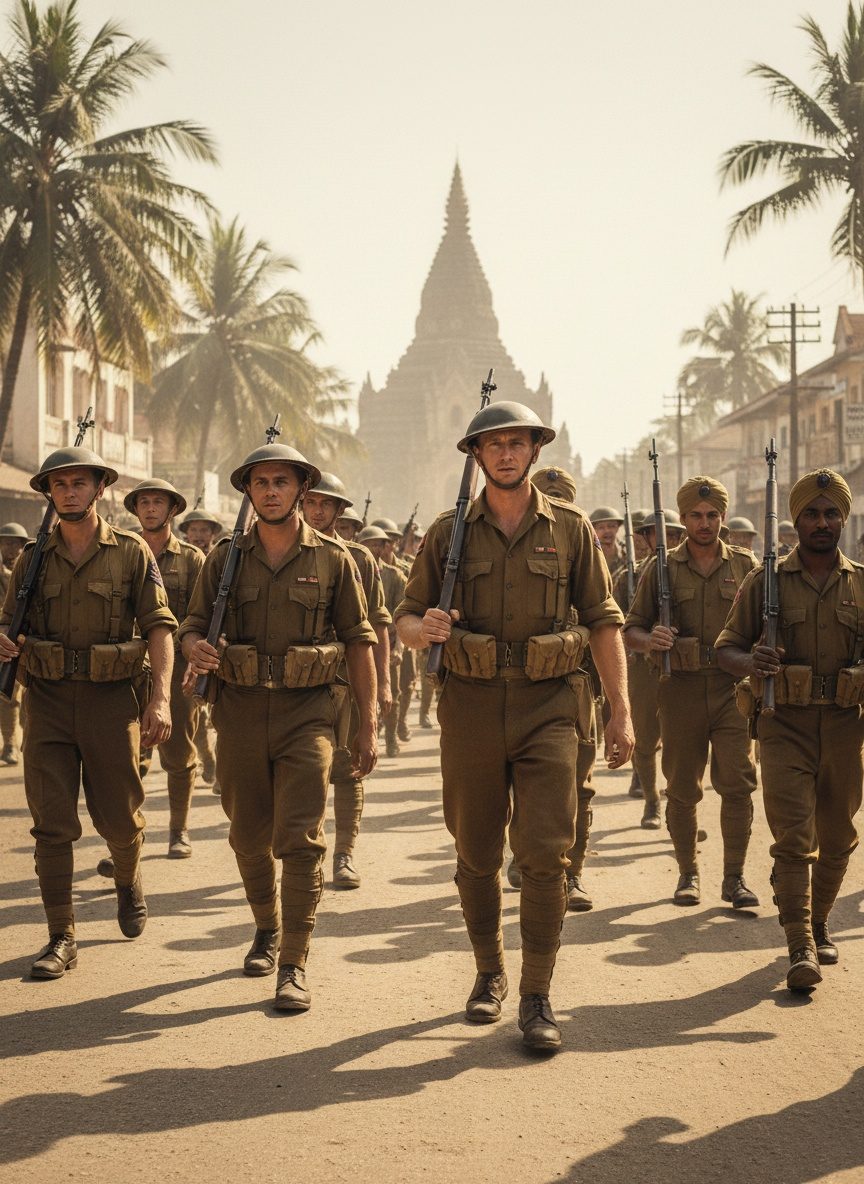
The fall of Rangoon is well-documented. Yet, the color film footage from May 1945 unearths a forgotten reality. When British and Indian troops finally entered the weary streets of Rangoon after three long years of brutal conflict, it wasn't just another military victory. It was the culmination of a gritty saga that only color could authentically capture—the raw essence of a beleaguered army and an equally exhausted city.
A Troop's Journey Through Hell
For the soldiers who entered the Burmese capital that sweltering May, it was an extraordinary epilogue to an otherwise Sisyphean ordeal through dense jungle warfare, relentless monsoon rains, and a tenacious enemy. Black and white photos, the norm for documenting the war, often failed to convey the vibrant, tangible atmosphere that these troops had endured. But in Rangoon, sharp hues pierced through the chaotic canvas, telling of struggles surpassing human endurance. The Burmese terrain had been unforgiving, a green labyrinth that swallowed ambitions and life alike, leaving only sweat, mud, and blood to tell its tale.
As the Allies advanced through a landscape dominated by oppressive foliage and equally menacing fauna, their journey became one of survival as much as combat. Leech-infested streams and disease-ridden air—just another day in what felt like an endless purgatory. The arrival at the gates of Rangoon was not only the end of a harrowing march but a profound sigh of life reclaimed, as luminous in color as the uniforms drenched in tropical rain.
Rangoon's Awakening
Rangoon, now submerged in striking color film, bore witness to its liberation with weary splendor. Walking through its streets, the soldiers were met with scenes of both ruin and rejuvenation. Buildings once grand, now scarred and weary, stood like sentinels of memory. The camera captured faces lined with the shadows of occupation, individuals teetering between fear and hope, like flickering images suspended on a celluloid screen.
The city's pulse was palpable—street vendors peddling their scant wares, children peeking curiously from behind splintered doors, and elders recounting tales woven from the fabric of war and peace. The ever-present scent of incense and spice mingled with the charcoal haze of cookfires. It portrayed a community resilient in the face of desolation, colored by the vibrant sarongs and the vivid greens of rainswept trees—all splashing life into what had been monochrome suffering.
Cameras That Broke the Mold
This color film footage was groundbreaking in its ability to capture deeper narratives often neglected by wartime propagandists. Where monochrome focused primarily on either hallowed heroes or faceless masses, the color film humanized them. It told of individual experiences—scenes where soldiers, forever altered by combat, adopted pets in Rangoon streets or shared food with locals, their smiles breaking wide under a sun that, for once, seemed to bless rather than bake them.
Such color footage shifted perspectives, offering not just a record but an immersive experience. Viewers back home—who had worn the drab hues of ration booklets and monochrome newsreels like a second skin—suddenly saw the war in Burma not merely as a distant geographic punctuation mark but as the vibrant, human endeavor it was. A young soldier’s sparkling blue eyes revealed more fear and relief than countless words could, transforming anonymous troops into sons, brothers, and friends.
The Aftermath of Triumph
While the fall of Rangoon marked a strategic triumph, the camera lenses captured the peace dividend as well—devastation defrayed by hope. British and Indian troops, their uniforms patched from the long road traversed, engaged in the onerous task of rebuilding. Building anew from the remnants was a labor of hearts as much as hands, for after the clamor of conflict, peace required its own quieter resilience. The vibrant spools of color film immortalized not just what war had destroyed but what patience and reconciliation could restore.
Today, this footage remains crucial. It carries weight not merely as a historical document but as a testament to the bravery and humanity captured within those vibrant frames. It's a reminder that color, often dismissed in discussions of historical documentation, infuses our understanding with a human depth that monochrome cannot—a poignant reminder of both the costs of war and the fragile beauty of peace. When we see the relief etched on the tired faces of those who liberated Rangoon and those they liberated, we get more than a history lesson. We gain an emotional truth, one that whispers shared stories from the past and insists they not be forgotten.