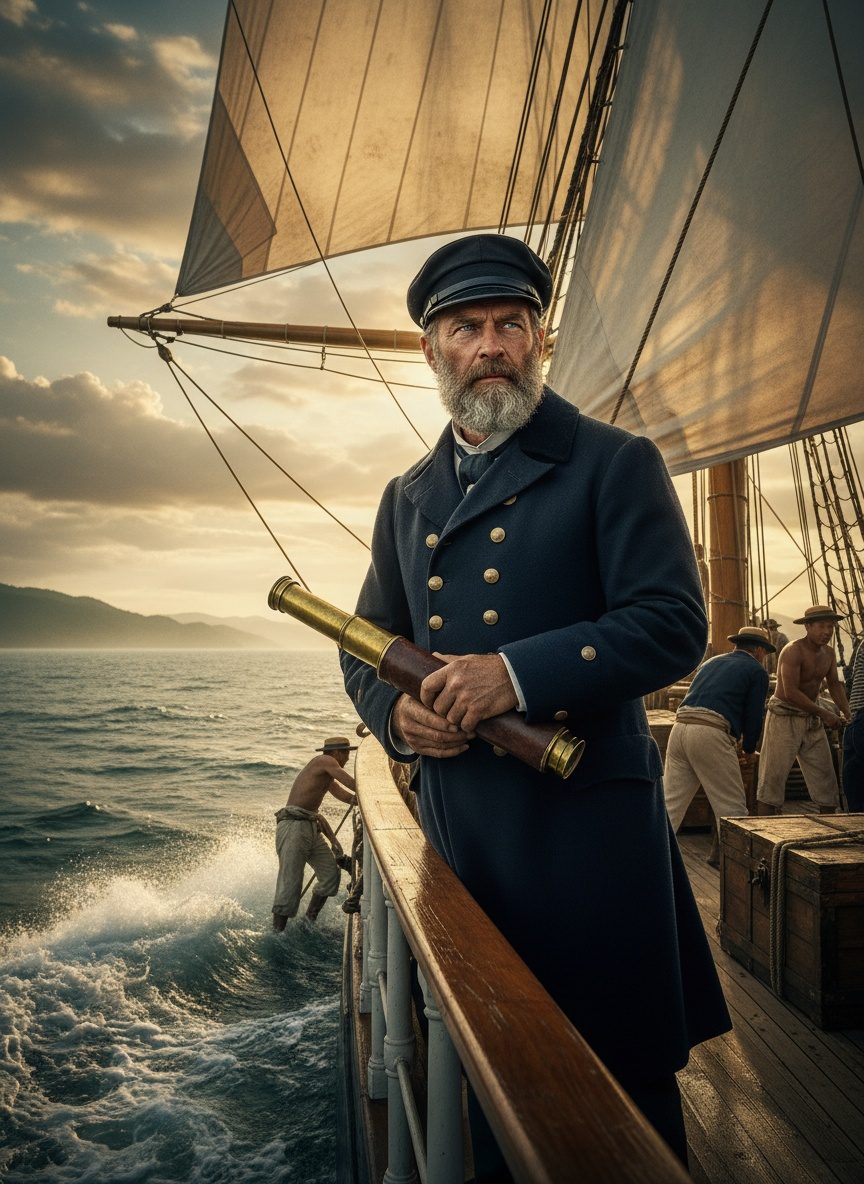
June 18, 1872. The air was thick with anticipation as sailors scuttled across the bustling decks, hoisting sails with practiced precision.
In the coastal waters off Foochow, two glorious tea clippers were preparing to embark on what would become the most legendary race of the Victorian age, and perhaps maritime history. The seafaring combatants, shimmering in the morning sun, were the renowned vessels Cutty Sark and Thermopylae. With their majestic sails set and their iron hulls poised, they were to duel across the oceans in a thrilling chase spanning 16,000 miles—from the bustling port cities of China to the docks of London. This was not just about traversing a route; it was a race against time, wind, and the relentless seas, where the victor would capture more than just the invaluable first crop of the season's tea.
Both ships had a shared destiny—the ambition of one audacious Scotsman, John Willis. Known for his daring and innovative spirit, Willis was a key figure in the competitive world of maritime trade. He had channeled his foresight and resources into these two hulls, part of a brave new wave in ship design. The Cutty Sark and Thermopylae were built for speed, a response to an era where steamships were beginning to encroach upon the realm of wind-powered vessels. The clippers were sleek and daring, manifestations of maritime architecture where every rivet, every timber, was positioned for a singular purpose: speed.
Both vessels were built in the preceding decade with the Thermopylae being launched in 1868 and the Cutty Sark in 1869. The Thermopylae, built by Walter Hood & Co. in Aberdeen, was envisioned as a demon of speed, often praised for her capability of slicing the waves with an unparalleled grace. The Cutty Sark, born from the design boards of Hercules Linton of the firm Scott & Linton, and completed in Dumbarton, was Willis's vision of a clipper that could surpass any ship on the sea. Sleek and stunning, her name whispered tales from the Scottish poem "Tam o' Shanter," and like the mythical witch from which she took her name, she was designed to be swift and formidable.
June 18 was etched in nautical history when both ships departed Foochow on the same tide, creating a visual spectacle of billowing canvas and eager decks. As the sun rose over the horizon, painting the water a myriad of colors, the two clippers set forth on their epic journey. Their mission was urgent: the first to dock in London would command superior prices for its cargo of tea, a bounty highly coveted by the London tea merchants and connoisseurs eagerly awaiting their aromatic shipments.
The route, a treacherous traverse down the coast of China, through the Indian Ocean, past the furious winds of the Cape of Good Hope, and northward towards the bustle of the Thames, was fraught with the uncertain temperament of the high seas. The captains, knowing the unpredictability of such expansive waters, relied on their seamanship, intuition, and just a dash of luck. The race was not merely against each other; it was also against the elements—a pitting of humanity’s indomitable will against nature’s caprice.
Every mile sailed brought its own perils. The roiling tempests of the Indian Ocean tested the sailors' mettle, commanding the men on deck to battle the very fury of storm and sea. Then came the infamous stretch around the Cape—aptly named by mariners as a test of endurance and a jewel of maritime folklore. Each gale, each rogue wave served as a reminder of the sea’s limitless power, yet both vessels forged on, relentless as their thirst for victory.
Throughout the voyage, the seamanship of each captain was put to the test. The Cutty Sark, commanded by the steadfast Captain Moodie, was driven to push her limits. The clipper seemed to respond with an almost sentient tenacity, cutting swiftly through even the most tumultuous of seas. The Thermopylae, under the vigilant eye of Captain Kemball, matched pace, proving herself every bit the contender. Each haul of the line, each calculated tack, brought them closer to their shared destination, a calculated chess game played on the canvas of the world's oceans.
The weeks turned into months, and as they neared the English Channel, the promise of land and the welcoming hand of home drew closer. It was a different battle now, against the nefarious calms that could beset the latter portions of the journey, requiring strategic navigational decisions as crucial as any made across the tempestuous seas.
Finally, as they approached the Thames—a ribbon of gateway to the beating heart of Britain—the differences between the two began to tell. Though tales abound and opinions diverge about the edge each vessel held, the reality of the times was that victories at sea were no singular event; they were a collective endeavor, a melding of human skill with maritime engineering that put the clippers on the precipice of legend.
While the Thermopylae arrived weeks ahead, the legend of the Cutty Sark was etched indelibly into the narrative of maritime trade. Her journey wasn't merely about arriving first. Her legacy was as a symbol of an era that championed the spirit of adventure, innovation, and determination. The race of 1872 was less about the mere crossing of an imagined finish line, and more about the enduring narrative of human ingenuity in the face of natural hardship and relentless rivalry.
This story of the greatest race in sailing history speaks to a time when ships like the Cutty Sark and the Thermopylae captured not just the winds, but the very imaginations of those who dared to dream. Its significance isn’t limited to the annals of maritime history but extends to our understanding of an era defined by exploration and enterprise. Today, preserved in dry dock, the Cutty Sark stands as a mnemonic guardian of a bygone age, her history pertinent as ever, begging us to reflect on how the dreams that set her sails remain alive, steering humanity into new, undiscovered waters.