He was a surgeon who had faced the realities of the human body on the operating table, not the battlefield. Yet it was Joseph Fayrer's scalpel—not a sword—that held the defense of Lucknow together.
As the summer of 1857 descended upon the embattled Lucknow Residency, the air within grew thick with trepidation and desperation. Surrounded by dissenting forces during what would become known as the Indian Mutiny, the small bastion of British colonial power seemed destined to fall. Within its walls, civilians and soldiers alike faced a grim siege, one where dwindling rations were as much a threat as the bullets and shellfire that rained down daily. Among them, the ceaseless work of Joseph Fayrer became a crucible of courage and resilience.
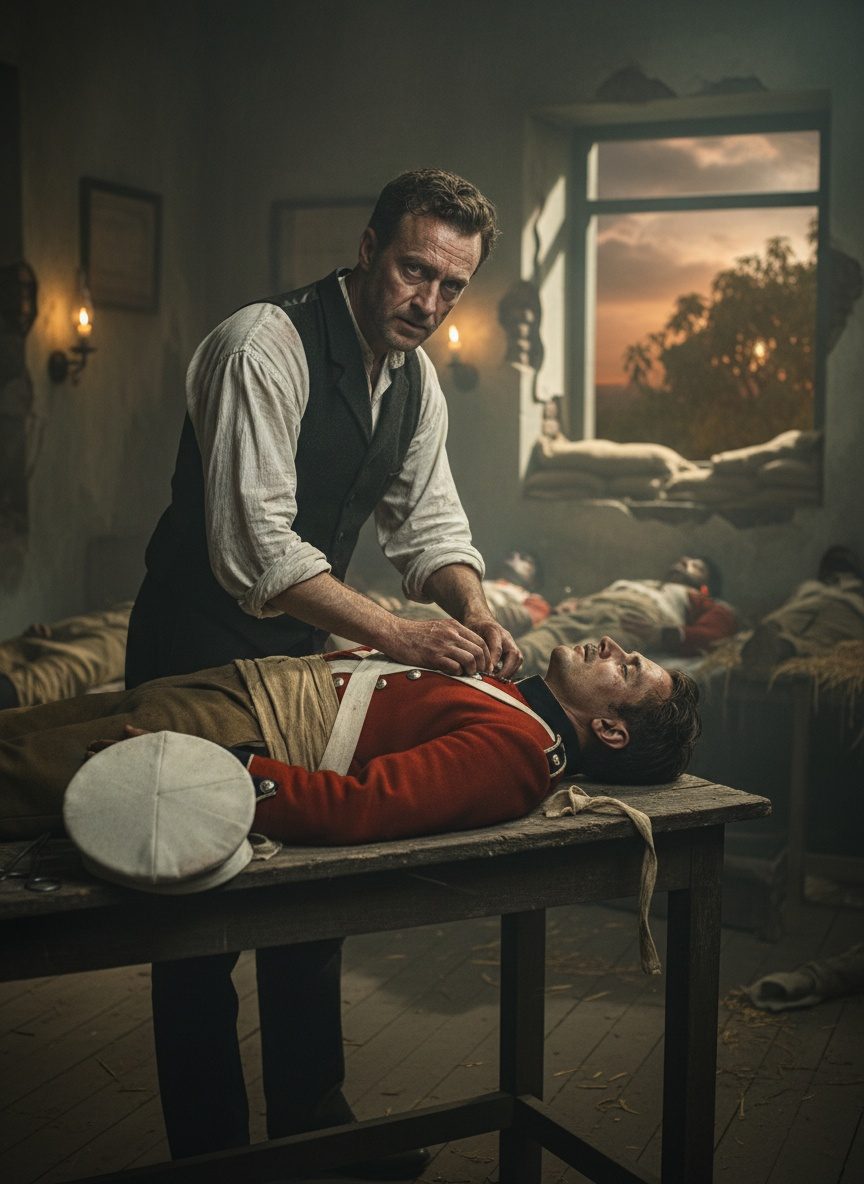
Fayrer, unlike any knightly exemplar of Victorian combat, held no esteemed military rank. The Residency’s occupants were a mix of soldiers drawn from their regimented plots and civilians whose lives had been pitched into chaos. His was the realm of the hospital, a makeshift sanctuary transformed into a hellish theater of war. Here, beneath the constant boom of artillery, Fayrer applied his surgical skill to mend torn flesh and soothe fever-stricken brows without the reprieve of proper medical supplies. This was medicine not taught in text—but carved from the sinews of crisis.
Ragged and rife with disease, the days stretched into weeks. Part of Lucknow's lived nightmare was the invisible specter of cholera. It ravaged as mercilessly as any frontline assault. The Residency's desperation for potable water propelled Fayrer into improvisation. Using crude distillation apparatus fashioned from recycled materials, he fought against the cholera epidemic reaping lives with cruel efficiency. These techniques were radical and risky, but necessity demanded he tread where medical council had not.
Every day etched lines of exhaustion deeper into Fayrer’s features, who somehow managed to be omnipresent within the Residency's chaos. His reputation for restlessly pacing the halls, clutching crude remedies, became legendary amongst survivors. Observing his tireless round-the-clock care was both comforting and heartbreaking for the inhabitants—comforting for his unyielding presence, heartbreaking for the depths of human suffering too often beyond healing.
Through Fayrer's lens, the Lucknow Residency siege became two battles intertwined. One fought with swords and guns on the fortifications outside, and another quieter yet equally valorous, within the cramped walls of the makeshift infirmary. It was his burden to hold back the tide of mortality with a dwindling supply of surgical spirits and bandages. His knowledge became the Residency's underpinning, demonstrating the power of human endurance against wars both large and microscopic.
Despite the constant thunder of cannonball barrages, Fayrer’s assistance to the garrison stopped many soldiers from succumbing to the overwhelming odds. His ingenuity crafted slings from uniform strips and splints from salvaged timber, every action a patch in the tapestry that kept the survivors alive and fighting. As ammunition and sustenance began to wither, so too did hope, yet Fayrer's unbroken spirit catalyzed defiance, proving that courage could persist even as bodies faltered.
Beyond the visceral immediacy of Fayrer's surgical interventions lay his equally critical role in maintaining morale. He acted as both healer and harbinger of faith, embodying that duty beyond which few can endure. When news trickled in of General Havelock’s advancing forces, it was whispered among the weary, entrenched defenders that Fayrer could have fended off the very darkness with his sheer determination alone.
The eventual relief did not arrive a moment too soon, for the Residency had already been wilting under months of pressure and attrition. Yet, when Havelock’s troops finally breached the hammering siege lines, the enclave stood resilient. The surgeon who saved so many lives had also safeguarded hope itself. Fayrer's perseverance had become a living testament to indomitability, a lion-hearted chapter in a dramatic saga greater than any one life.
The siege of Lucknow, seen through the lens of Joseph Fayrer’s tireless endeavor, reminds us of the profound intersection between resilience and ingenuity in times of dire need. By turning the tools of his trade into weapons against both visible and invisible foes, Fayrer transcended the role of surgeon to become a keystone of survival against overwhelming odds. In every scene of survival against collapse and chaos, Fayrer's legacy challenges the tales that textbooks often leave untold. It beckons us to find such stories within the cracks of history, where unsung heroes write destiny onto the pages of time with courage, an indelible ink.