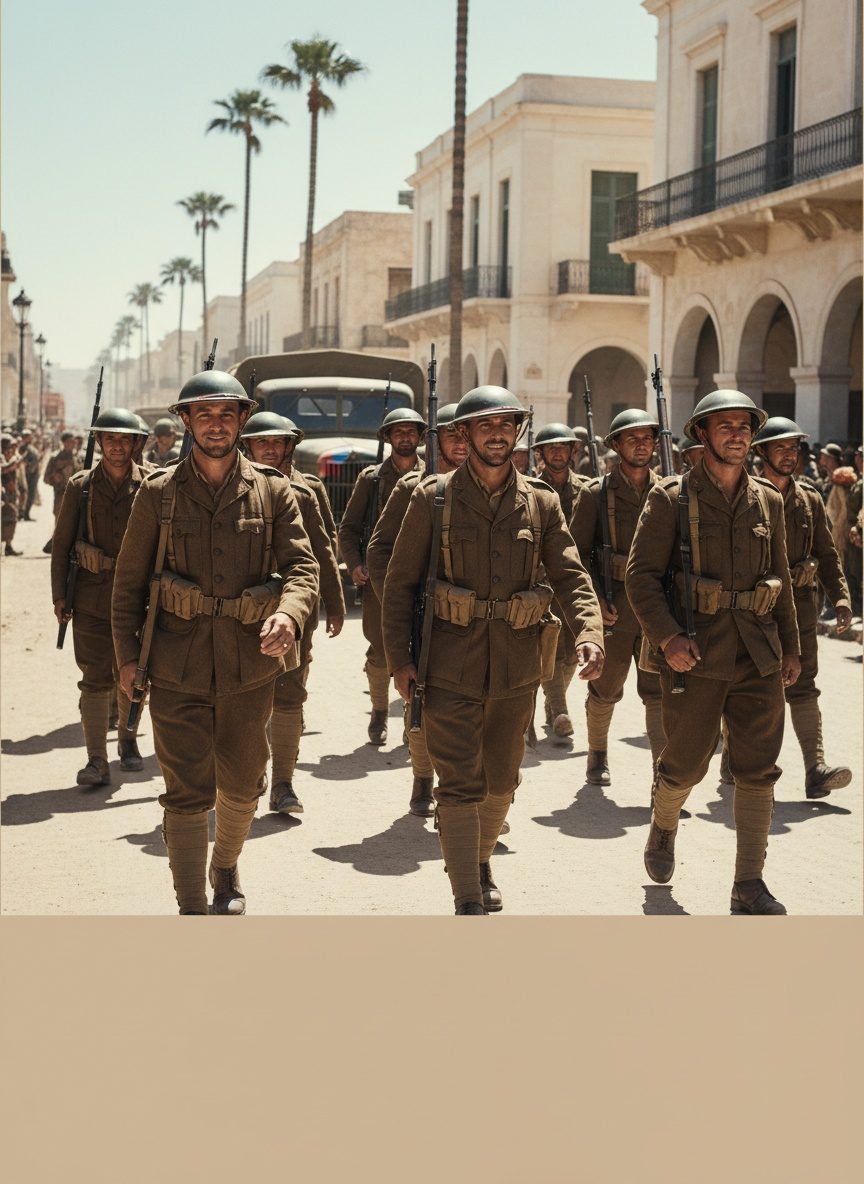
Dust clouded the air, catching the first rays of dawn as boots crunched over the gravel streets of Tripoli. The men, sun-baked and weary from a grueling desert campaign, straightened their spines in a semblance of formation, their eyes set on the road ahead. Silent witnesses to the moment, rolling cameras seized the vibrant panorama in hues of amber and ochre, immortalizing the Eighth Army's entrance into the city on this pivotal January day. The desert rats, they were called, but these were no creations of fiction. The camera rolled steadily, unraveling a vivid war tapestry on its brilliant colored reel.
The Odyssey Across the Desert
To appreciate the significance of this moment, one must trace the immense journey of these soldiers across the arid Libyan desert. Their march spanned 1,400 miles of unyielding sands, each footfall echoing the arduous path from the climatic Alamein to the storied gates of Tripoli. This was a test not just of military might, but of human endurance against nature’s harshest elements. As they moved forward, blistered feet dragged through endless dunes under a blazing sun that showed no mercy. The air was always thick with the smell of fuel and sweat, a reminder of the mechanical war machines trundling alongside them, etching tracks into the earth like scars across a battlefield.
The dessert was merciless, yet it was in this crucible that the men of the Eighth Army formed their unbreakable bond. Stories of camaraderie brightened the dreary sunsets—of shared rations and laughter under the starlit sky, where homes seemed a million miles away. Here was a living testament to human resilience, proving that even the harshest terrain could be traversed in the pursuit of freedom.
The Pillars of Tripoli
The gateway to Tripoli loomed grand and ancient, welcoming and foreboding in equal measure. It was a city held firmly in Rommel's grip for three years, a bastion of Axis power in North Africa. Yet on this morning of January 23, 1943, it opened its heart to the liberators. The soldiers, who once faced the ferocity of German Panzer units, now moved through Tripoli's streets in an astonishing display of quiet confidence. The camera captured their resolve with all the exuberant newness of color film, preserving images of men whose faces told the silent stories of battlefields won and comrades lost.
Tripoli's architecture—its columns, arches, and mosaic avenues—formed a striking background to the march. The city, resilient and layered in history, was symbolic of so much more than military conquest; it was a beacon of alliance and liberation. In this scene, the vibrancy of colored film did more than simply capture an event; it brought to life the textures and tones of a critical turning point in the war, a prelude to victory in North Africa.
The Technicolor Testimony
Color films were rare and precious, reserved for those moments deemed significant enough to challenge the constraints of black and white. When the Eighth Army entered Tripoli, the decision to capture this in color was both strategic and emotional. The richness of color injected immediacy and realism into the footage, making the soldiers’ gallantry tangible, the desert more unforgiving, and the victory more vivid. For viewers thousands of miles away, who relied on reels to frame their understanding of the war, seeing these scenes through the lens of color film was extraordinary.
Audiences back home were given a window into the world of these soldiers, revealing the scars etched not only on their faces but also in their spirits. There was a startling authenticity to the footage—a portrayal of war as it truly was, filmed in a medium that refused to soften the edges. Once back in civilian life, these visual records became remnants of a history that felt, for the first time, profoundly personal.
The Moment History Wasn't Prepared to Capture
The soldiers marched through Tripoli not as mythic heroes but as men, weary yet determined. There was an unfeigned simplicity to their presence, captured in the unexpected burst of color that brought them to life in a way standard footage could not. Each frame preserved the inexorable passage of time, the determination in their steps mingling with the layered beauty of Tripoli itself. In this single act of liberation, the city was transformed from an occupied stronghold to a beacon of allied victory, forever changing the fate of North Africa.
As artillery echoed back across the distance they had conquered, the men of the Eighth Army knew their journey was far from over. The footage would make its way around the world, ensuring that their perseverance and triumphs were not forgotten amidst the chaos and clamor of global conflict. This, after all, was more than just a dispatch from the front— it was history in motion, a vibrant reminder of the human spirit’s ability to endure and overcome.
As viewers today witness these scenes, we are called to remember the courage embedded in such journeys, to see beyond the grayscale shadows of history into the immersive, technicolor turnings of a world at war. The entry into Tripoli wasn’t just one moment in time; it was the prelude to an era defined by both tremendous hardship and profound hope.